Macstarna Freeing Caile Vipinas (François Tomb)
Details
The story
In AD 48 the emperor Claudius, who had written a history of the Etruscans, spoke to the Roman Senate about Servius Tullius, the sixth king of Rome. Roman writers, he said, made Servius the son of a captive woman. The Etruscans told it differently. In their version he was Mastarna, the faithful companion of a warrior named Caelius Vibenna, and after many reversals he came to Rome with what was left of Vibenna's army, settled on the hill later called the Caelian after his leader, and took a new name. The speech survives on a bronze tablet found at Lyon in 1528.
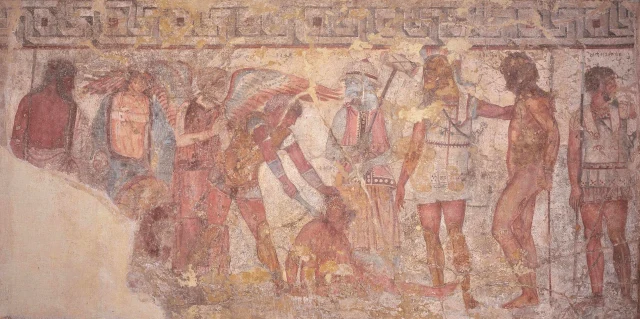
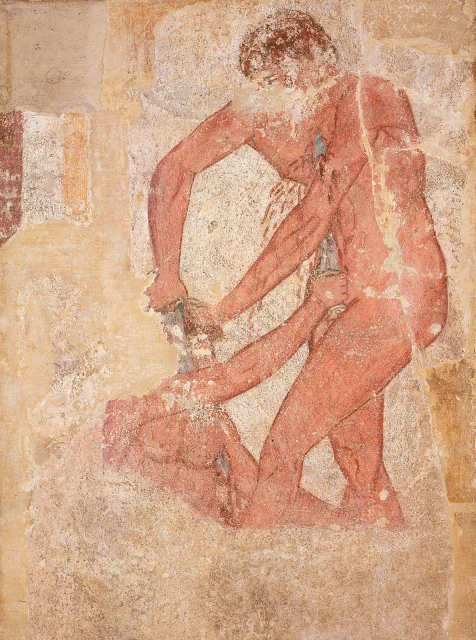
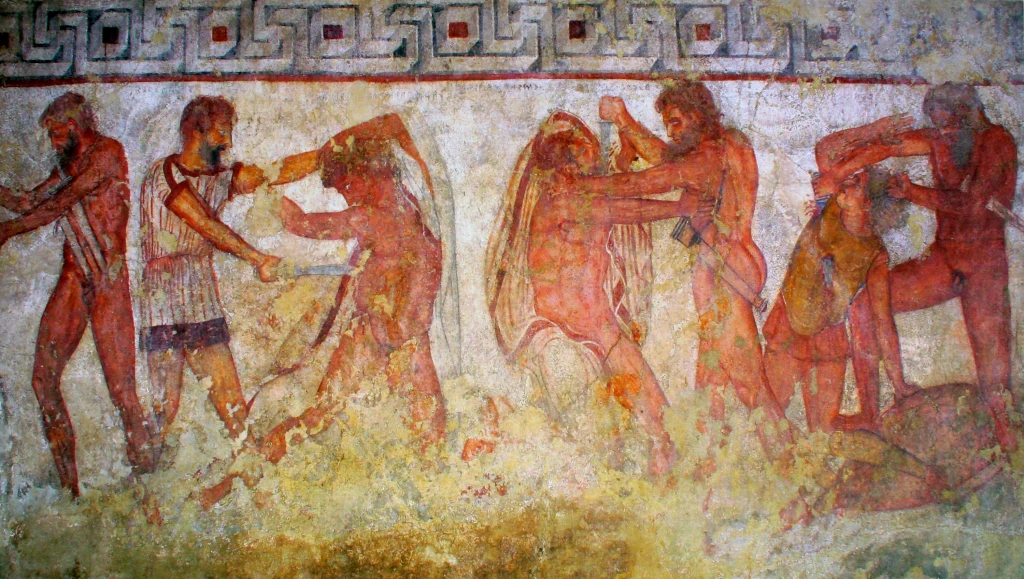
This painting tells the Etruscan story nearly four centuries before Claudius did. Macstarna, his name painted beside him, cuts the ropes binding the wrists of Caile Vipinas, while their companions turn on the captors and kill them. Every figure is named, and some of the victims also carry the name of their home town, Volsinii among them. That the painted Macstarna and Rome's king were one man rests on Claudius' word, and historians still argue over how much of the tale is history.
The Vibenna brothers, at least, left a trace of their own. At a sanctuary at Veii, a 6th-century BC drinking cup was offered in the name of Avile Vipiiennas, Aulus Vibenna, the brother who also fights on this wall.