Paul Gauguin · PD
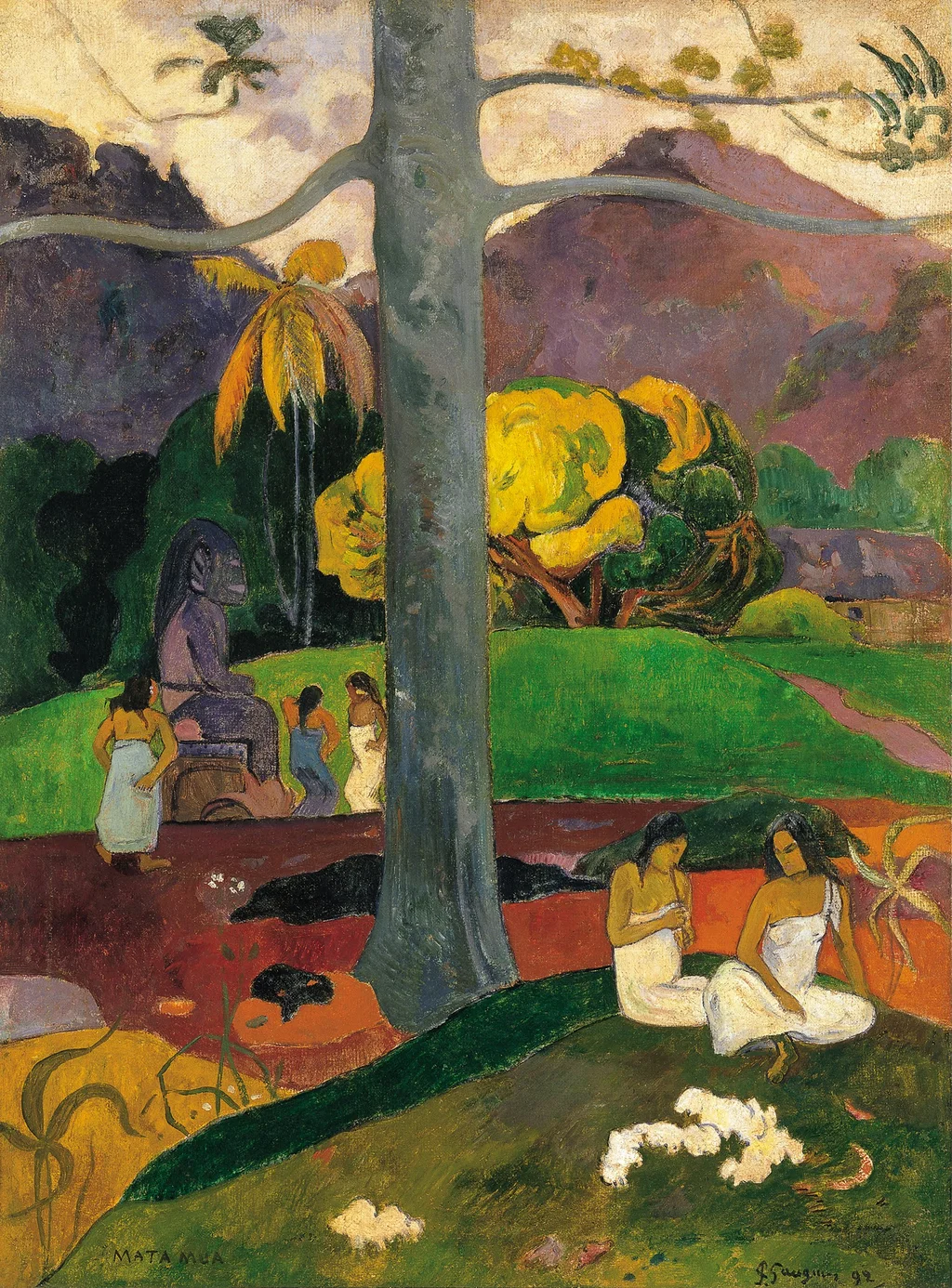
Mata Mua
Details
The story
Gauguin sailed for Tahiti in 1891 expecting to find an untouched paradise, and found instead a French colony with churches, traders and imported disease. So he painted the island he had wanted rather than the one he got. In this scene from 1892, women worship Hina, the old Tahitian moon goddess, under the trees, with a flute player in front and dancers behind, a religion that colonial rule had already largely swept away. The title, in Tahitian, means in olden times. The painting has never belonged to the museum. Baron Hans Heinrich Thyssen-Bornemisza bought it at auction in New York in 1984, sharing it with another collector until 1989, and today it is owned by his widow, Carmen Cervera. After nearly two years in Andorra, where she lives, it came back to Madrid in February 2022, and it hangs here under the agreement signed that month by which the Spanish state rents her collection.