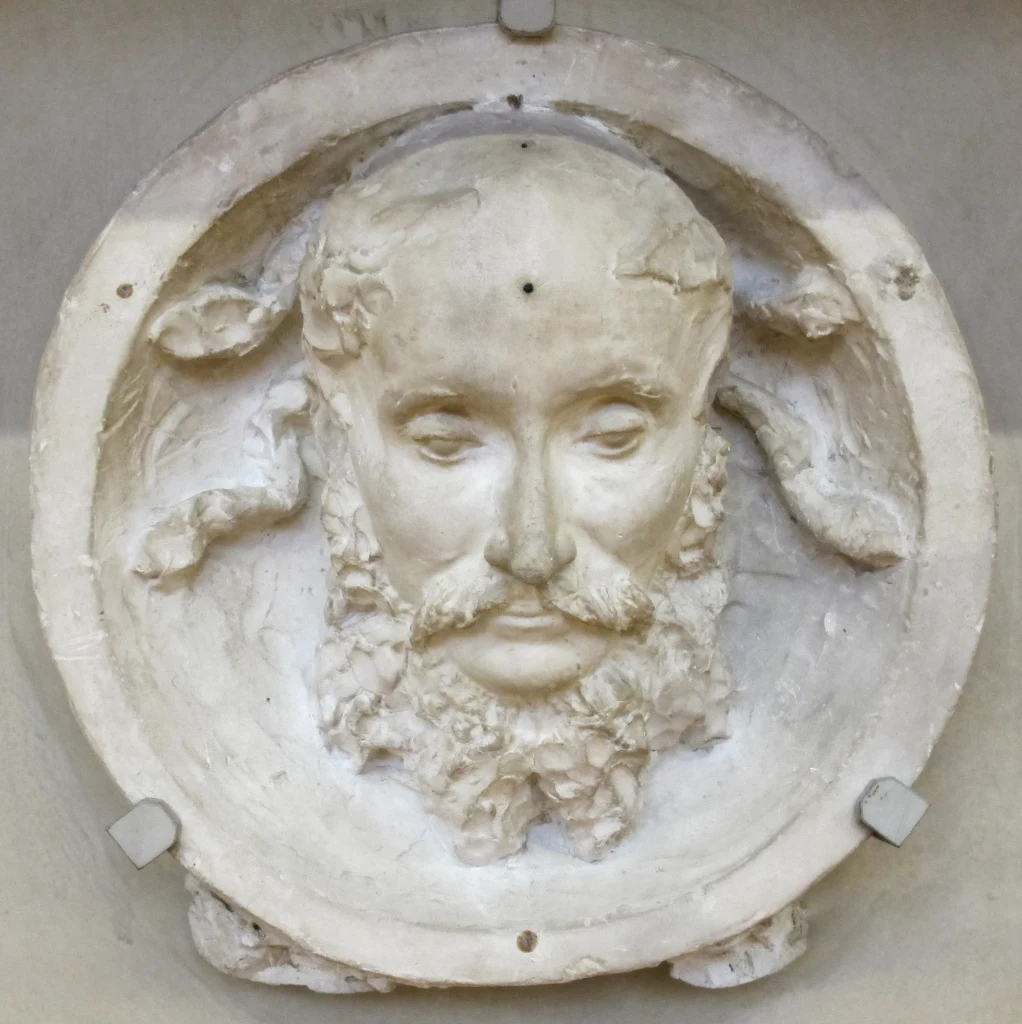
Medallion for the Gerolamo Segato Monument
Details
The story
Look at the hair. The locks around this man's head turn into snakes, the hair of Medusa, the monster of Greek myth whose gaze turned people to stone. The face is Girolamo Segato's, and the snakes point straight at his work. Segato had explored Egypt from 1818 and, back in Italy in 1823, worked out a method of mineralising human remains that kept tissue with its colour and firmness. He became known as the petrifier, and some of his specimens survive at the University of Florence. He died in Florence in February 1836 without revealing the method, and his epitaph says that he would be seen whole and petrified if his art had not died with him. The tomb was ordered from Bartolini the same year. His first design was turned down, he came back to it only in 1844, and he chose a sarcophagus carrying the portrait in a round medallion, in the manner of Renaissance tombs. It was carved in marble long after his death and placed in the cloister of Santa Croce in 1887.
More works by Lorenzo Bartolini
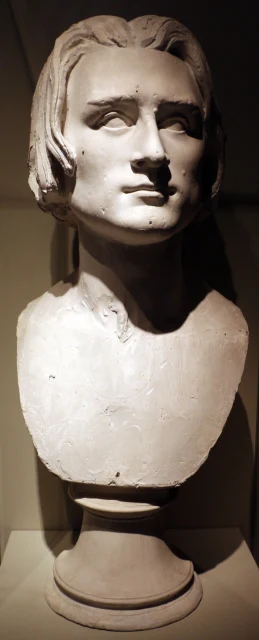 Bust of Franz LisztLorenzo Bartolini, 1838
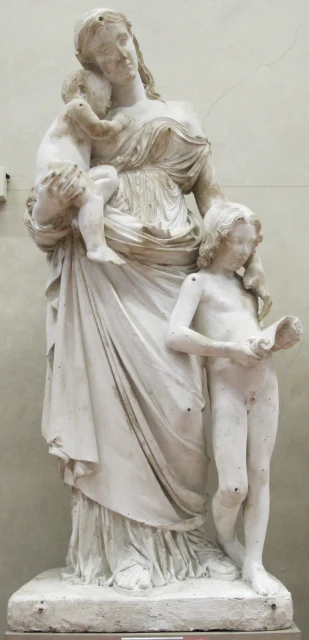 Charity the EducatorLorenzo Bartolini, 1820
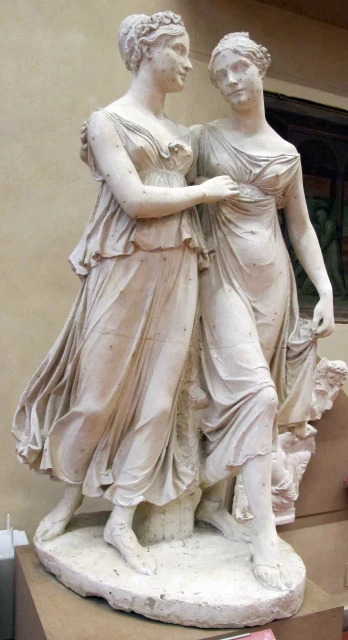 Emma and Julia Campbell (plaster model)Lorenzo Bartolini, 1820
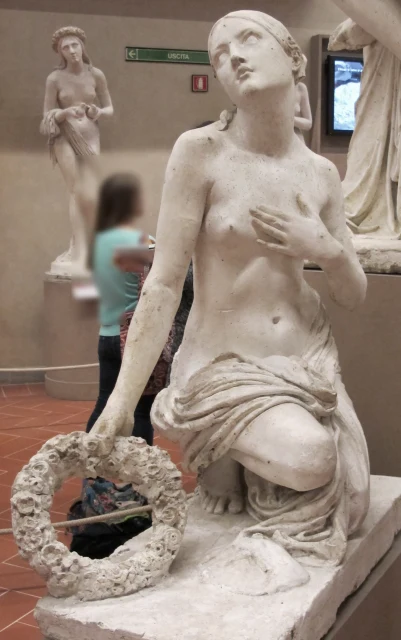 Gratitude, Figure for the Demidoff Monument (plaster model)Lorenzo Bartolini, 1831
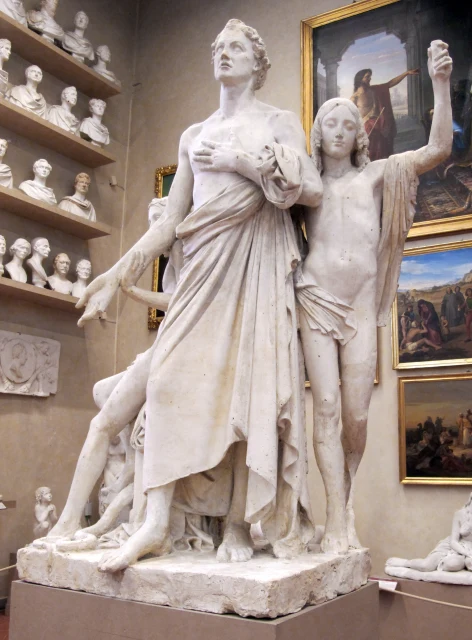 Monument to Leon Battista Alberti (plaster model)Lorenzo Bartolini, 1843