Lorenzo Bartolini
1777–1850 · Grand Duchy of Tuscany · Neoclassicism, Purismo
The story
On 4 May 1840 the new professor of sculpture at the Florence Academy of Fine Arts put a hunchbacked man on the model's stand and told his students to use him for a figure of Aesop, the ancient teller of fables. The lesson caused an uproar. Lorenzo Bartolini had waited a long time for that chair. He was 62 when he finally got it, in 1839, and he meant to use it. All of nature is beautiful, he taught, when it suits the subject, and a student should learn to copy what is actually in front of him, whatever its shape. He later put up a small stone slab in his garden to remember the day.
He had come to that belief by a long road. As a young man he worked in Paris in the studio of the painter Jacques-Louis David, alongside Ingres, modelled a bust of Napoleon, and then ran the sculpture school at Carrara, the marble town, for Napoleon's sister Elisa Baciocchi. When the empire fell in 1814 he came home to a Florence that distrusted him, and for years his best clients were foreigners: English aristocrats and the wealthy Russian Demidov family. His marble of a young woman kneeling in prayer, called Trust in God, carved in the mid-1830s and now in Milan, won him a far wider public.
What he left behind is best seen in the same museum as Michelangelo's David. More than 400 plaster models and busts from his studio in Borgo San Frediano passed to the Italian state after a negotiation with his heirs that dragged on until 1889. Since 1985 they have filled the long hall that was once the women's ward of the old San Matteo hospital, and many still carry the small metal points his assistants used to measure depths when they copied a model into marble.
More articles

Works
11 works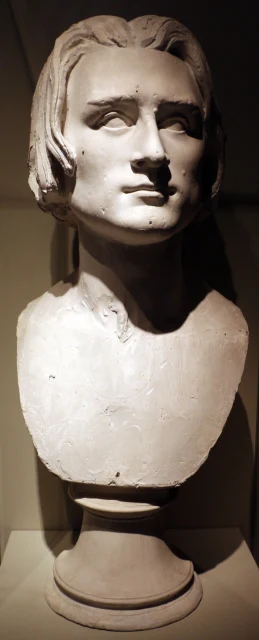 Bust of Franz LisztLorenzo Bartolini, 1838
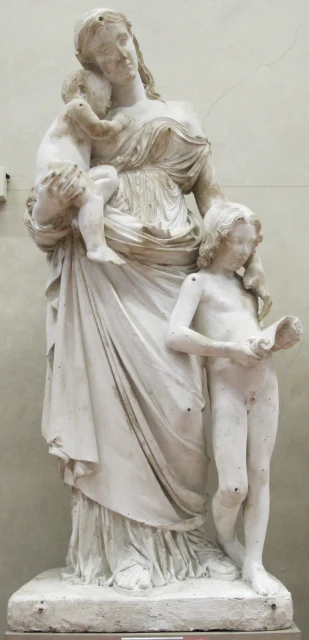 Charity the EducatorLorenzo Bartolini, 1820
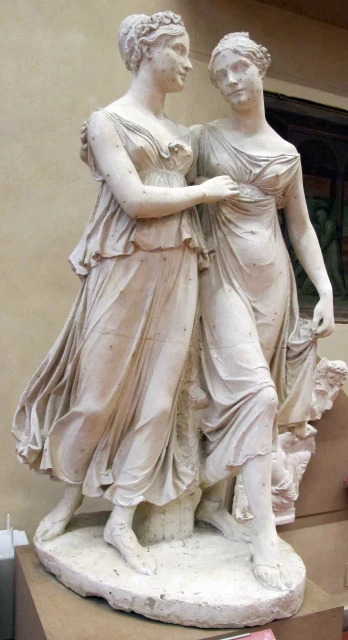 Emma and Julia Campbell (plaster model)Lorenzo Bartolini, 1820
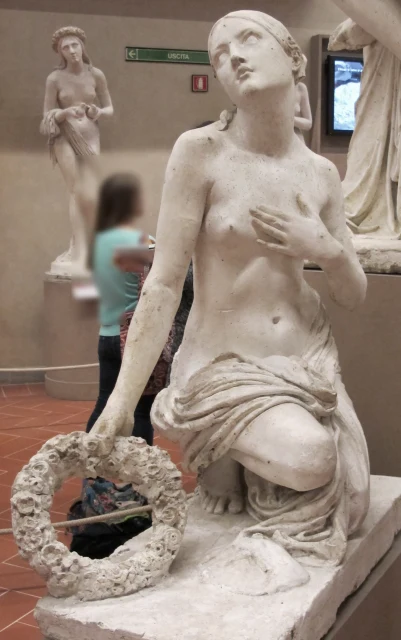 Gratitude, Figure for the Demidoff Monument (plaster model)Lorenzo Bartolini, 1831
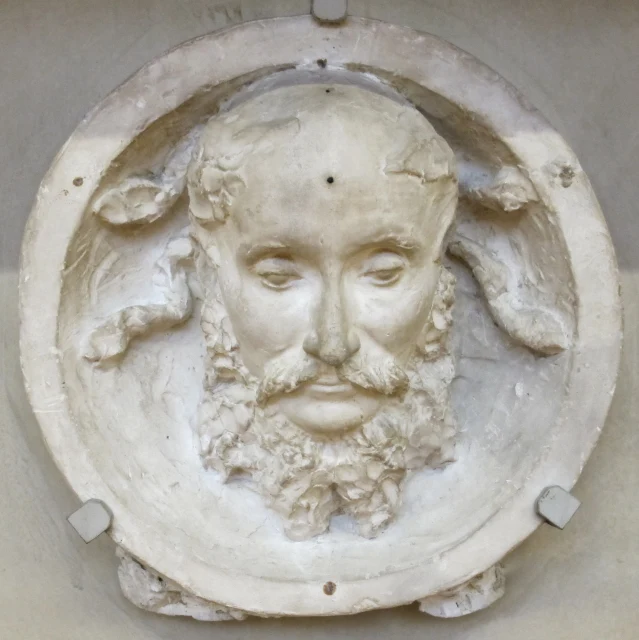 Medallion for the Gerolamo Segato MonumentLorenzo Bartolini, 1841
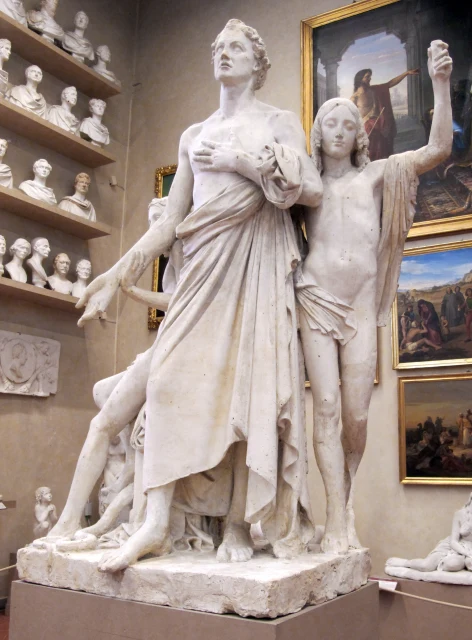 Monument to Leon Battista Alberti (plaster model)Lorenzo Bartolini, 1843
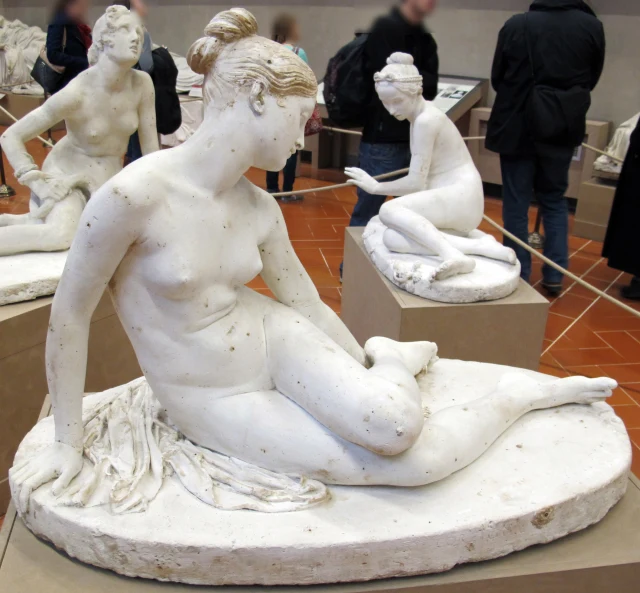 Nymph with a Scorpion (plaster model)Lorenzo Bartolini, 1835
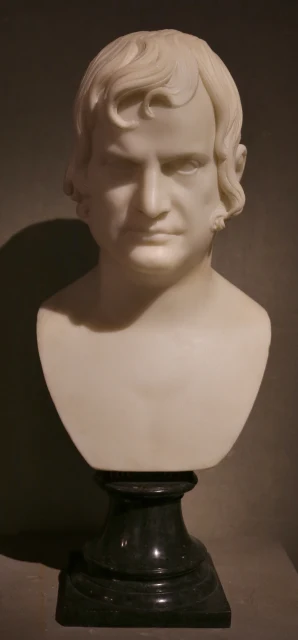 Portrait of Giovan Battista NiccoliniLorenzo Bartolini, 1827
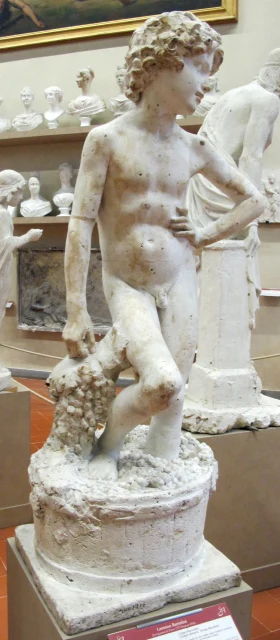 The Grape Presser (plaster model)Lorenzo Bartolini, 1818
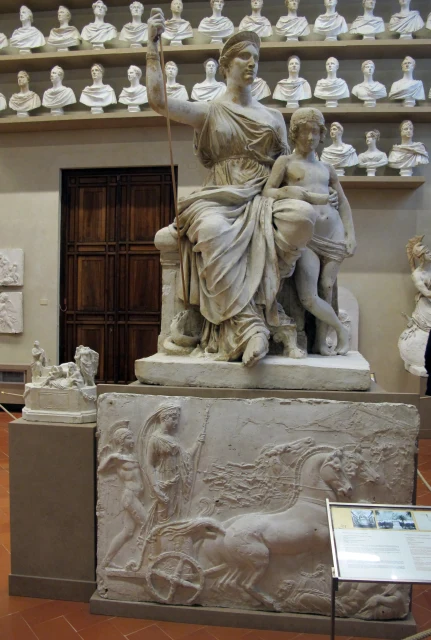 The Magnanimity of Elisa, Monument to Elisa Baciocchi (plaster model)Lorenzo Bartolini, 1810
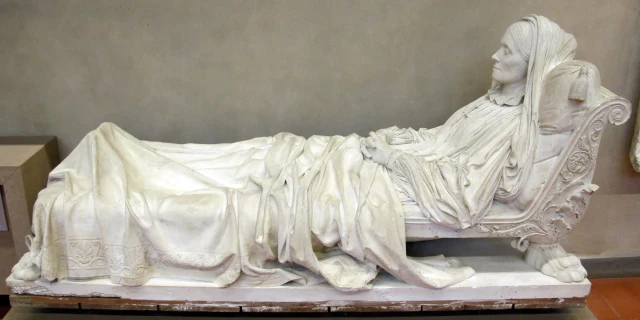 Zofia Zamoyska on Her Deathbed (plaster model for her tomb)Lorenzo Bartolini, 1837