Mercury
Details
The story
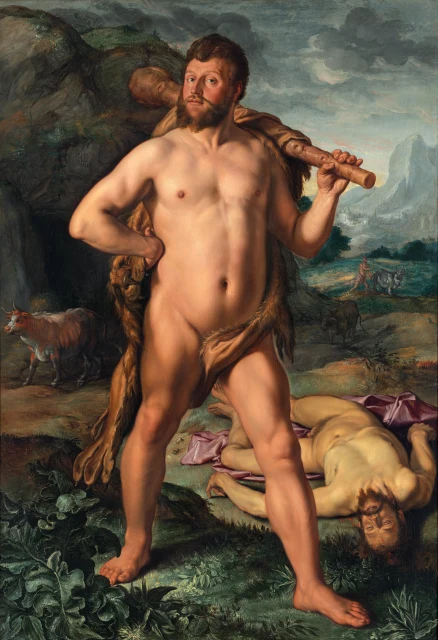
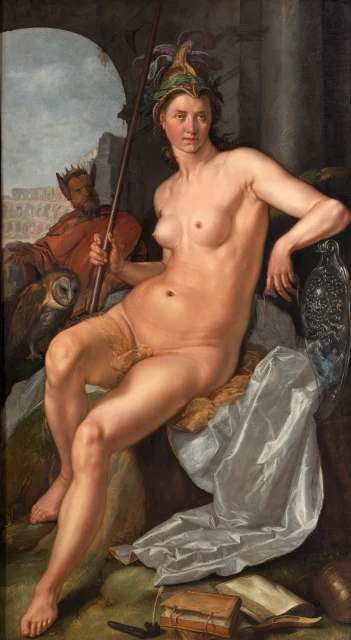
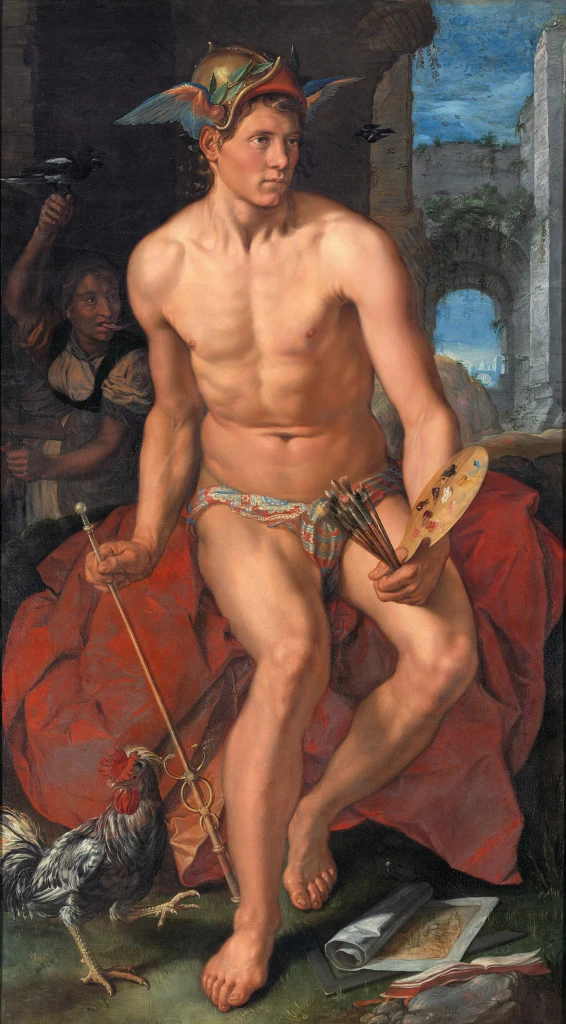
In 1611 Goltzius painted two life-size figures for a Haarlem house, probably for the lawyer and town councillor Johan Colterman. Minerva stood for practice and this Mercury for theory, and in 1613 a Hercules followed, the virtue the other two were meant to produce. It was the humanist idea of an education, set out in paint. You know Mercury by his winged helmet, his snake-entwined staff and the cockerel. As patron of the arts and of eloquence he holds a brush and palette, and at his feet lie a set square, compasses and a drawing album. Beside him a girl with a rattle and a magpie sticks out her tongue. She stands for foolish chatter, set against the god's reasoned speech. The three canvases stayed together with Colterman's heirs, and since 1917 the Mauritshuis has lent Mercury to the Frans Hals Museum, where it hangs beside the other two.