Rachenitsa
Details
The story
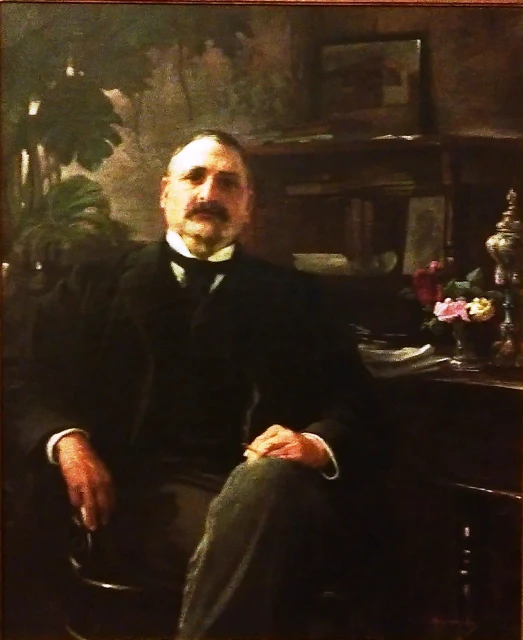
In 1894 Bulgaria was barely a nation. It had been a principality only since 1878, and Sofia had become its capital not long before. Mrkvička painted this crowd at the height of a village celebration, gathered around the fast, stamping solo dance Bulgarians call the rachenitsa, the dancer's arms flung wide while musicians and drinkers urge him on. Look at the figure dancing in the centre. A theory that has gained ground in recent years holds that he was modelled on James Bourchier, the Irish correspondent of the London Times who had settled in Sofia and become the country's most devoted foreign friend. Bourchier and the painter knew each other well and roamed the taverns of the capital together, and portraits of the journalist do share the dancer's long features. Nothing proves it, and the man may simply be a villager the painter watched. Bourchier loved this land to the end. He asked to be buried near the Rila Monastery in the mountains south of Sofia, and his grave is still there among the firs.