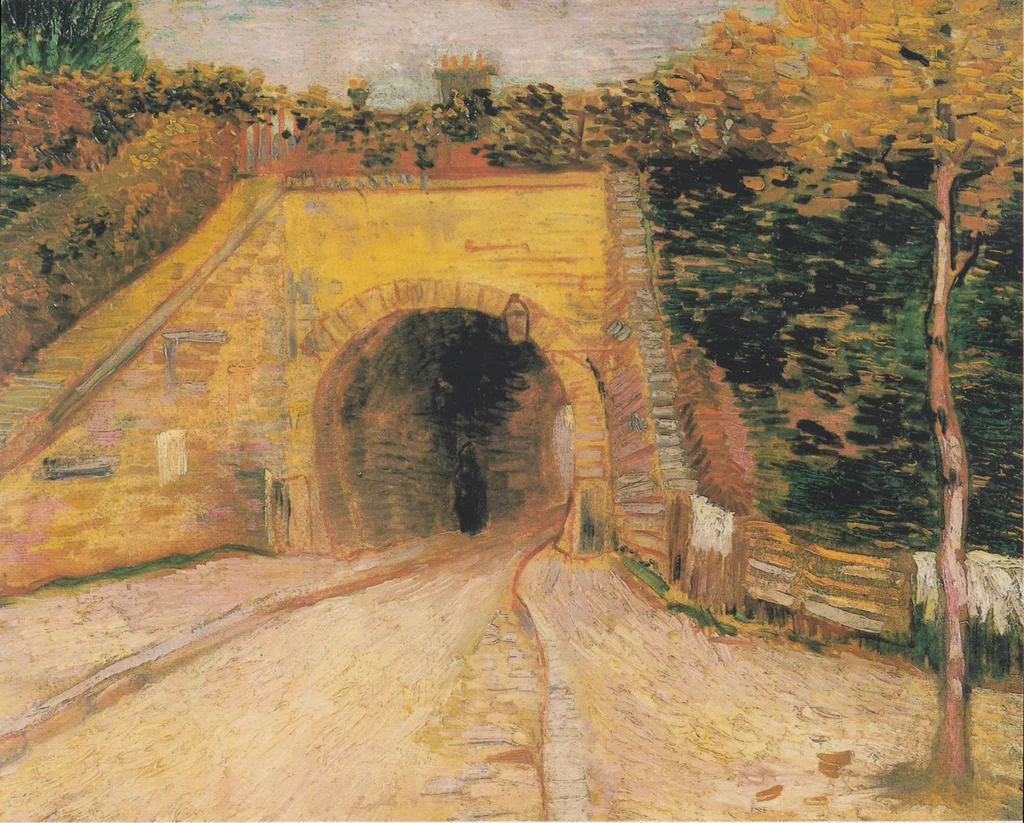
Vincent van Gogh, Roadway with Underpass, 1887. Wikimedia Commons. · PD
Roadway with Underpass
Details
The story
In 1887 Paris still ended at a wall. The fortifications built in the 1840s ran all the way round the city, and roads passed through them by gateways and low tunnels, where officials collected a duty on goods coming in. On a late summer day that year, Van Gogh set up in front of one of these passages, on the side of someone walking back from Asnières, the riverside suburb where he often went to paint outdoors. That is why the far end of the tunnel glows faintly. A single figure in black is walking into the dark halfway through. The ochre wall is laid on in thick, creamy paint with chalky blue shadows, and the leaves on the embankment are small dots and dashes of contrasting colour, a method he was testing that year after seeing the Divisionist painters in Paris. The whole ring of walls was pulled down in the 1920s, and passages like this one went with it.