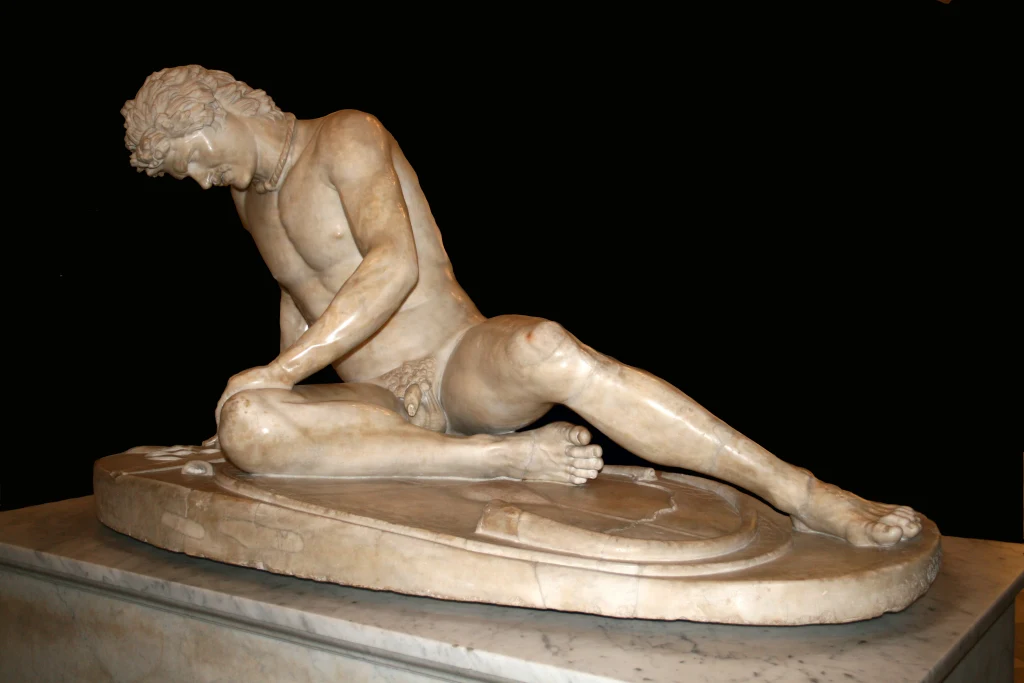
The Dying Gaul
Details
The story
For a long time this man was taken for a gladiator. The marble is first recorded in 1623, in the collection of the Ludovisi family, who were building their villa in Rome on the site of the ancient Gardens of Sallust, and it was probably found there. In 1737 Pope Clement XII bought it for the Capitoline. Lord Byron still saw a dying gladiator when he wrote of him in the fourth canto of Childe Harold's Pilgrimage, published in 1818, a man whose brow 'consents to death, but conquers agony', butchered to make a Roman holiday.
The details tell another story. He wears the moustache, the stiff, unruly locks and the twisted neck ring, the torque, that Greeks and Romans associated with the Gauls, and on the base beside him lie an oval Celtic shield and a curved war trumpet. The museum identifies him as a Galatian, one of the Celtic peoples who had settled in Asia Minor, and the statue as a replica of one figure from the group that King Attalos I dedicated at Pergamon to celebrate his victories over them.
This copy is dated to around 60 to 40 BC, the same decades in which Julius Caesar was fighting his way through Gaul.
More works by Unknown Roman sculptor (Republican period)
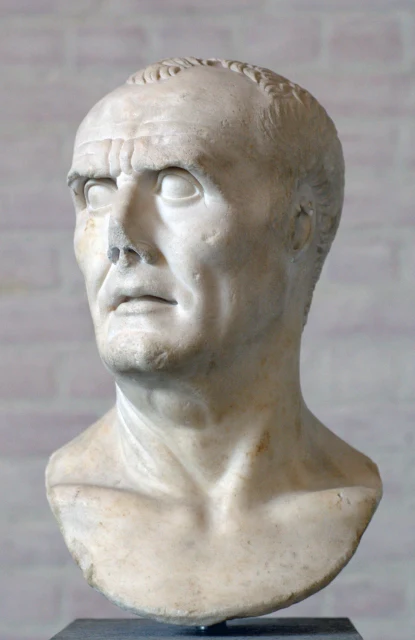 Bust of a Roman, the So-called "Marius"Unknown Roman sculptor (Republican period), -30
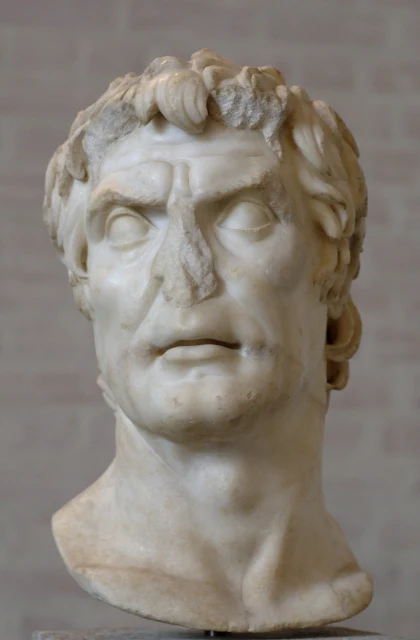 Bust of a Roman, the So-called "Sulla"Unknown Roman sculptor (Republican period), -30
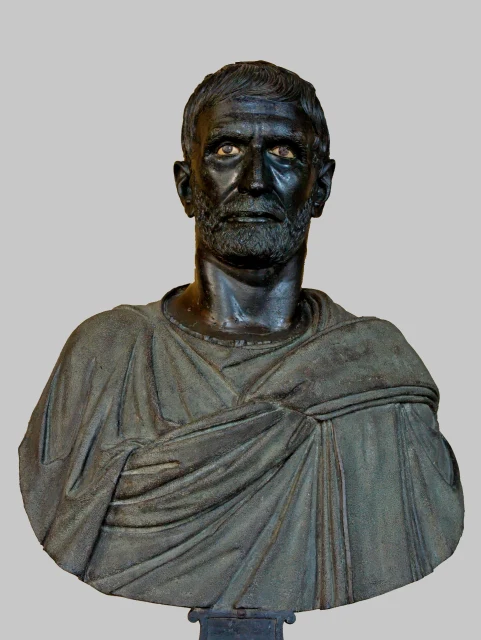 Capitoline BrutusUnknown Roman sculptor (Republican period), -300
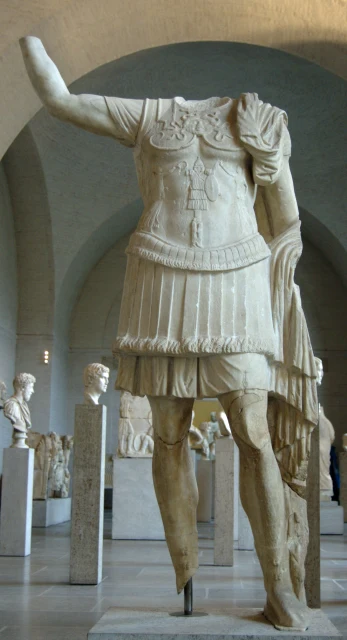 Cuirassed Statue of a Roman GeneralUnknown Roman sculptor (Republican period)
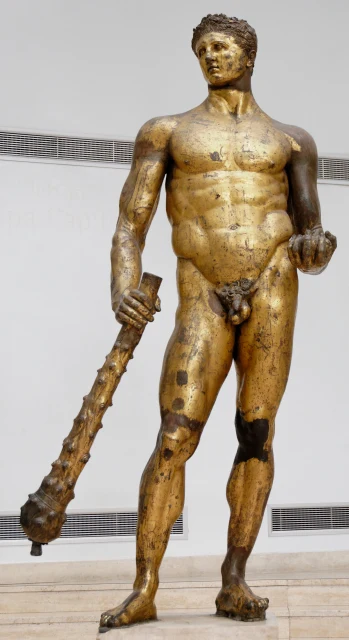 Gilded Bronze Statue of HerculesUnknown Roman sculptor (Republican period), -150