The Finding of the She-Wolf
Details
The story
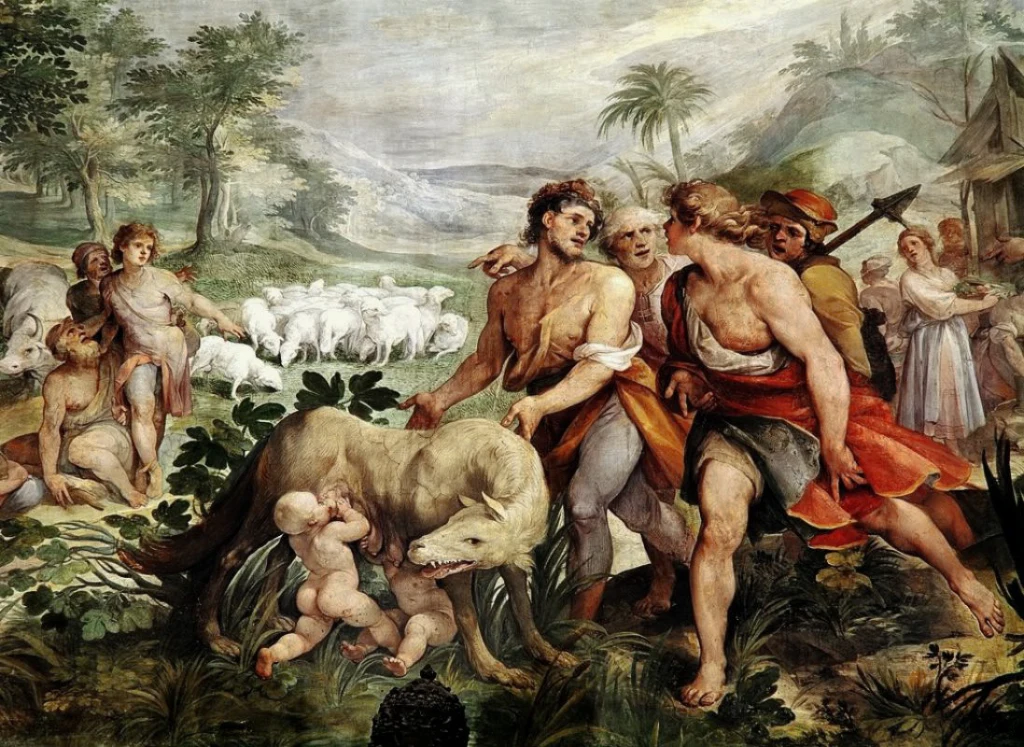
In 1595 the Conservatori, the magistrates who ran the city of Rome under the pope, handed the young Giuseppe Cesari the walls of the great hall in their palace on the Capitoline, a room meant for the sessions of the city's Public Council. The scenes were to come from Livy's history of Rome's beginnings, and this one, dated 1596, is where he started.
Livy tells how the twins Romulus and Remus, left to die by the Tiber, were found by Faustulus, the king's herdsman, while a she-wolf was feeding them. Here Faustulus and his companions come upon the animal with the two infants.
In this building the wolf was a natural place to begin. Since 1471 the city had kept the bronze she-wolf in the same palace, and from the middle of the 16th century it stood in an open loggia that is now the museum's Hall of the She-wolf, where it remains. Cesari framed his story like a tapestry hung on the wall, and the later scenes of the cycle are laid out the same way, separated by painted garlands of fruit and flowers, trophies of arms and vases.