The story
On the night of 7 September 1944, days before Bruges was liberated, two German officers and a party of armed sailors entered the Church of Our Lady by torchlight. They wrapped a marble statue in mattresses and loaded it onto a lorry. It was Michelangelo's Madonna and Child, and the next year the Allied art officers known as the Monuments Men found it, still in its mattresses, deep in the salt mine at Altaussee in the Austrian Alps.
The statue had travelled before. Michelangelo carved it in Carrara marble around 1504, and the Mouscron family, Flemish cloth merchants trading in Italy, bought it and gave it to this church in 1514. It is usually described as the only sculpture of his to leave Italy in his lifetime. French revolutionary troops took it to Paris in the 1790s, and it came back after Napoleon's fall. Look at the Child, who seems about to step down from his mother's lap.
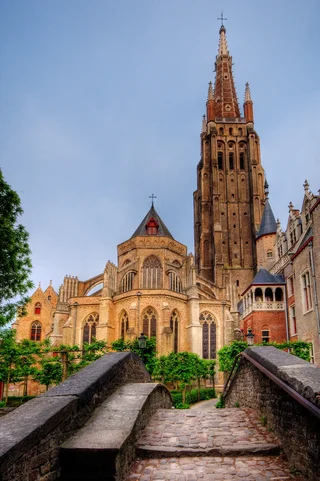
The church around it was begun in the early 13th century, and its brick tower rises more than 115 metres, one of the tallest of its kind in the world. In the choir lie two rulers of Burgundy. Mary of Burgundy, who died in 1482 after a fall from her horse, has a gilded Gothic tomb finished in 1502. Her father, Charles the Bold, killed in battle at Nancy in 1477, was laid beside her only in the 16th century, under a tomb in the newer Renaissance style.
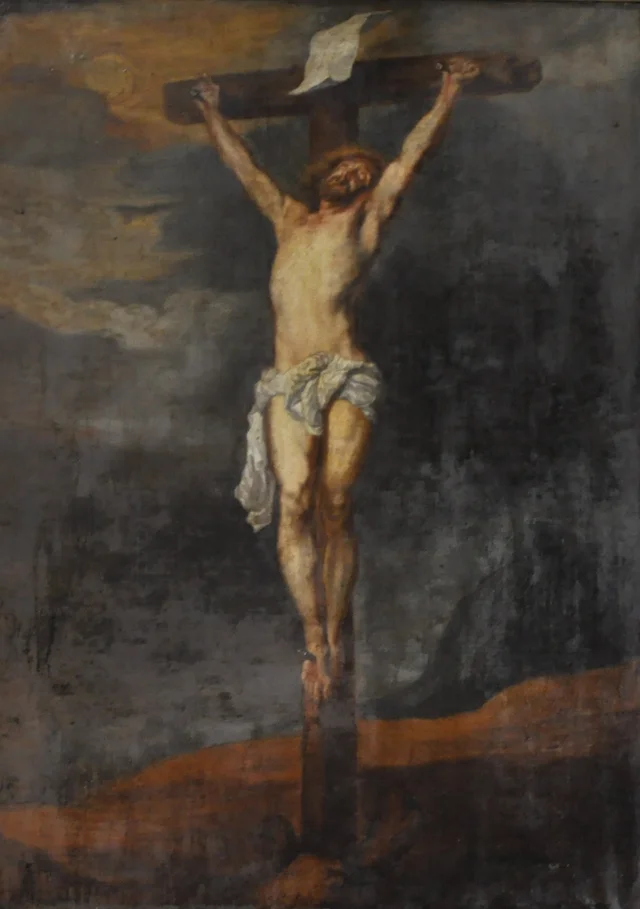
Paintings by the Bruges masters Gerard David and Pieter Pourbus hang in the church too, along with a Crucifixion by Anthony van Dyck.