The story
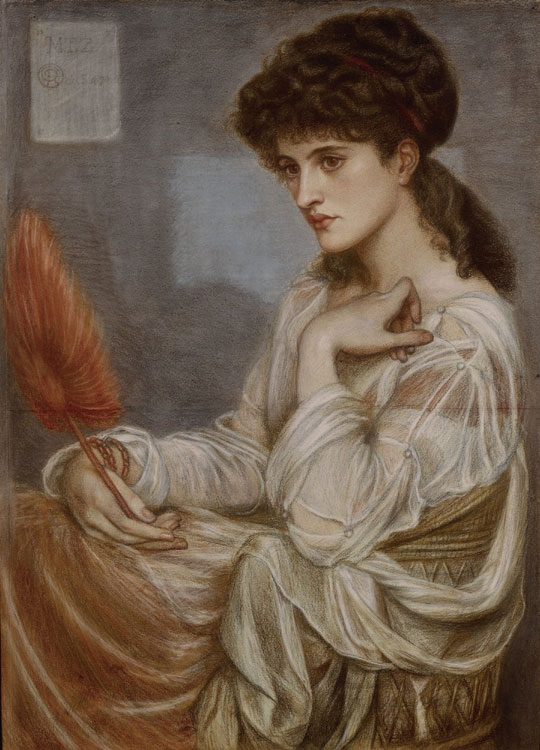
In 1870 two painters from the same London circle each made a portrait of Maria Zambaco, a sculptor and model from a wealthy Greek family settled in London. Dante Gabriel Rossetti drew her in coloured chalks, pale and pensive, holding a red feathered fan. Edward Burne-Jones, who had fallen in love with her and nearly ran away with her, painted her in gouache. Both portraits are now in Neuss, the Rhine city across the river from Düsseldorf.
They are here because of the art historian Irmgard Feldhaus, who from the 1950s bought Symbolist and Pre-Raphaelite art for the museum while most museums in the region were collecting classical modernism. The result is a collection unusual in Germany, strong in the French Nabis, with Vuillard's view of the Square des Batignolles in Paris, and in Belgian Symbolism, with James Ensor's crowded interior The Bourgeois Salon II.
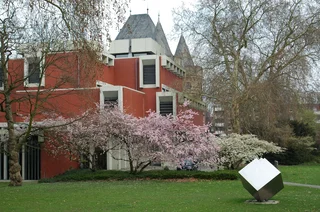
The museum began with the art and local history collection of Clemens Sels, given to the city together with a bequest from his widow Pauline that paid for a first building in 1912. That building was destroyed in the Second World War. Since 1975 the museum has stood in a modern building by the architect Harald Deilmann beside the Obertor, the medieval city gate, and its other rooms cover naive painting and finds from Novaesium, the Roman camp from which Neuss grew.