The story
Cambrai spent four years of the First World War under occupation, and its museum paid for it. More than 200 works disappeared, destroyed in bombardments or carried away in pillage, and the collection had to be rebuilt in the decades that followed. It lives in the Hôtel de Francqueville, a town mansion built around 1720, home to the museum since 1893 and enlarged and reopened in 1994.
The visit moves through three worlds. An archaeology department holds Merovingian finds from the region and a room devoted to the study of human bones from local excavations, a collection rare in France. A heritage section tells the story of the city through sculpture from its vanished cathedral. Since 2018 the fine arts galleries have been arranged around the human body, as model, as maker and as viewer, with sculpture by Rodin and Camille Claudel and abstract paintings by Auguste Herbin.
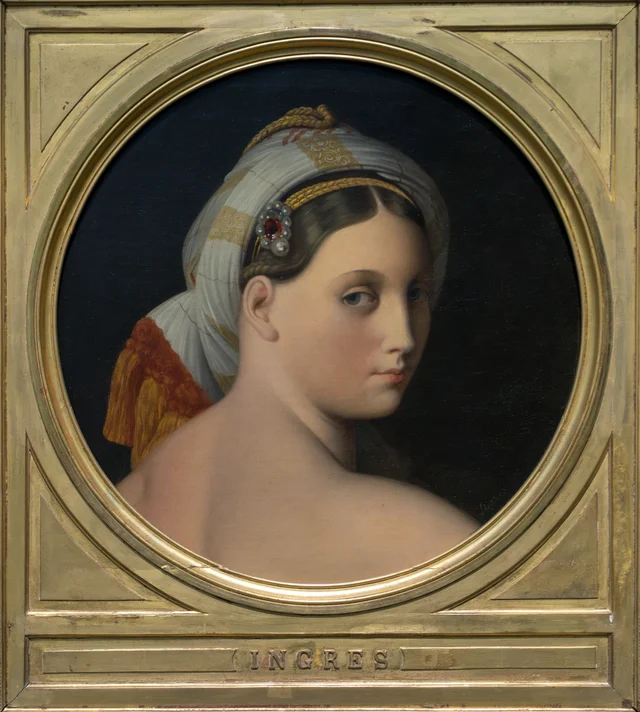
Among the pictures is a head from Ingres's Grande Odalisque, the painter's own repeat of the face from his famous nude, deposited here by the Louvre.