The story
The first things Santa Cruz de Tenerife set out to preserve were flags. In July 1797 a British squadron under Horatio Nelson attacked the port and was beaten off, and Nelson lost his right arm in the fighting. The flags taken from the attackers became the city's trophies, and in 1840 the town council ordered two cases built to keep them, the step regarded as the origin of its municipal museum.
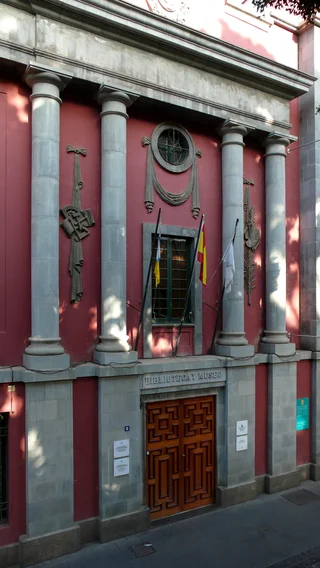
For decades the collection was shown in the council chamber of the town hall. Since the 1930s it has filled a Neoclassical building on the Plaza del Príncipe designed by the architect Eladio Laredo, with ten busts of notable figures from Tenerife on its façade, among them the composer Teobaldo Power and the playwright Ángel Guimerá.
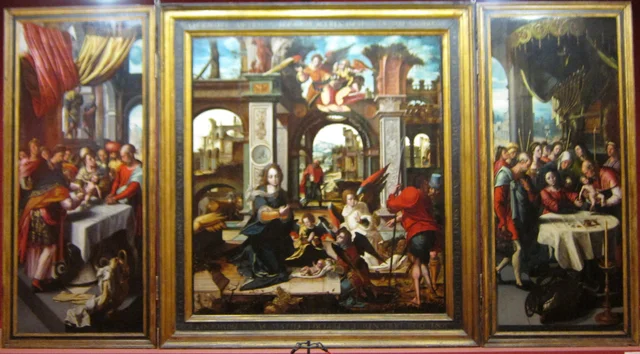
Inside, fourteen rooms run from the 16th century to the 20th. The oldest highlight is the Triptych of Nava and Grimón by Pieter Coecke van Aelst, the Antwerp painter, named after a noble family of Tenerife. Nearby are a Saint Andrew attributed to José de Ribera and a portrait of Queen Isabella II by Federico de Madrazo, and the island's own painters are well represented, from Cristóbal Hernández de Quintana and Juan de Miranda, active in the 17th and 18th centuries, to the landscapist Valentín Sanz.