The story
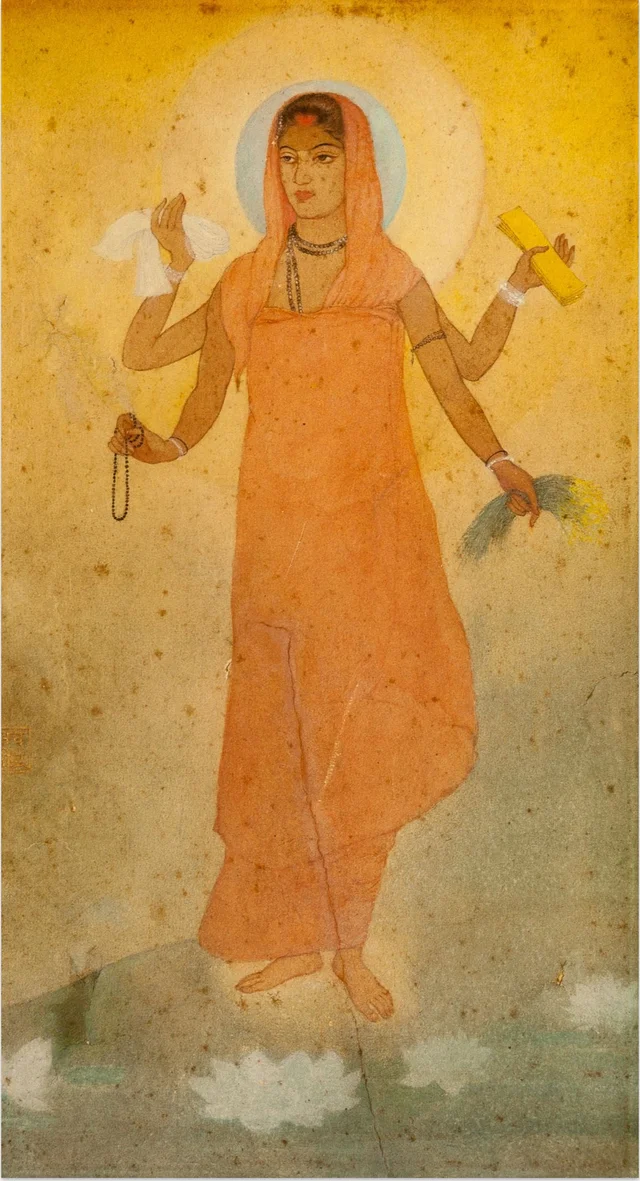
Among the smallest pictures in Kolkata's Victoria Memorial Hall is one of its most charged. Bharat Mata, Mother India, is a watercolour painted in 1905 by Abanindranath Tagore, smaller than a sheet of writing paper. A saffron-robed woman with four arms holds a book, sheaves of rice, a white cloth and a prayer garland. Tagore first called her Mother Bengal, and the image was taken up by the Swadeshi movement, the campaign to boycott British goods. That it now belongs to a monument built for Queen Victoria is part of the building's own story.
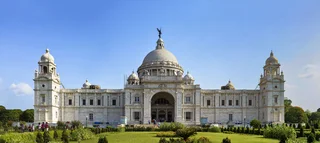
The memorial was the idea of Lord Curzon, the viceroy of India, after the Queen died in January 1901. Designed by the architect William Emerson and faced in white marble from Makrana in Rajasthan, it was begun in 1906 and opened in 1921, in gardens on the Maidan, the great open park at the centre of the city.
The galleries inside tell the history of Calcutta and of British rule in India. The collection is especially rich in paintings and prints by Thomas and William Daniell, the uncle and nephew who travelled across India in the late 1700s. There are portraits by Johan Zoffany and by Joshua Reynolds, including Reynolds's portrait of John Zephaniah Holwell, the official who wrote the best-known account of the Black Hole of Calcutta in 1756.