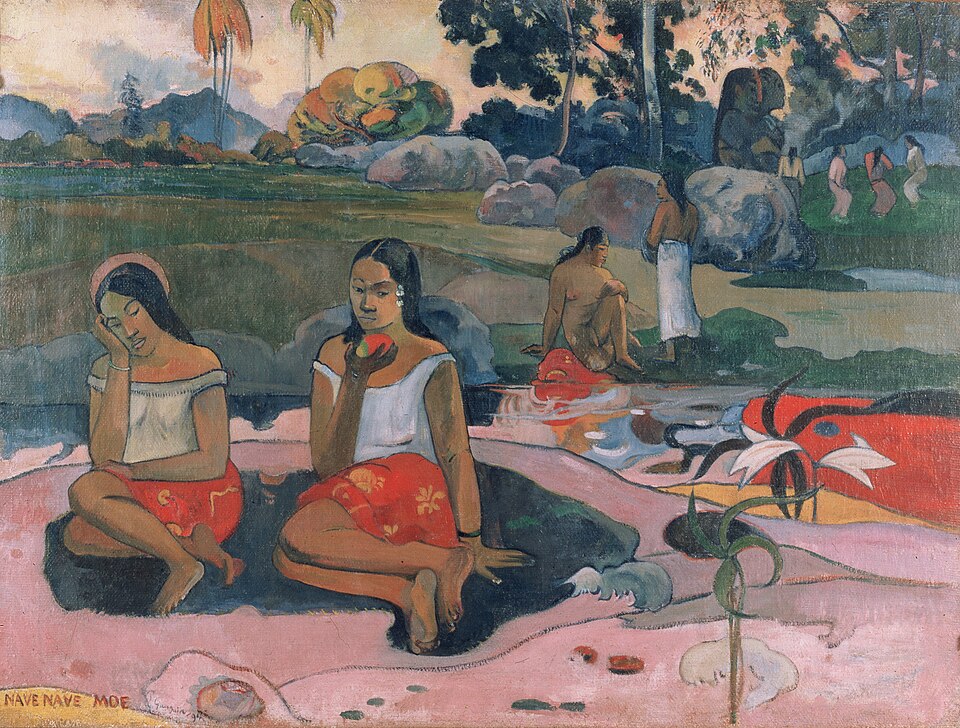
Paul Gauguin, Sacred Spring: Sweet Dreams (Nave nave moe), 1894. Wikimedia Commons. · PD
Fuente sagrada: dulces sueños (Nave nave moe)
Ficha
La historia
Gauguin lo pintó en París a comienzos de 1894, no en los trópicos. Había vuelto de Tahití dos años antes, sin dinero, y vivía en un estudio cubierto con sus propios cuadros de las islas, trabajando aún de memoria. Así que la escena está recordada, no vista. Dos mujeres tahitianas se sientan junto a un estanque: una duerme con un tenue halo sobre la cabeza; la otra sostiene una fruta como una Eva a punto de morder. Gauguin introdujo signos cristianos en un mundo polinesio que nunca los usó, y el halo y el lirio valen por la pureza. Incluso rotuló sobre la tela las palabras tahitianas Nave nave moe, que él glosaba como un deleite dulce y somnoliento. El coleccionista moscovita Iván Morozov lo compró en 1907, y en 1931 llegó al Hermitage.