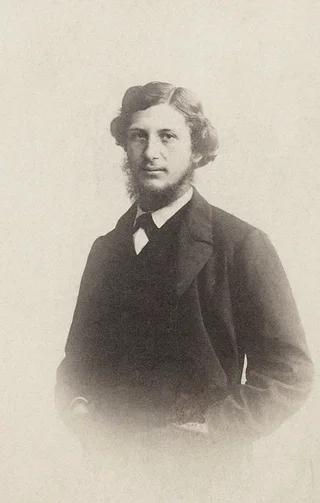
Frédéric Bazille
1841–1870 · France · Impressionnisme
L'histoire
À l'été 1870, la France entra en guerre contre la Prusse, et Frédéric Bazille, âgé de 28 ans et déjà l'une des présences les plus stables parmi les jeunes peintres réunis autour de Claude Monet, s'engagea dans un régiment d'infanterie de zouaves quelques semaines après la déclaration.
Il avait passé la décennie précédente à rendre discrètement cette génération possible. Fils d'une riche famille de vignerons de Montpellier, formé d'abord à la médecine qu'il abandonna pour la peinture, Bazille partagea son atelier parisien avec Monet et Pierre-Auguste Renoir, acheta leurs toiles quand presque personne ne le faisait, et paya plus d'une fois le loyer de Monet. Mesurant bien plus d'un mètre quatre-vingts, ce qui était rare pour l'époque, il servait aussi de modèle dans les tableaux de ses amis chaque fois qu'il leur fallait une haute silhouette dans une foule. Son œuvre la plus ambitieuse, « Réunion de famille », un portrait de groupe de ses proches rassemblés sur une terrasse, fut montrée au Salon de Paris de 1868 et reste son tableau le plus connu.
Le 28 novembre 1870, à la bataille de Beaune-la-Rolande, son officier supérieur fut blessé et Bazille prit lui-même la tête de l'assaut. Il fut touché par deux balles et mourut sur le terrain. Aucune des huit expositions impressionnistes qui suivirent dans les années d'après n'inclut son travail.
Œuvres
15 œuvres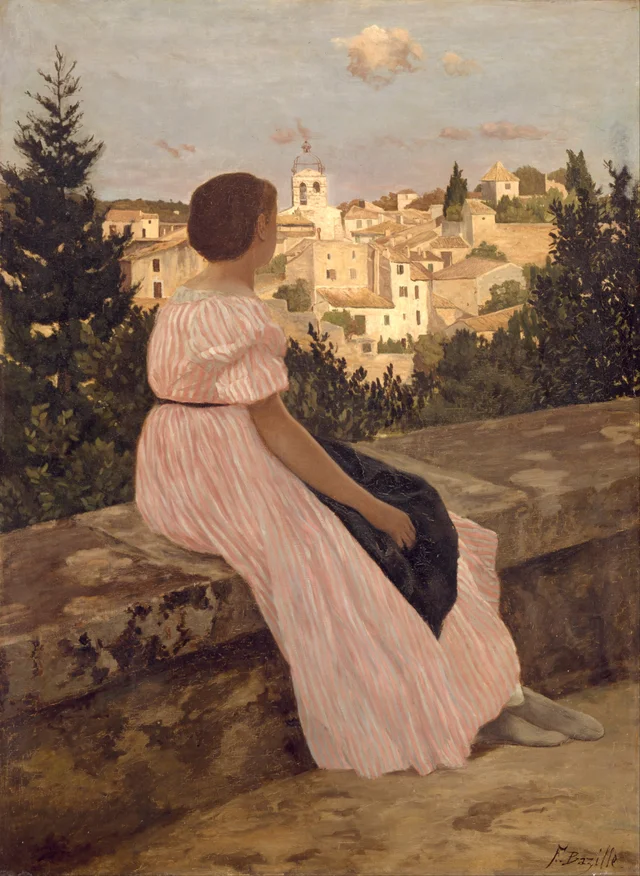 La Robe roseFrédéric Bazille, 1864
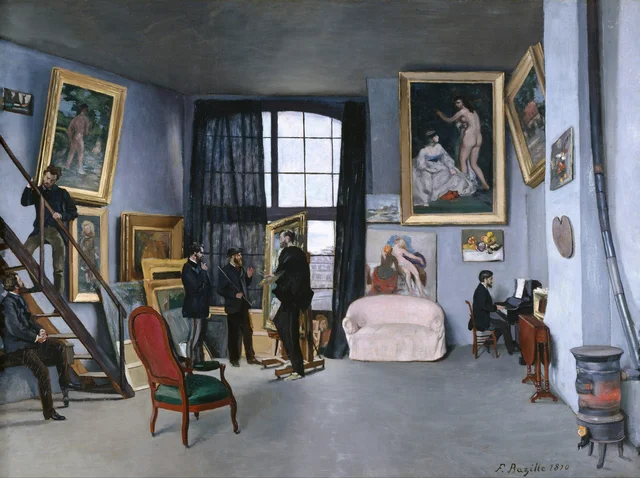 L'Atelier de BazilleFrédéric Bazille, 1870
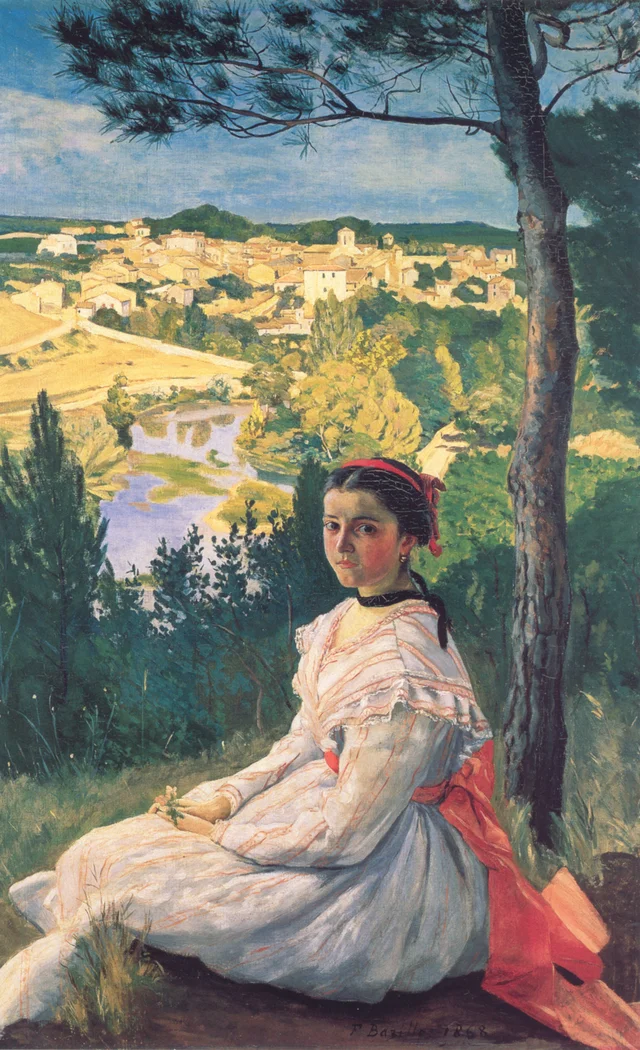 Vue de villageFrédéric Bazille, 1868
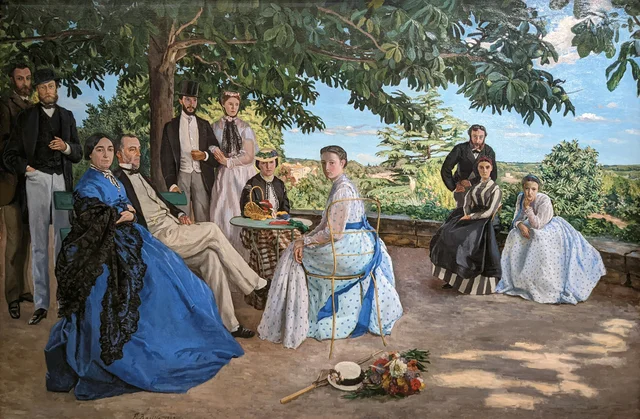 Réunion de familleFrédéric Bazille, 1867
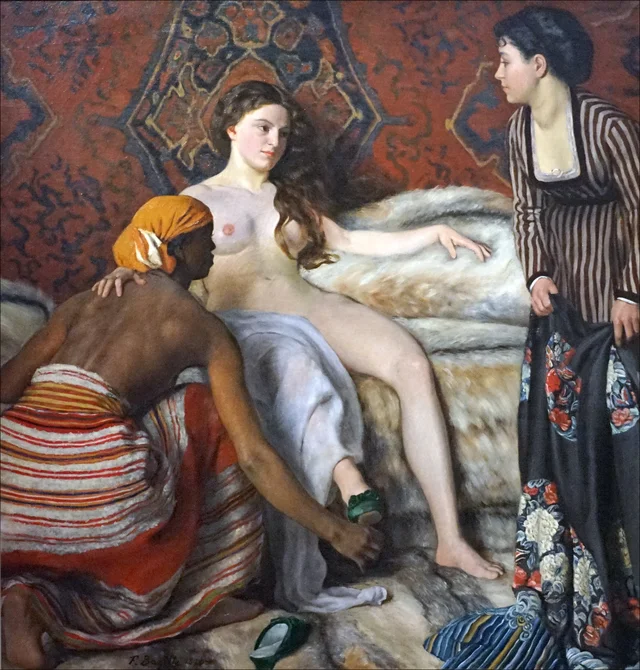 La ToiletteFrédéric Bazille, 1870
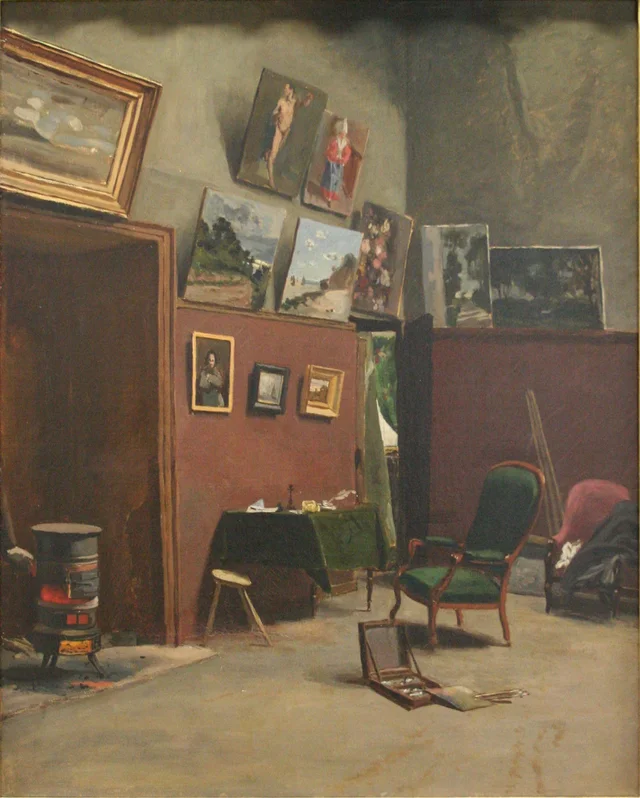 L’Atelier de la rue de FurstembergFrédéric Bazille, 1865
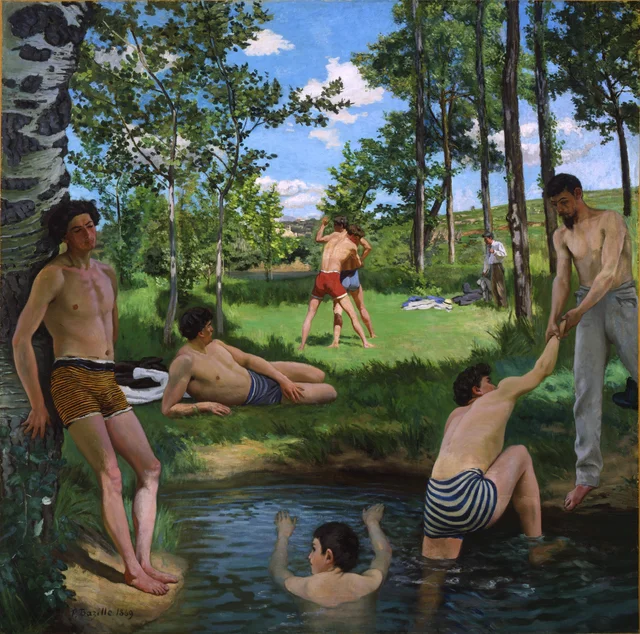 Scène d'étéFrédéric Bazille, 1869
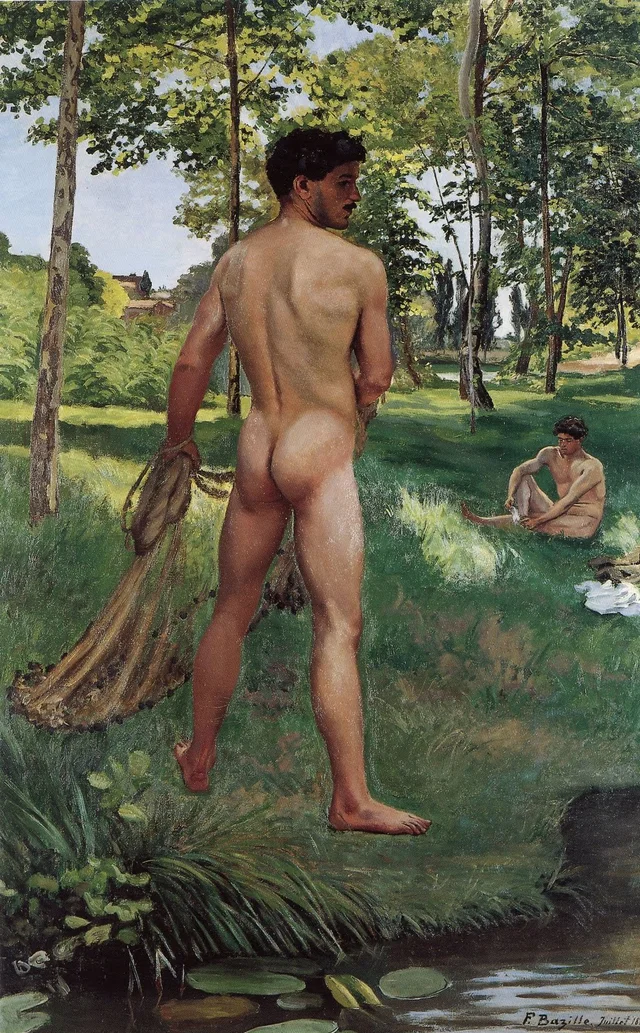 Pêcheur au filetFrédéric Bazille, 1868
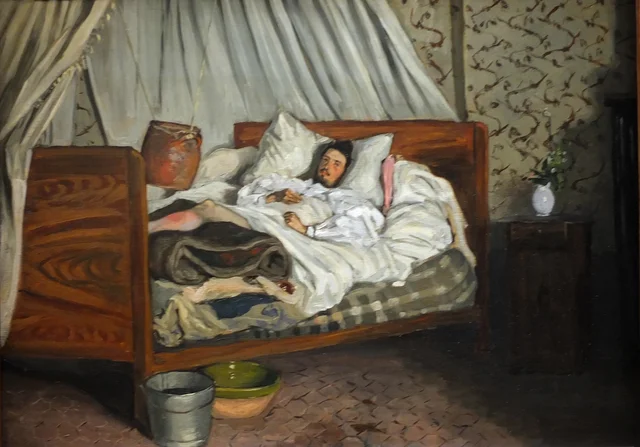 L'Ambulance improviséeFrédéric Bazille, 1865
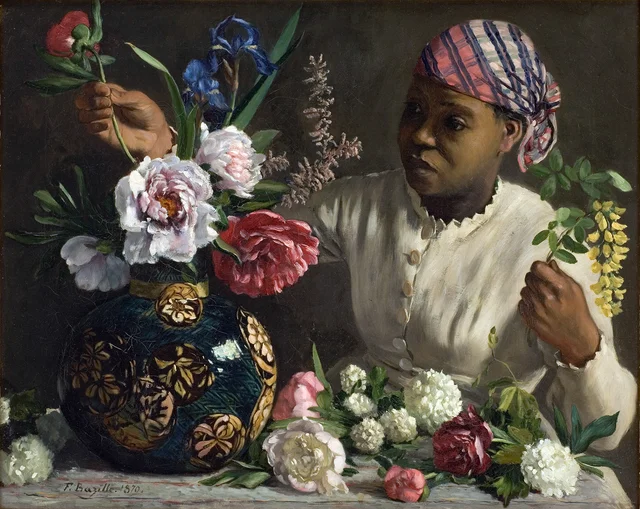 Femme noire aux pivoinesFrédéric Bazille, 1870
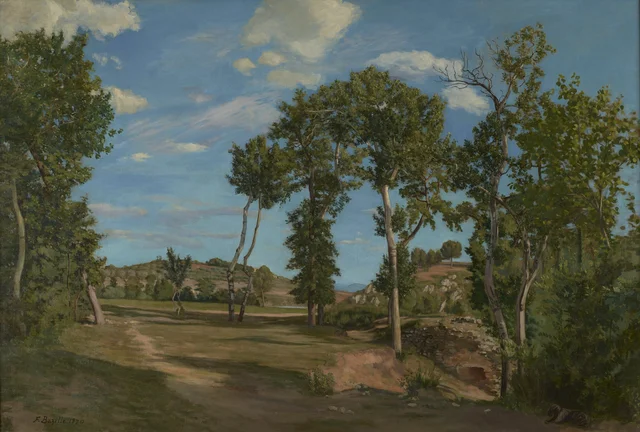 Paysage au bord du LezFrédéric Bazille, 1870
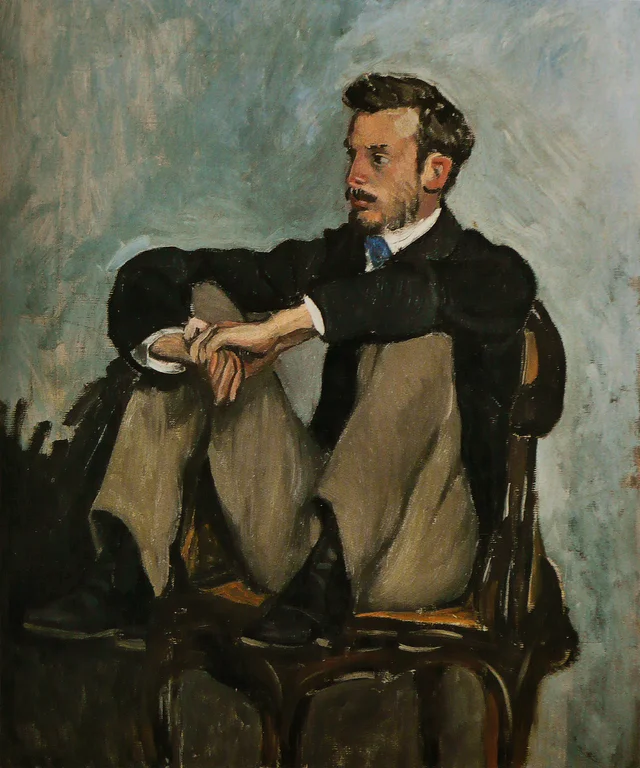 Auguste RenoirFrédéric Bazille, 1867
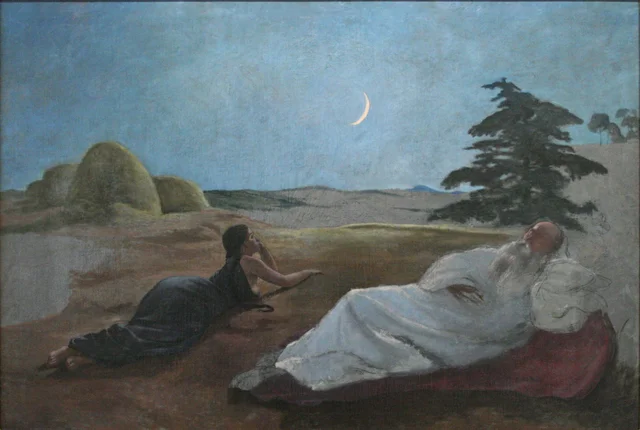 Ruth et BoozFrédéric Bazille, 1870
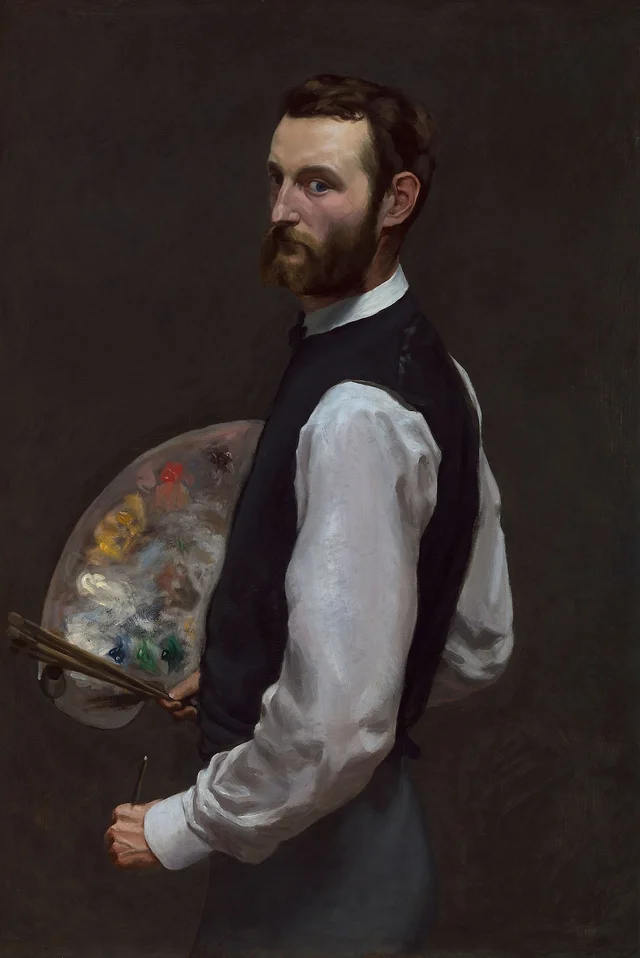 AutoportraitFrédéric Bazille, 1865
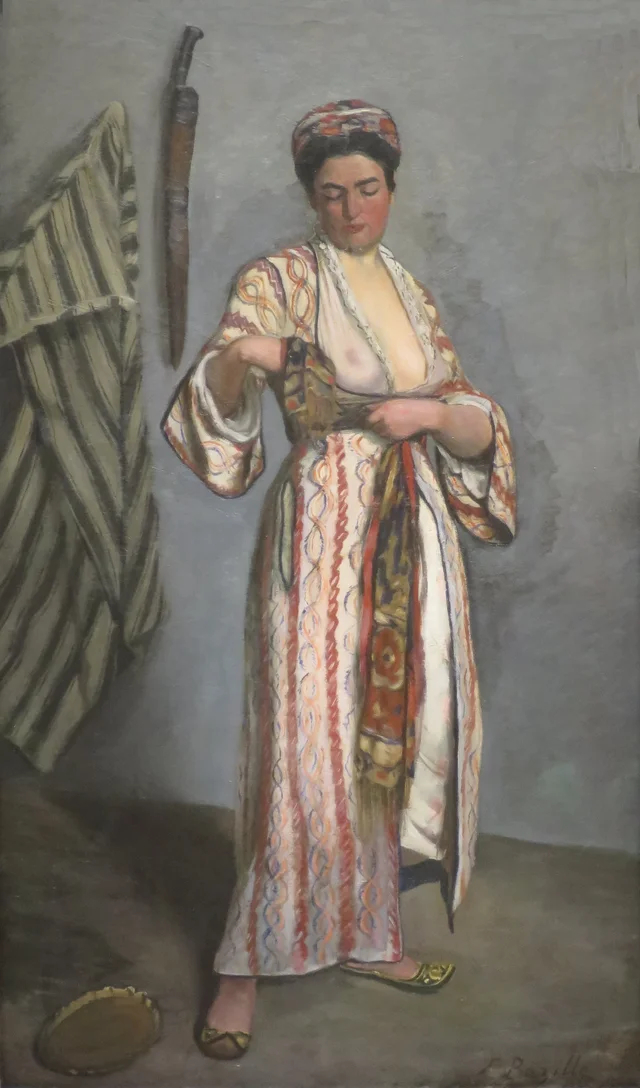 Femme en costume mauresqueFrédéric Bazille, 1869