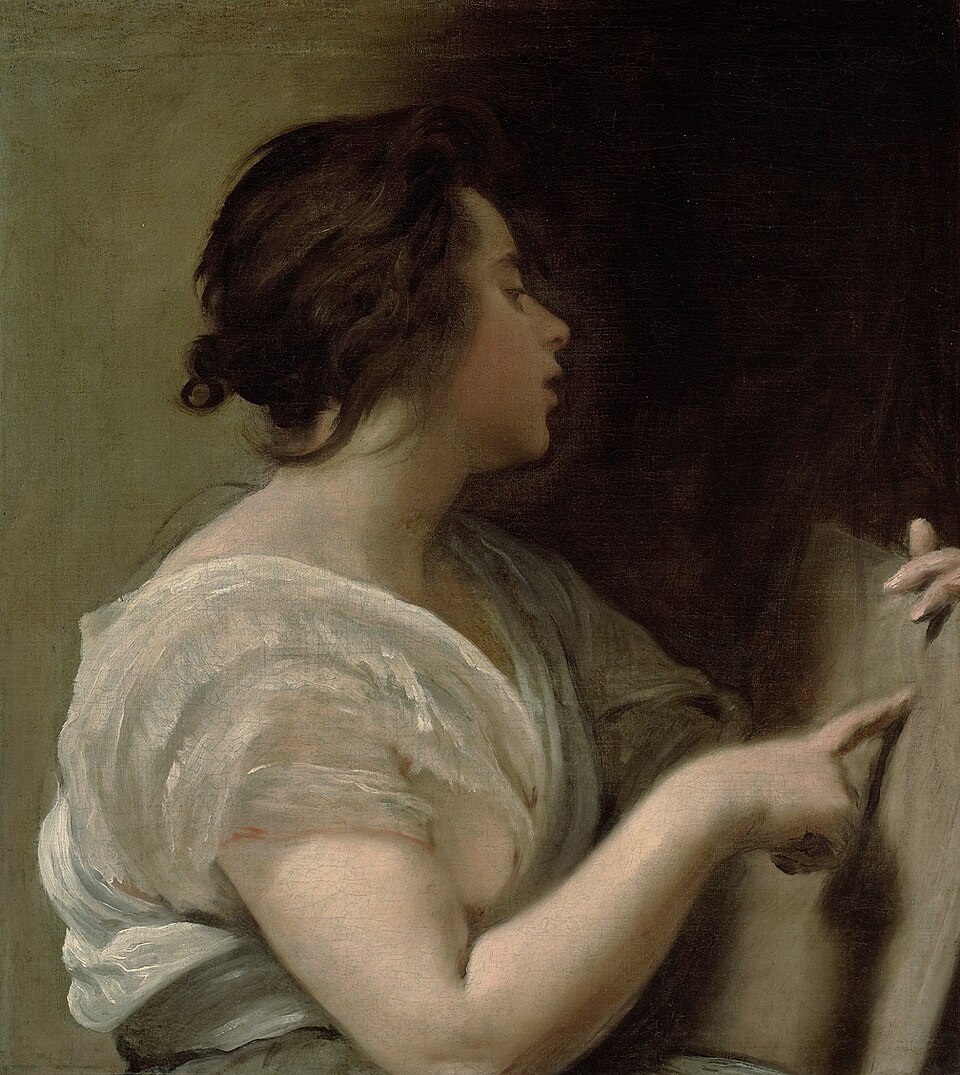
Diego Velázquez, Female Figure (Sibyl with Tabula Rasa), 1648. Wikimedia Commons. · PD
Figure féminine (Sibylle à la tabula rasa)
Détails
L'histoire
C'est l'une des énigmes du Vélasquez de la maturité, et nul ne sait qui est cette femme. On l'appelle d'ordinaire une sibylle, une prophétesse antique, parce qu'elle rappelle une autre figure que le peintre avait faite des années plus tôt, une tablette à la main. Ici elle se tient de profil, un doigt posé sur une ardoise où rien n'est écrit, une tabula rasa. Les cheveux dénoués, quelques mèches sur le cou nu, les lèvres à peine entrouvertes, comme sur le point de parler. La petite toile est restée sans doute inachevée, et c'est peut-être pour cela qu'elle paraît si vivante, brossée de blancs nacrés, d'une touche libre que Vélasquez avait apprise devant Titien en Italie. Il l'a peinte vers 1648, alors qu'il était peintre du roi Philippe IV à Madrid.