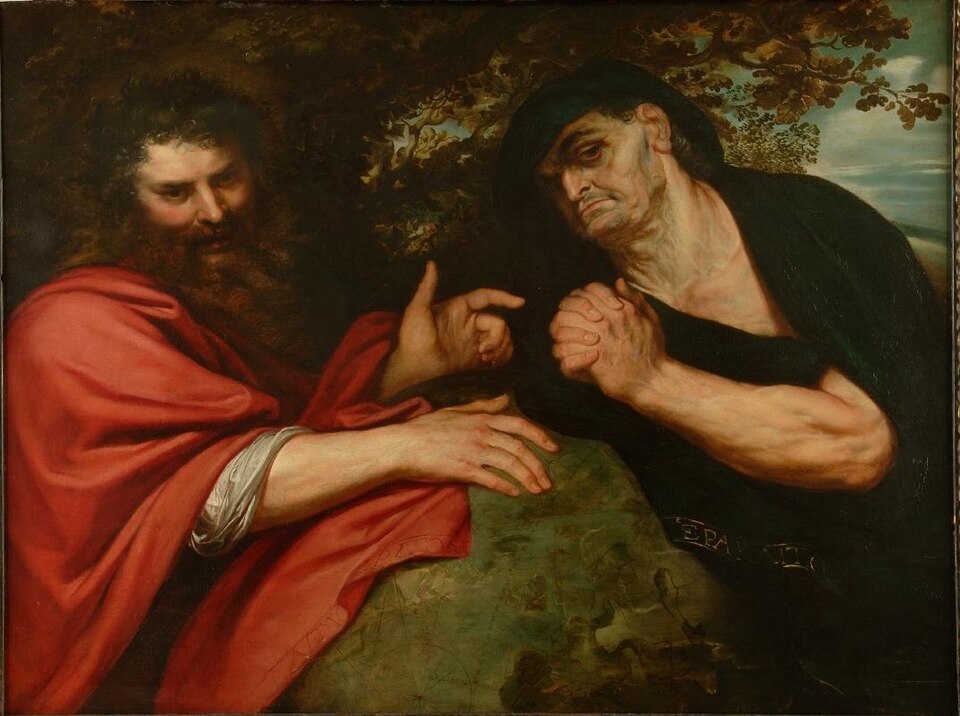
Peter Paul Rubens, Heraclitus and Democritus, 1603. Wikimedia Commons. · PD
Héraclite et Démocrite
Détails
L'histoire
En 1603, un Rubens de vingt-six ans, encore presque inconnu, se rendit en Espagne au service du duc de Mantoue: il convoyait des tableaux et des présents pour Philippe III et son favori, le duc de Lerma. Sur la route de l'intérieur, des semaines de pluie abîmèrent plusieurs de ces toiles, et le jeune peintre dut les refaire sur place, à Valladolid. Ce tableau est l'un de ces remplacements. Il oppose deux philosophes de l'Antiquité: Démocrite, qui rit des folies du monde sous son manteau rouge, et Héraclite, qui pleure, vêtu de sombre. Entre eux, un globe terrestre où l'on reconnaît le nord de l'Europe. L'œuvre est restée à Valladolid, aujourd'hui au Musée national de la sculpture.