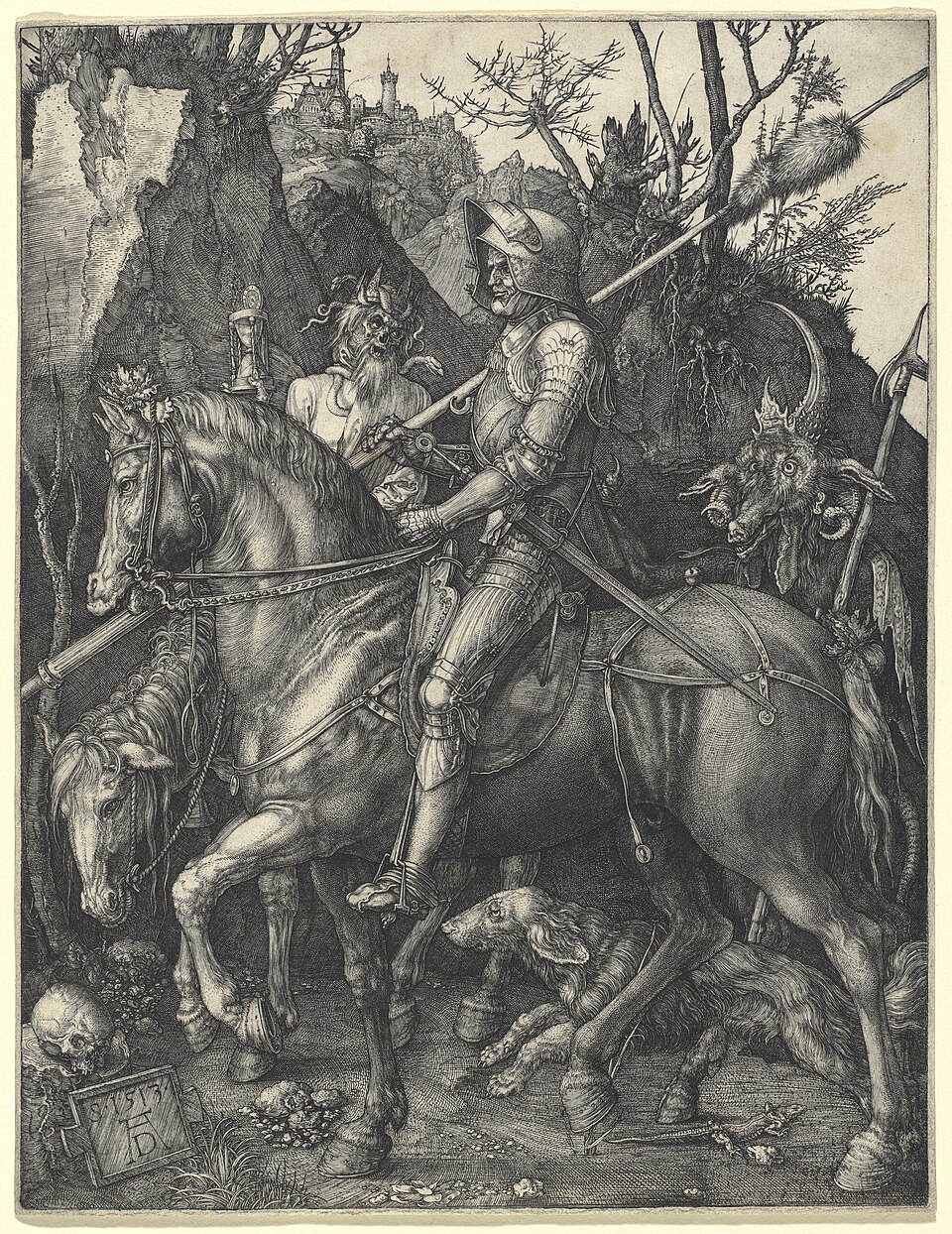
Albrecht Dürer, Knight, Death, and the Devil, 1513. Wikimedia Commons. · PD
Le Chevalier, la Mort et le Diable
Détails
L'histoire
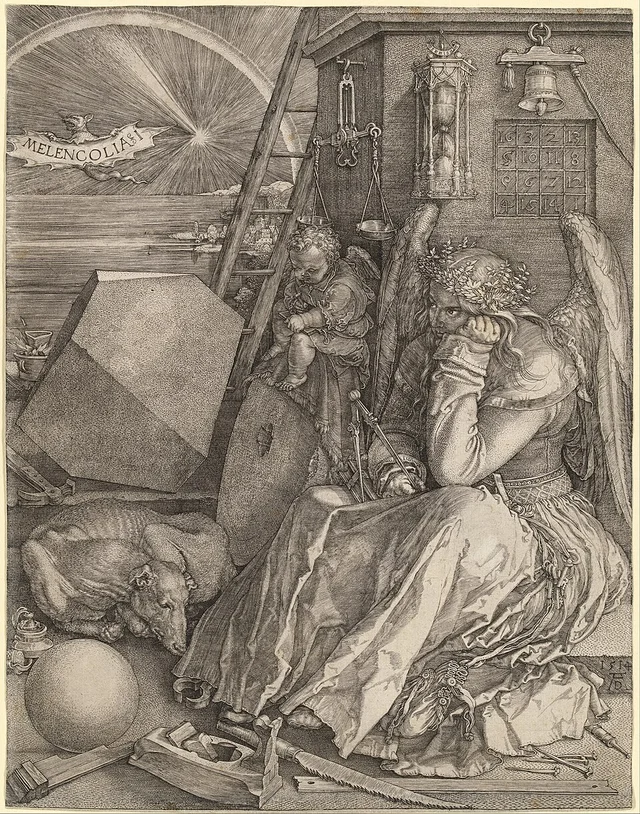
En 1513, Dürer grave sur cuivre ce cavalier en armure qui avance dans un défilé rocheux sans un regard pour ce qui l'entoure. À côté de lui, la Mort, couronnée de serpents, brandit un sablier pour lui rappeler que son temps s'écoule. Derrière, un diable à groin de porc le suit de près. Le chevalier ne cède pas, droit sur sa monture, son chien trottant à ses pieds. On y voit d'ordinaire l'image du chrétien ferme dans sa foi, qui traverse les tentations et la peur sans dévier de sa route. C'est l'une des trois grandes gravures, dites estampes maîtresses, que Dürer réalisa coup sur coup vers 1513 et 1514.