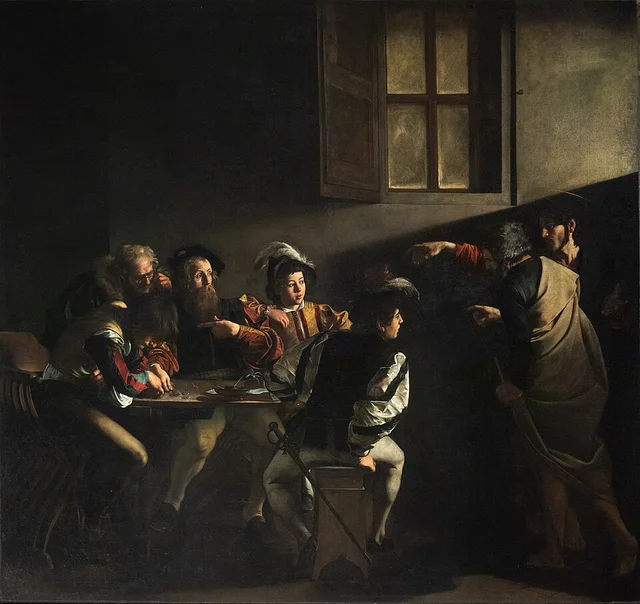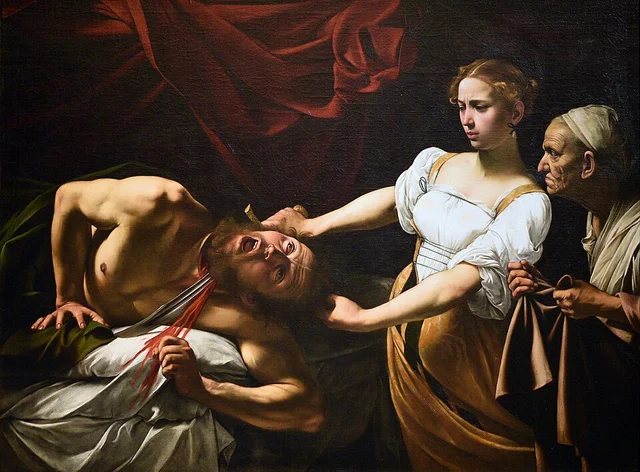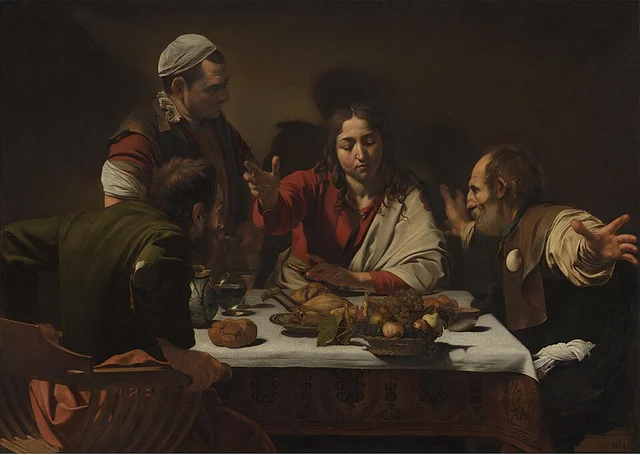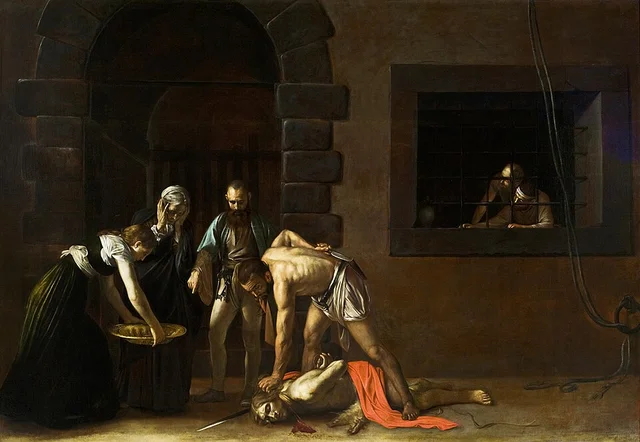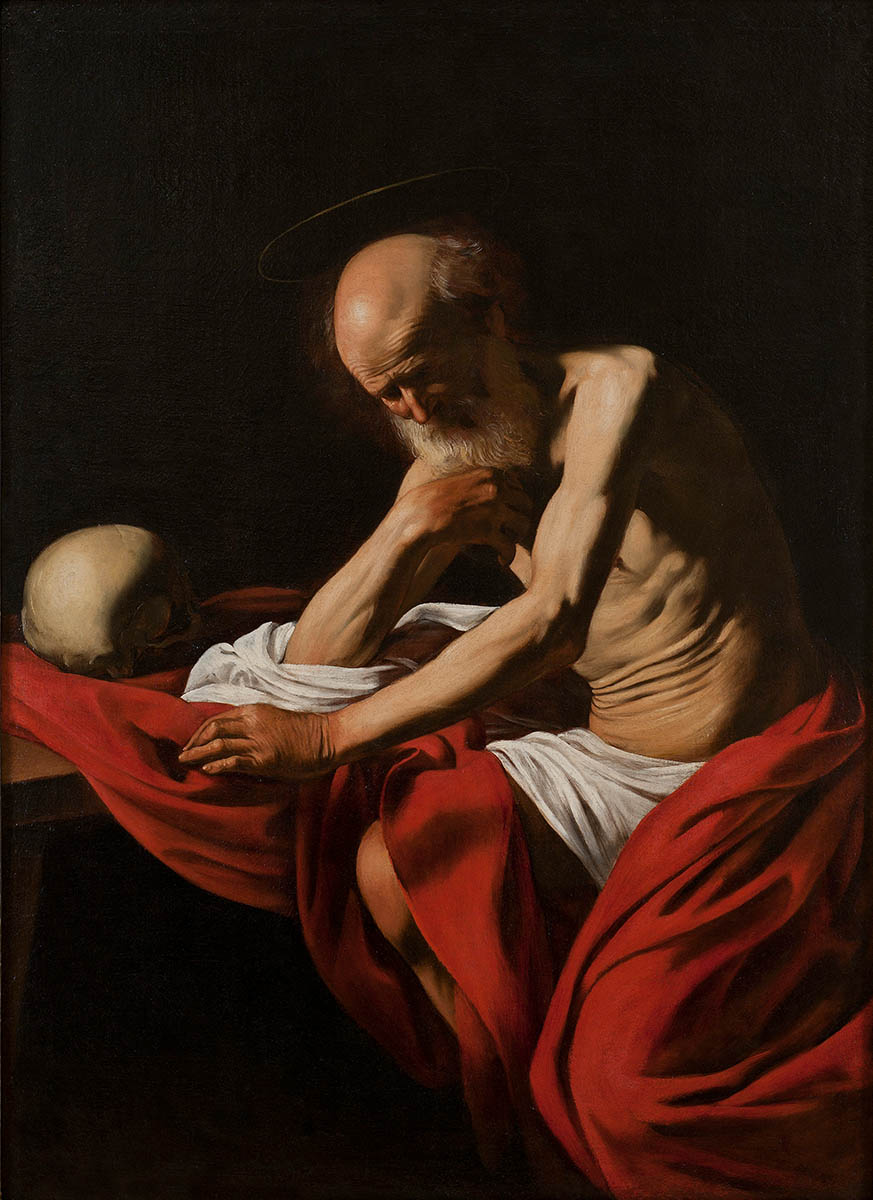
Caravaggio, Saint Jerome penitent, 1605. Wikimedia Commons. · PD
Saint Jérôme pénitent
Détails
L'histoire
Vers 1605, à Rome, Caravage peint plusieurs fois saint Jérôme, le vieux traducteur de la Bible retiré au désert. Il en fait un homme âgé, le crâne dégarni, absorbé dans ses livres à la lueur crue qui tombe d'un côté. Le crâne posé près de lui rappelle la mort et la pénitence, thème que le peintre traite sans décor ni ornement. Ces années romaines sont les plus recherchées de sa carrière: cardinaux et collectionneurs se disputent ses toiles, quelques mois avant que sa vie ne bascule dans la fuite. Le corps sec et la peau tannée du saint disent l'ascèse plus qu'aucun attribut.