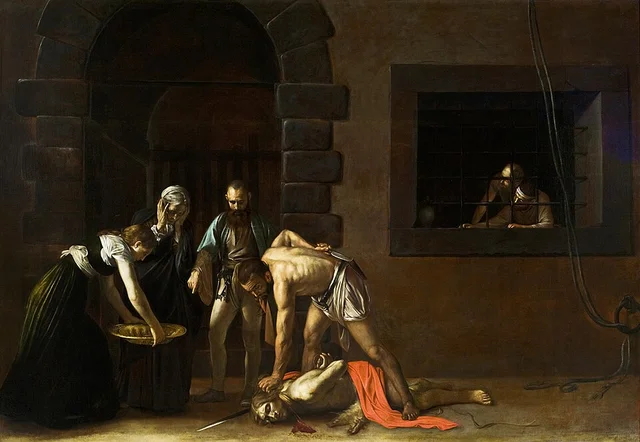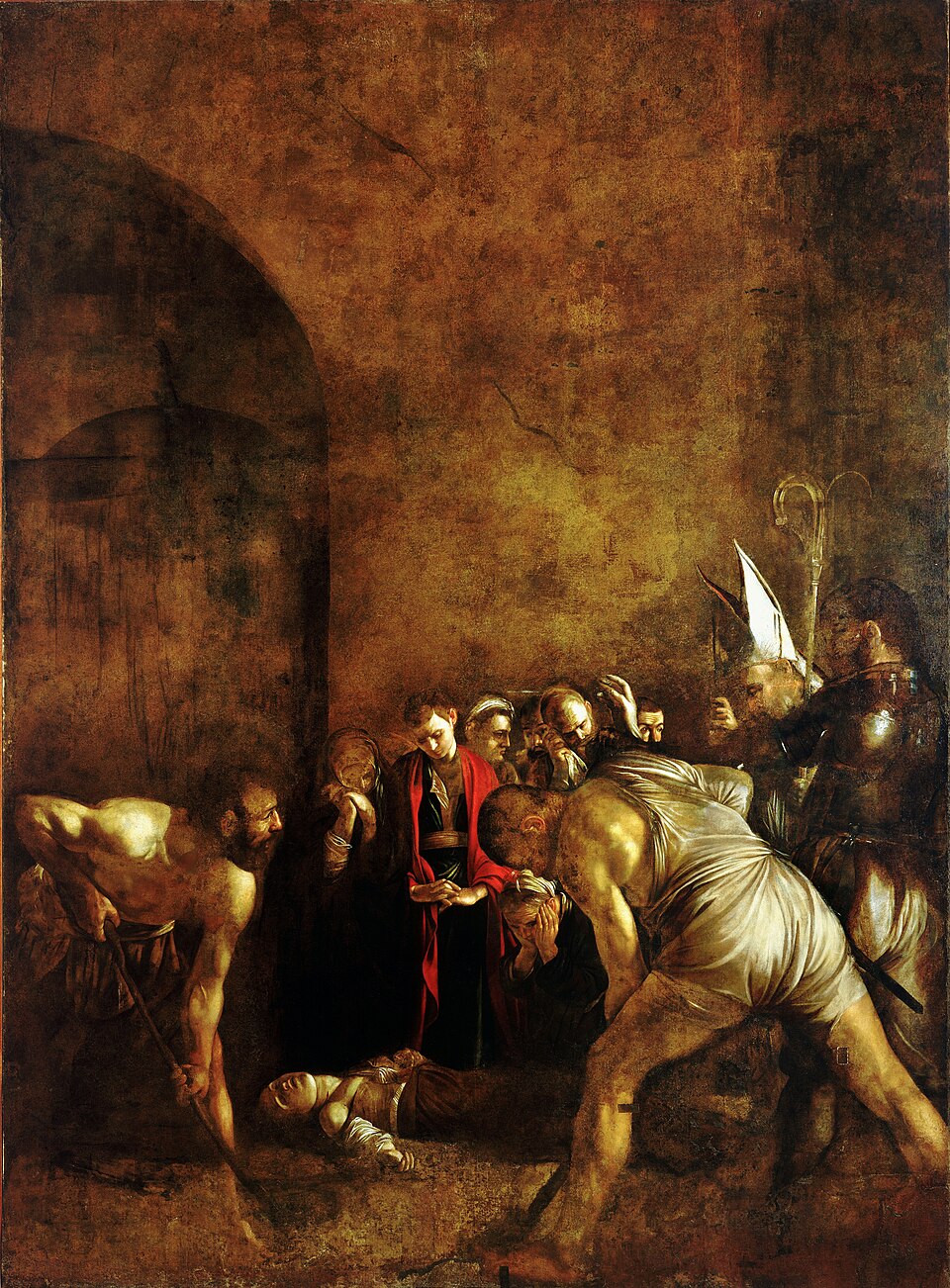
Caravaggio, The Burial of Saint Lucy, 1608. Wikimedia Commons. · PD
L'Enterrement de sainte Lucie
Détails
L'histoire
À l'automne 1608, Caravage débarque en Sicile après s'être évadé de la prison des chevaliers de Malte, où on l'avait enfermé. À Syracuse, on lui commande ce retable pour l'église Santa Lucia, sur le lieu même où la sainte patronne de la ville aurait été martyrisée. Il peint une scène presque vide: le corps de Lucie étendu à terre, une foule serrée au fond, et deux immenses fossoyeurs au premier plan qui creusent déjà la tombe. Les figures sont écrasées sous un mur de pénombre qui occupe la moitié haute de la toile. Fugitif et malade, le peintre travaille vite. L'œuvre reste aujourd'hui à Syracuse.