Gustave Courbet · CC0
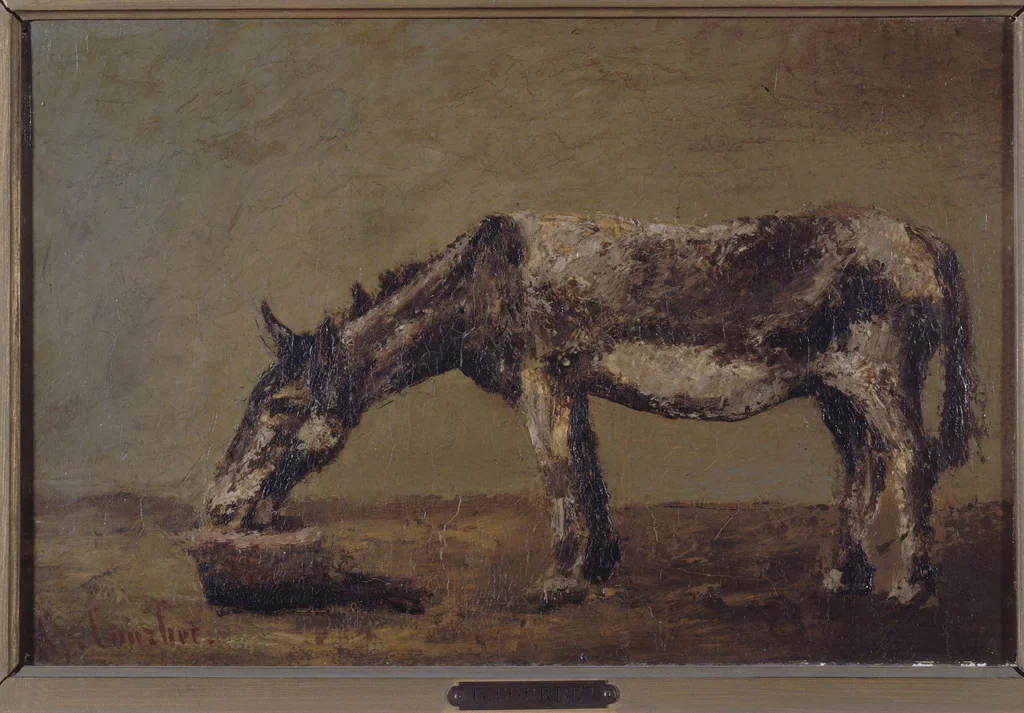
L'âne
Détails
L'histoire
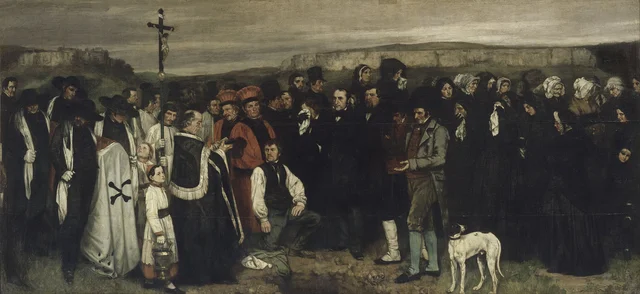
Courbet built his reputation by insisting that ordinary, unglamorous things deserved to be painted at full size and full seriousness, peasants, stone-breakers, a village funeral. A donkey sits easily inside that idea. By 1862 he was an established and much-argued-over figure, the leader of French Realism, and he painted the animal plainly, without turning it into a joke or a symbol. There is not much more to say than what is there, a single patient beast, rendered carefully by a man who thought that was reason enough. The painting reached the Petit Palais in Paris in 1913 as part of a large gift of Courbet's work from the critic Theodore Duret, one of the first writers to take the new painting seriously.