絵画の寓意としての自画像

Artemisia Gentileschi · PD

絵画の寓意としての自画像


作品情報

制作年
1638
技法
油彩、キャンバス
種類
絵画
寸法
98.6 × 75.2 cm

ストーリー

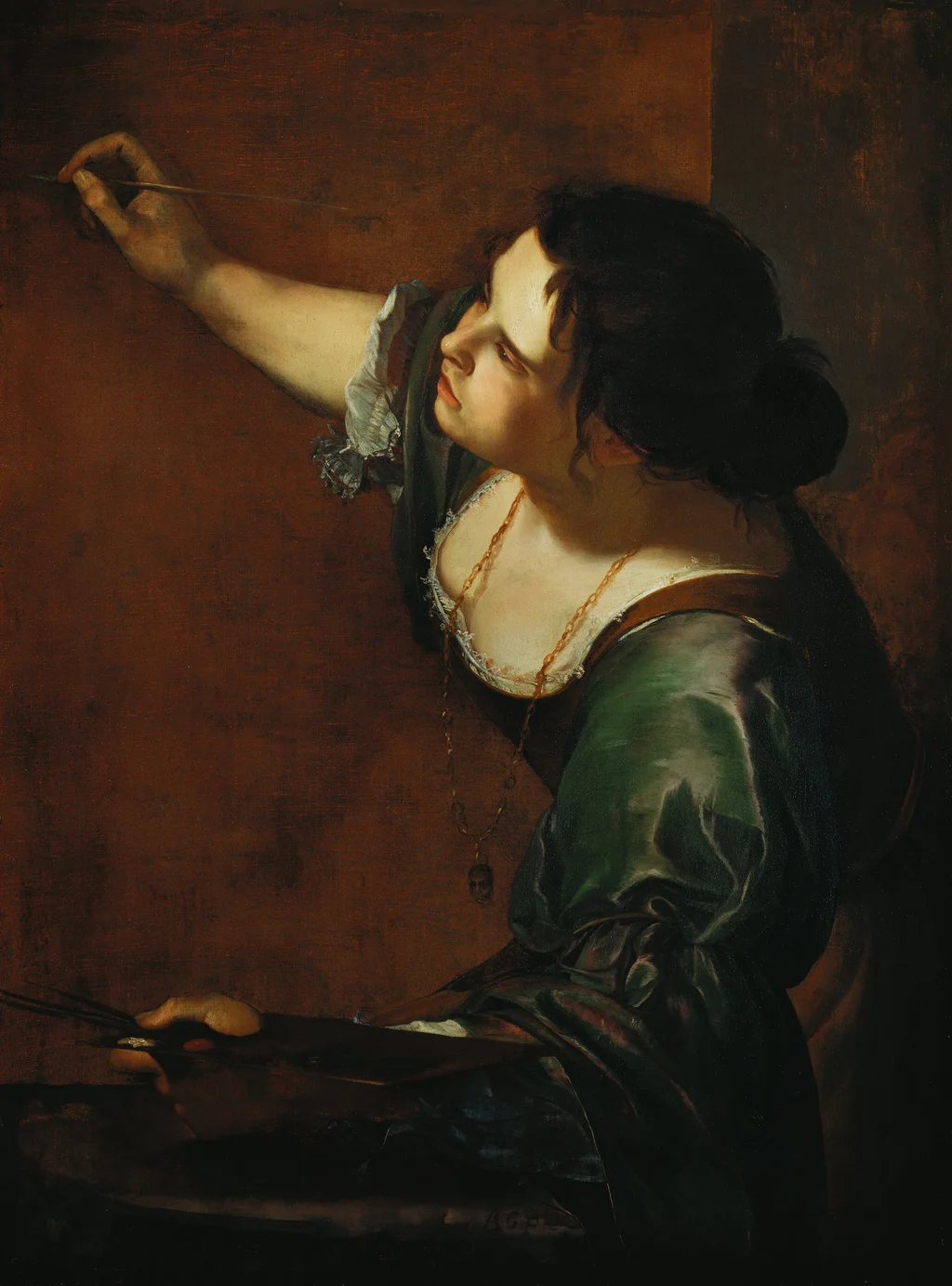
Artemisia Gentileschi painted this in London around 1638, invited to the court of Charles I, and she does something in it that none of her male rivals could. In Italian art the figure of Painting was always shown as a woman, with a gold chain, a wild lock of hair, a brush and palette, and lips left unpainted because painting is mute. A man could depict that woman. Only a woman painter could become her. So Artemisia paints herself as Painting itself, leaning into the canvas with her sleeves pushed up over strong forearms, brush lifted, caught in the act of work rather than posing for us. The light falls hard from the upper left onto her green silk and the muscle of her arm. Charles I owned it, and after the upheavals of the English civil war it returned to the royal collection, where it still hangs.

絵画の寓意としての自画像 — アルテミジア・ジェンティレスキ — MuseScope