Andrea Mantegna · PD
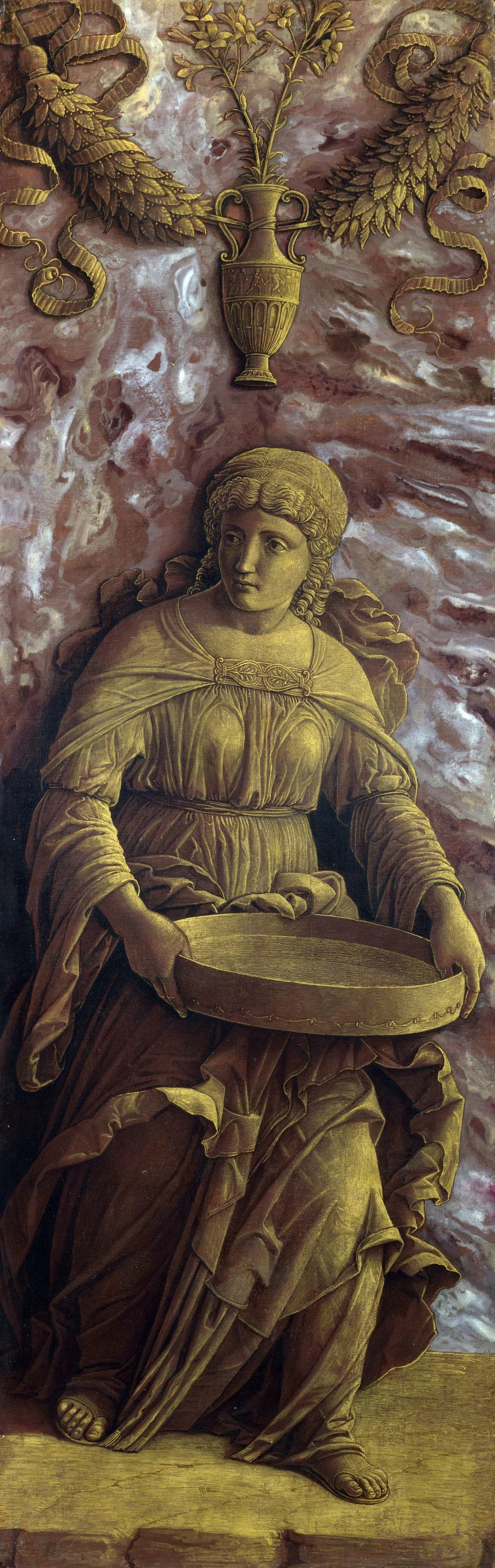
체를 든 베스타 여사제 투키아
상세 정보
이야기
Mantegna painted this to fool you. From a few steps back the figure of Tuccia reads as a small bronze relief set against veined marble. That is exactly the illusion he wanted. In the 1490s, deep in the study of ancient Rome, Mantegna set out to prove that paint could imitate carved bronze so well it rivaled the sculptor's craft, and pictures like this were called bronzi finti, feigned bronzes. Tuccia was a Vestal Virgin, a priestess sworn to chastity, and when that vow was doubted she carried water from the river Tiber to the temple in a sieve without spilling a drop, taking the impossible as proof of her innocence. She holds that sieve here. The panel may have been made for the private study of Isabella d'Este, the Marchioness of Mantua, who prized exactly this kind of learned classical conceit.