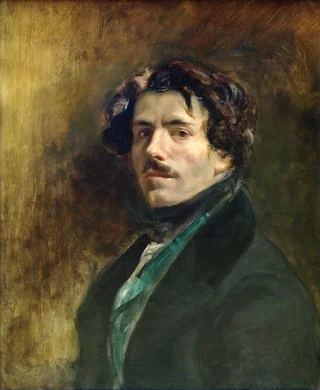
Eugène Delacroix
1798–1863 · França · Romantismo
A história
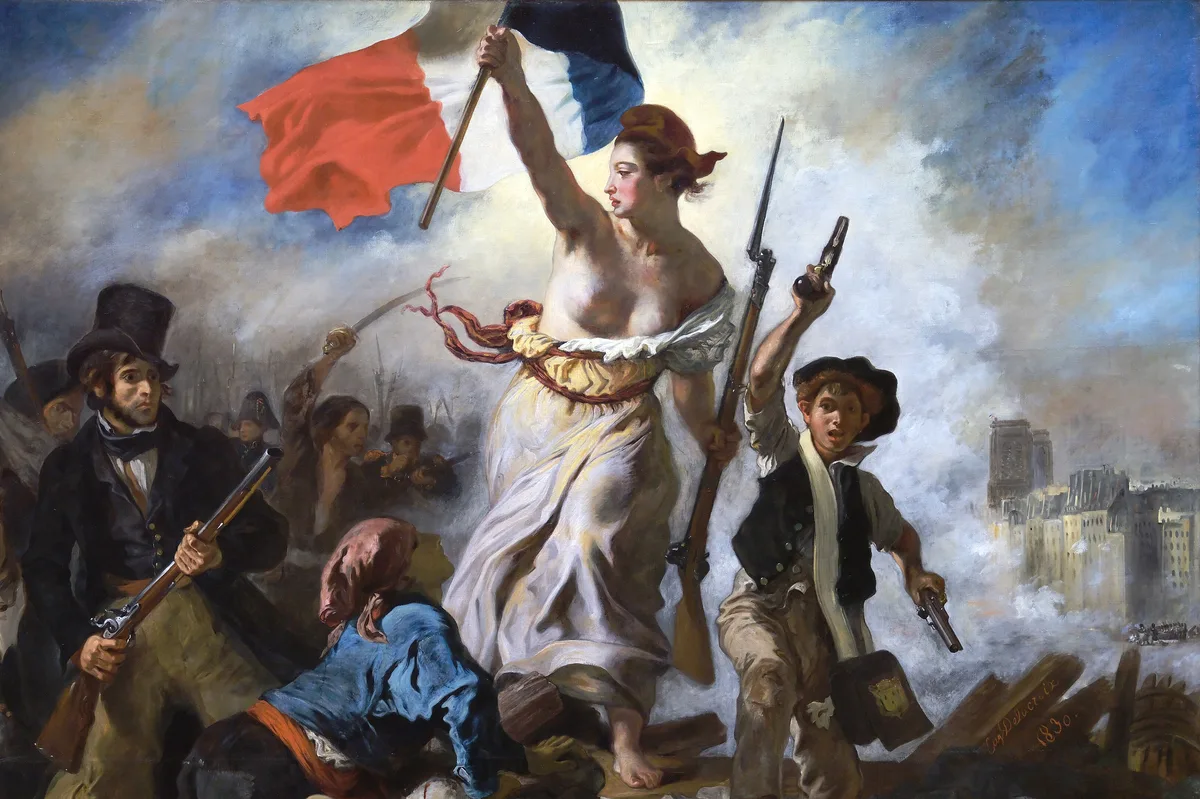
No final de julho de 1830, o povo de Paris passou três dias nas barricadas e expulsou seu rei, Carlos X. Eugène Delacroix, de 32 anos, assistiu de fora e sentiu que não havia feito sua parte, então a fez com um pincel. Naquele inverno, pintou uma mulher de seios nus avançando sobre os mortos, com a bandeira tricolor numa mão e um mosquete na outra, à frente de uma multidão de operários e garotos de rua em meio à fumaça dos tiros. A Liberdade Guiando o Povo transformou uma semana de combates reais nas ruas na imagem à qual a França ainda recorre sempre que se rebela.
Delacroix liderava a outra metade da pintura francesa, oposta à de Ingres — a metade que confiava mais na cor, no movimento e no sentimento do que no desenho limpo. Dois anos depois de A Liberdade, viveu a experiência que incendiou sua paleta. Em 1832, viajou a Marrocos com uma missão diplomática francesa, e a luz, as vestimentas, os cavalos e as cortes do norte da África o atingiram como uma revelação. Encheu cadernos de aquarelas rápidas e se apoiou nessa viagem de meio ano pelos 30 anos seguintes, dos quais saíram mais de 70 quadros.
Era romântico também em suas amizades, próximo do compositor Frédéric Chopin, a quem retratou ao piano, e da escritora George Sand. Por boa parte da vida, manteve um diário que ainda hoje é lido como uma das coisas mais perspicazes já escritas por um pintor sobre a pintura. Perto do fim, cobriu uma capela da igreja de Saint-Sulpice, em Paris, com murais — um deles um anjo lutando com Jacó entre árvores que ele havia estudado num bosque nos arredores da cidade —, terminando-os em 1861 e morrendo dois anos depois.
Mais artigos
Obras
139 obras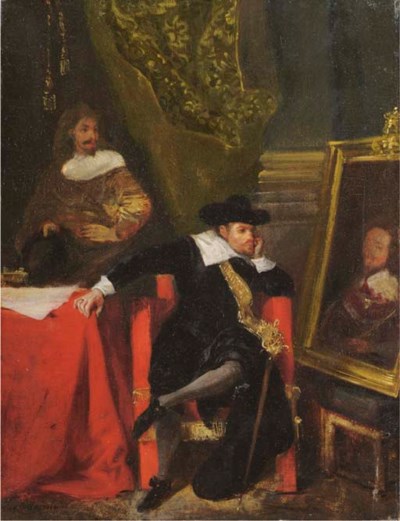 Cromwell no castelo de WindsorEugène Delacroix, 1828
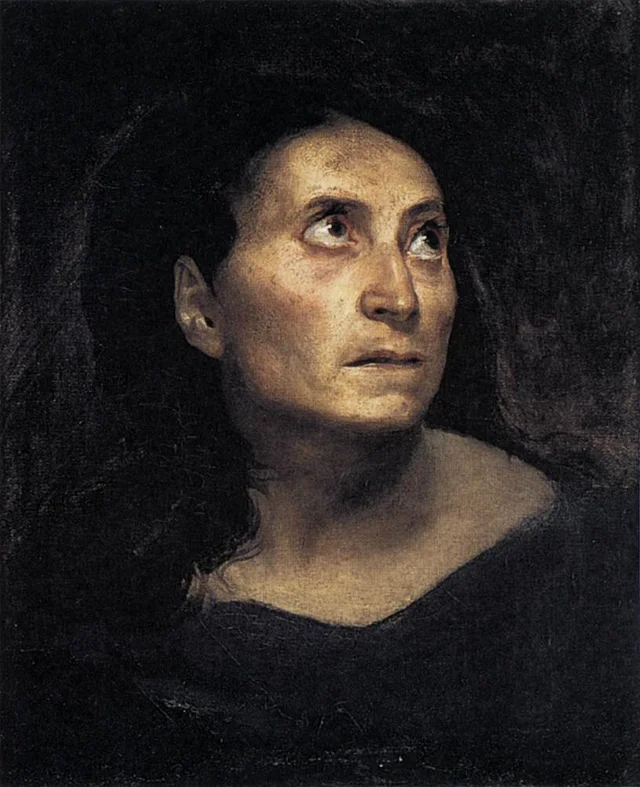 Cabeça de mulherEugène Delacroix, 1822
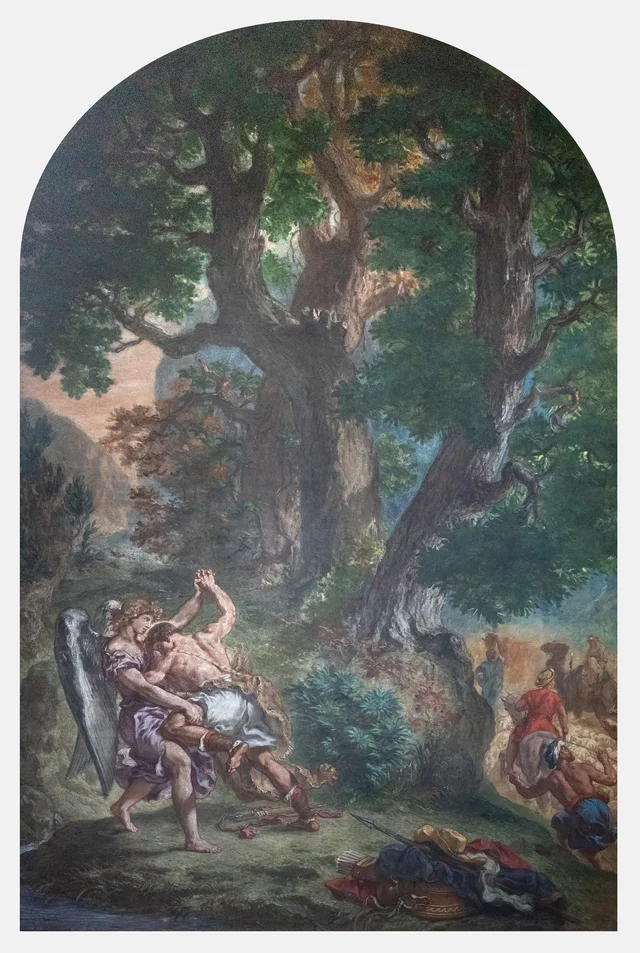 A Luta de Jacó com o AnjoEugène Delacroix, 1860
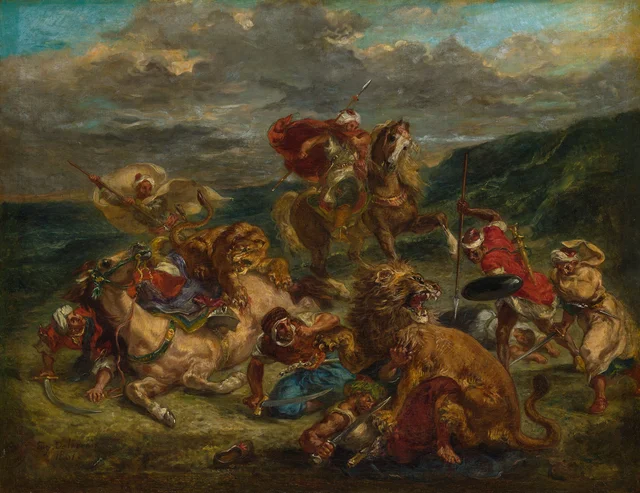 A caça ao leão no MarrocosEugène Delacroix, 1861
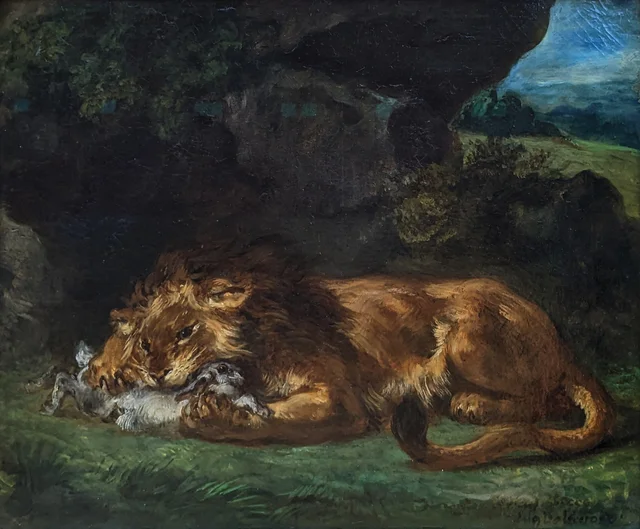 Leão devorando um coelhoEugène Delacroix, 1853
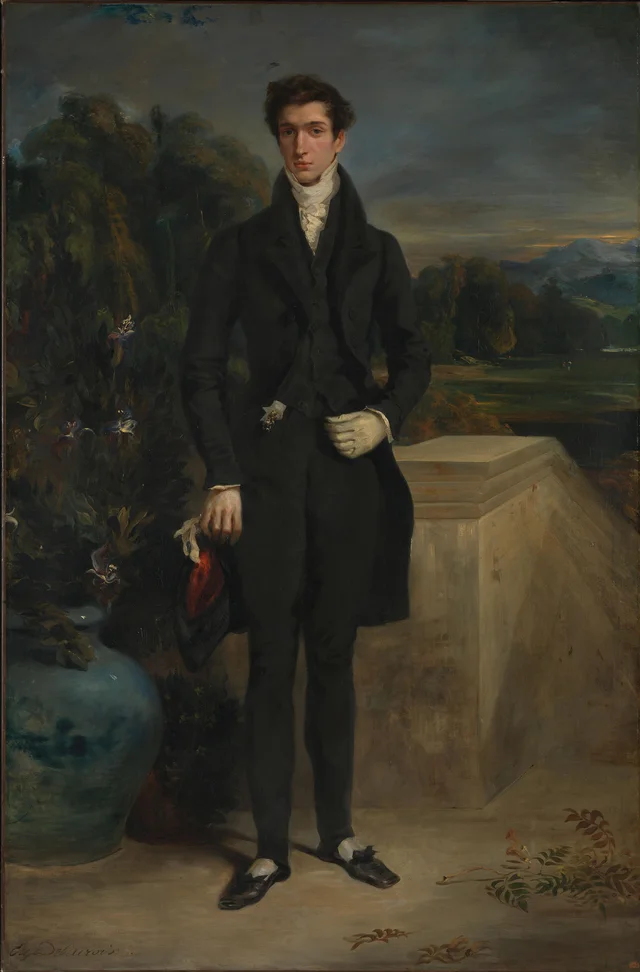 Retrato de Louis-Auguste SchwiterEugène Delacroix, 1827
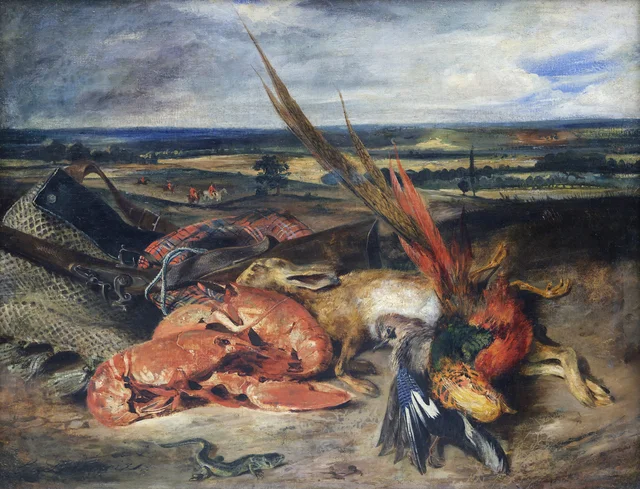 Natureza-morta com lagosta e troféus de caça e pescaEugène Delacroix, 1827
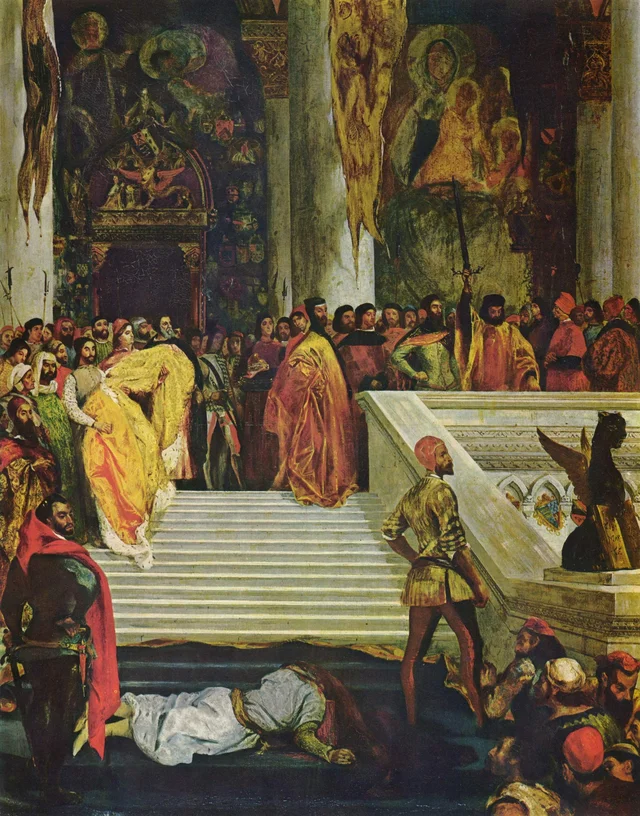 A Execução do Doge Marino FalieroEugène Delacroix, 1826
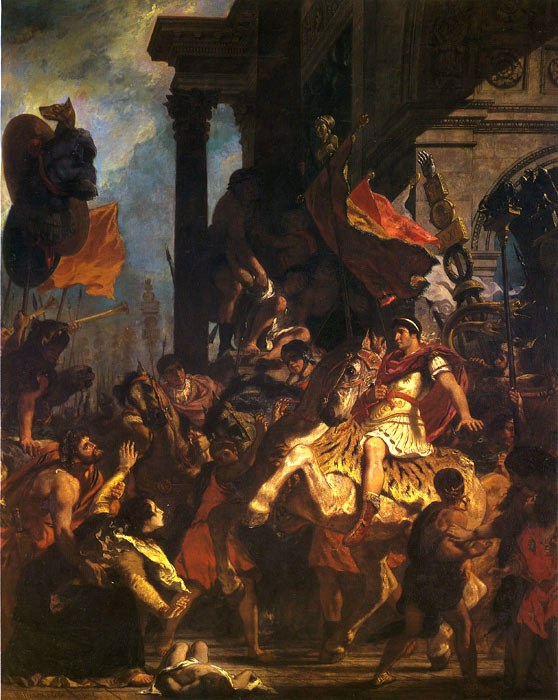 A Justiça de TrajanoEugène Delacroix, 1840
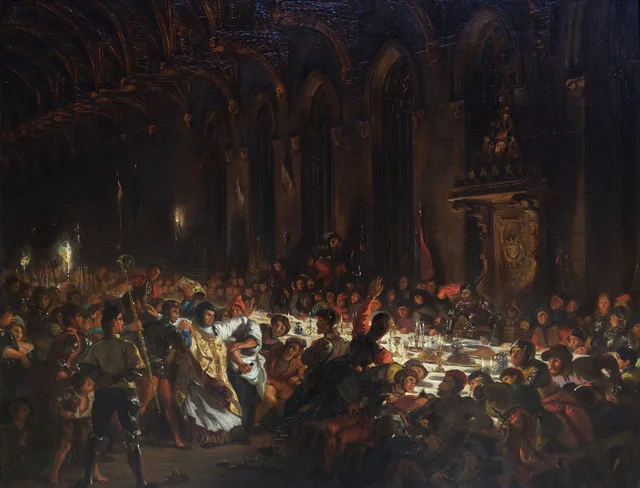 O assassinato do bispo de LiègeEugène Delacroix, 1828
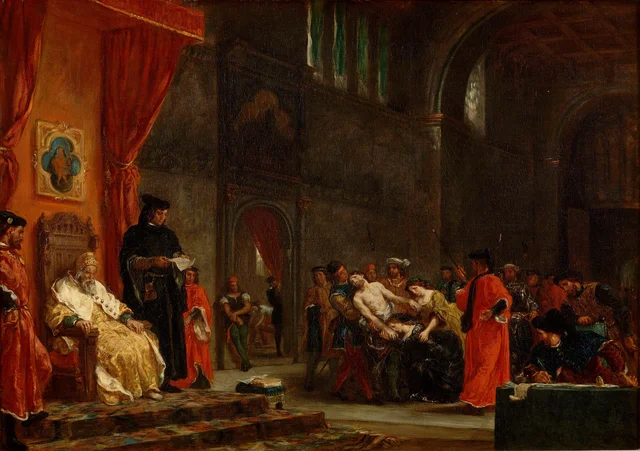 Os Dois FoscariEugène Delacroix, 1855
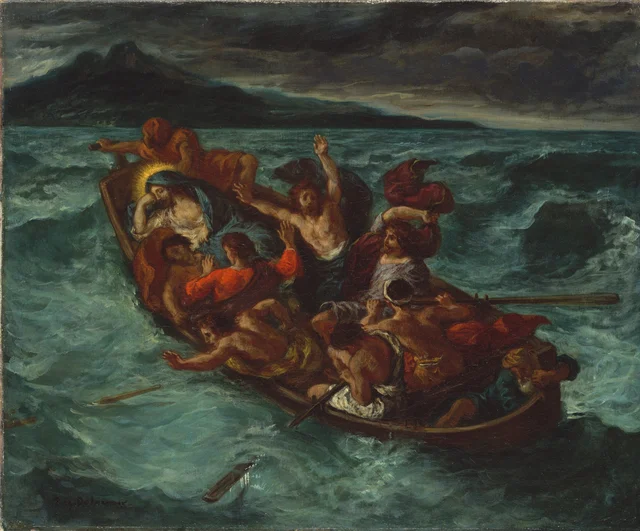 Cristo adormecido durante a tempestadeEugène Delacroix, 1853
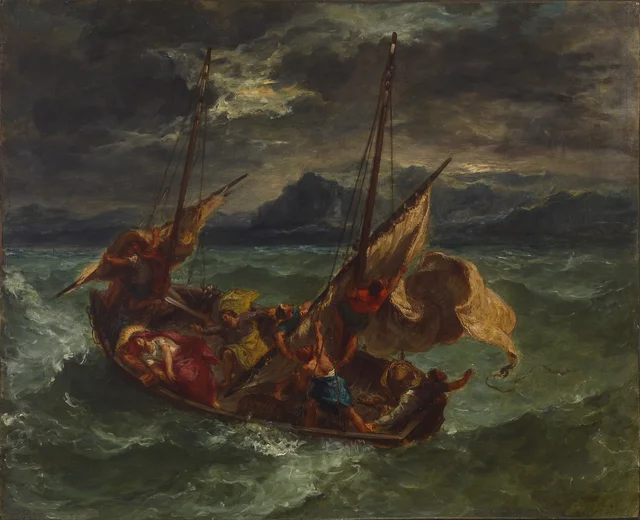 Cristo no mar da GalileiaEugène Delacroix, 1854
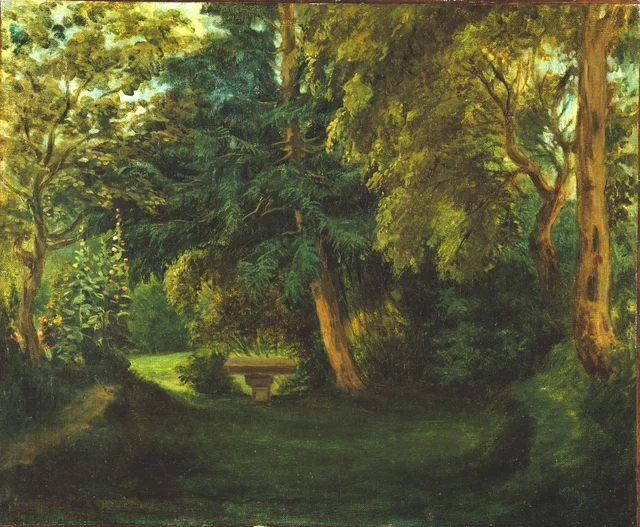 O jardim de George Sand em NohantEugène Delacroix, 1842
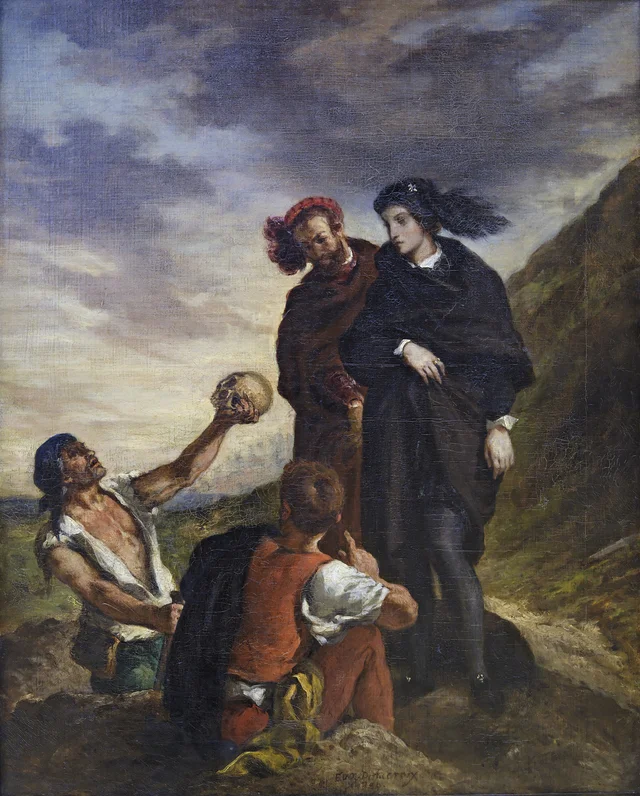 Hamlet e Horácio no cemitérioEugène Delacroix, 1839
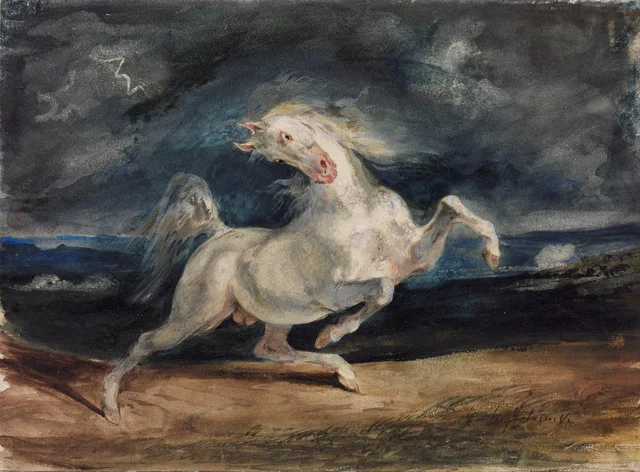 Cavalo assustado por um raioEugène Delacroix, 1824
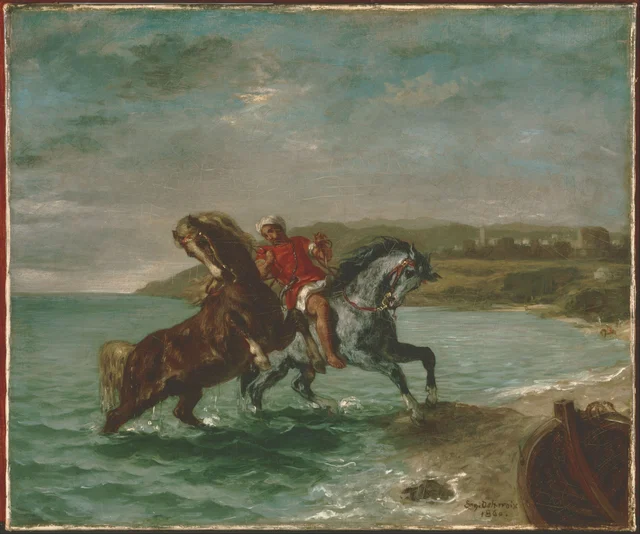 Cavalos saindo do marEugène Delacroix, 1860
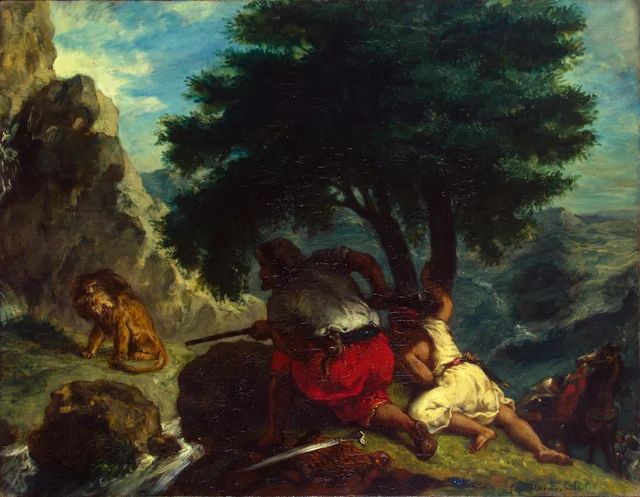 Caça ao leão no MarrocosEugène Delacroix, 1854
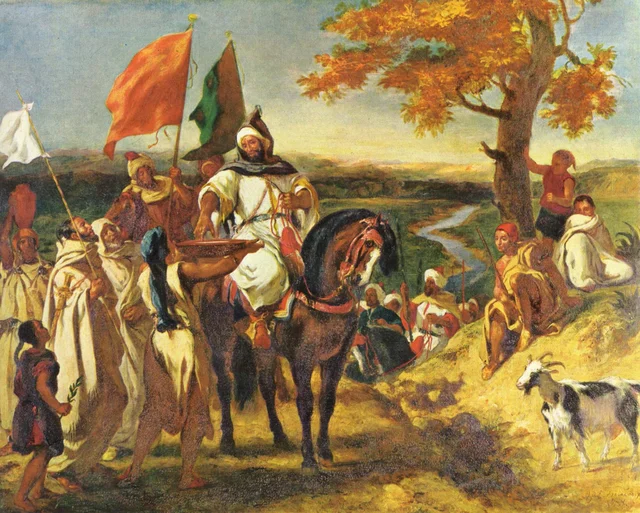 O caíde marroquino visitando sua triboEugène Delacroix, 1837
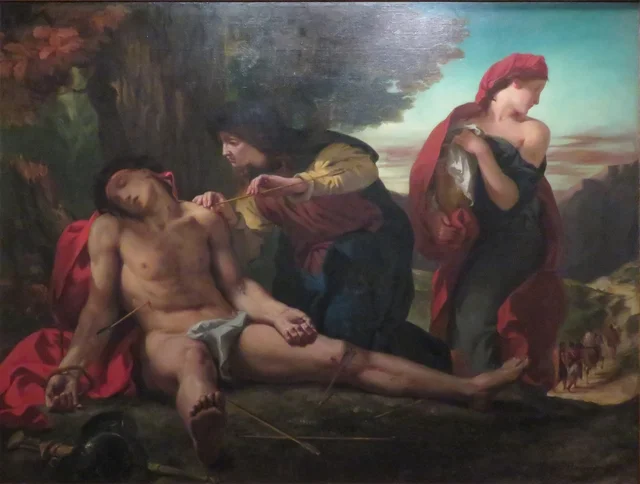 São Sebastião socorrido pelas Santas MulheresEugène Delacroix, 1836
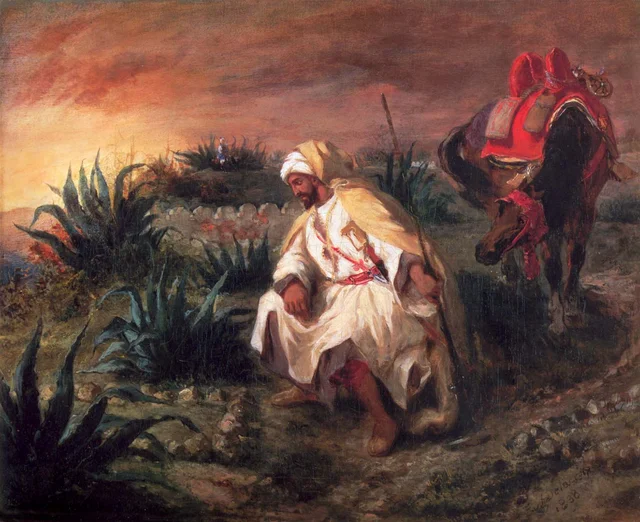 Os árabes junto ao túmuloEugène Delacroix, 1838
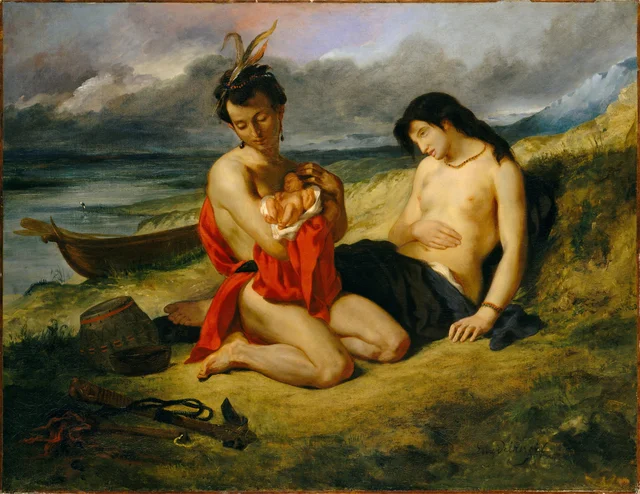 Os NatchezEugène Delacroix, 1835
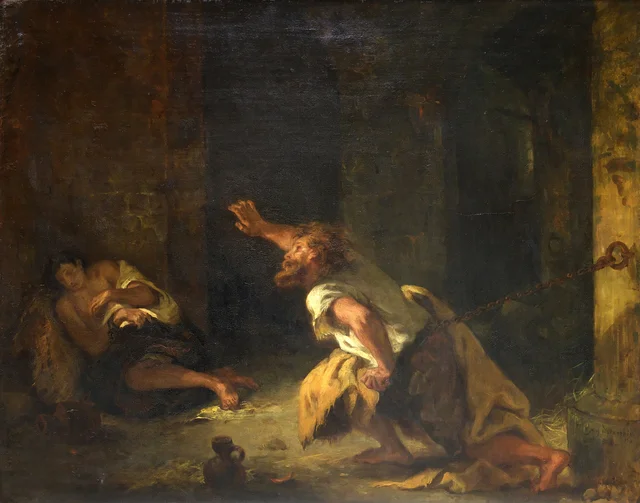 O prisioneiro de ChillonEugène Delacroix, 1834
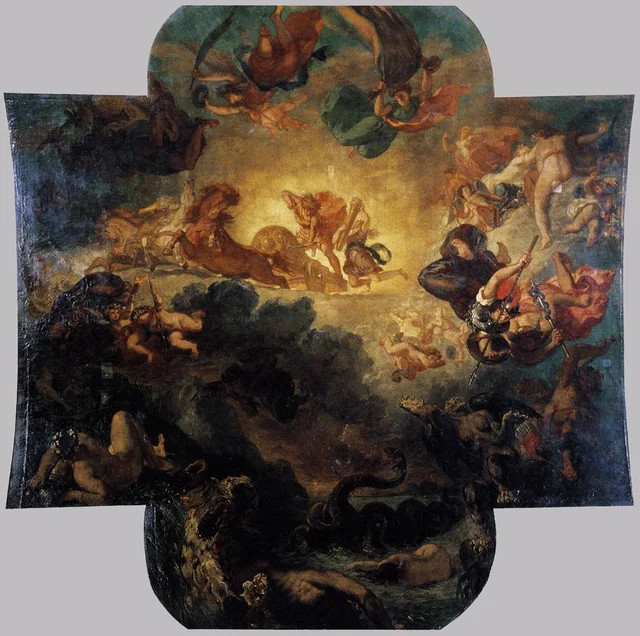 Apolo vencendo PítonEugène Delacroix, 1850
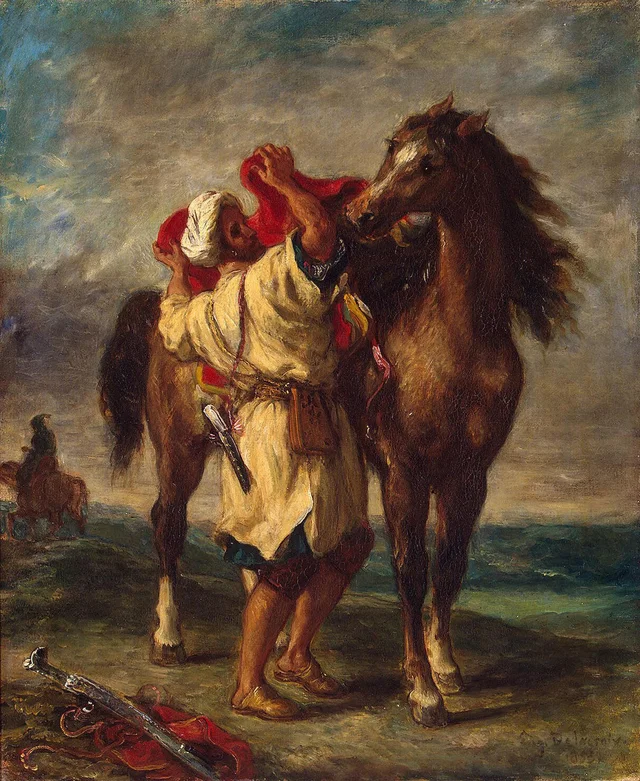 Árabe selando seu cavaloEugène Delacroix, 1855