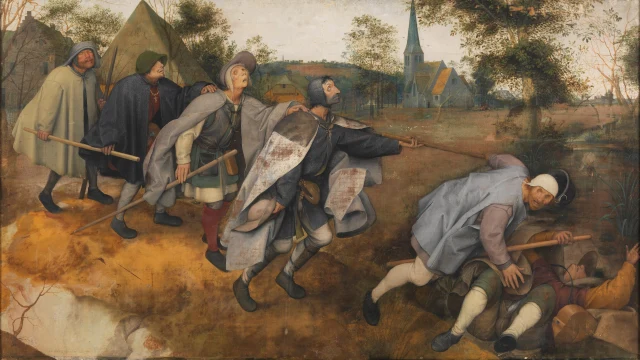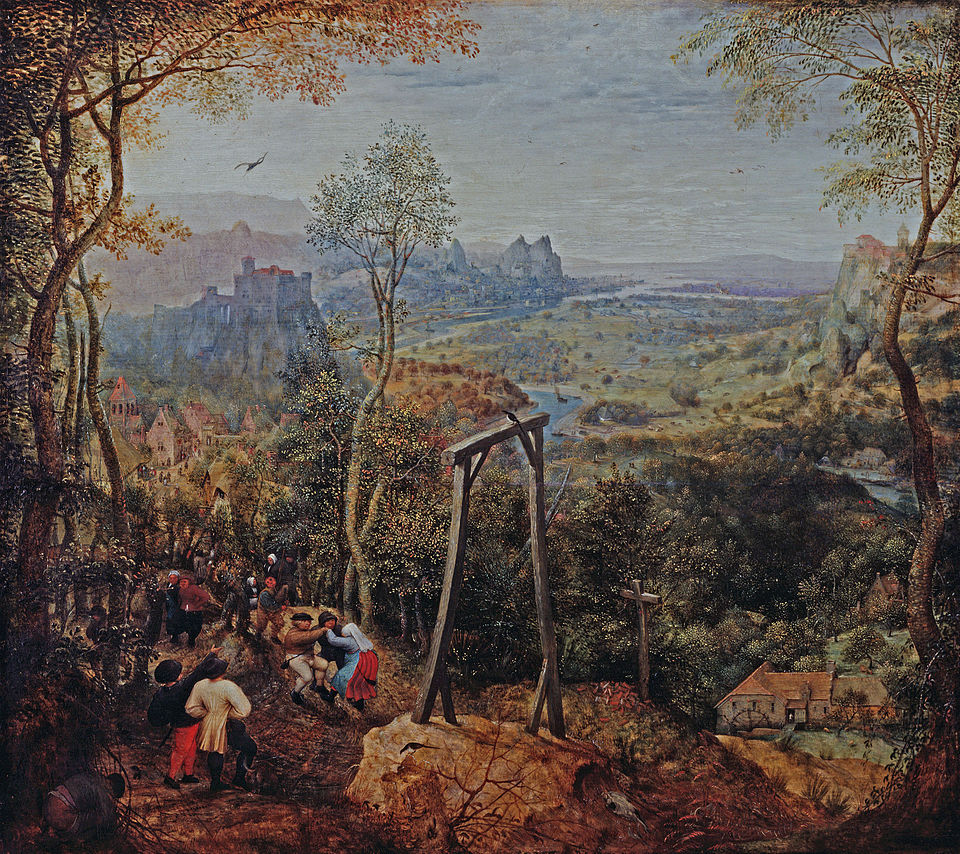
Pieter Brueghel the Elder, The Magpie on the Gallows, 1568. Wikimedia Commons. · PD
A Pega no Patíbulo
Ficha técnica
A história
Bruegel pintou esta pequena tábua em 1568, pouco antes de morrer, e, segundo seu primeiro biógrafo, deixou-a de herança para a esposa. À primeira vista é uma paisagem luminosa e feliz, com um vale verde descendo até um rio ao longe e camponeses dançando alegremente ao som de uma gaita, num descampado. No centro dessa alegria, porém, ergue-se uma forca de madeira, e sobre ela está pousada uma pega, o pássaro preto e branco. A escolha não é inocente. Na cultura da época a pega estava ligada à tagarelice e à fofoca, e naqueles anos de ocupação espanhola, sob o duque de Alba, uma denúncia sussurrada podia levar qualquer um justamente para a forca. Por isso muitos veem no quadro um aviso velado, com o povo dançando bem ao lado do instrumento da morte, sem se importar. Há ainda um homem defecando à esquerda, gesto de desprezo típico dos provérbios flamengos que Bruegel adorava ilustrar. Ao fundo, o rio e as montanhas se abrem numa vista ampla, o tipo de paisagem panorâmica em que ele era mestre.