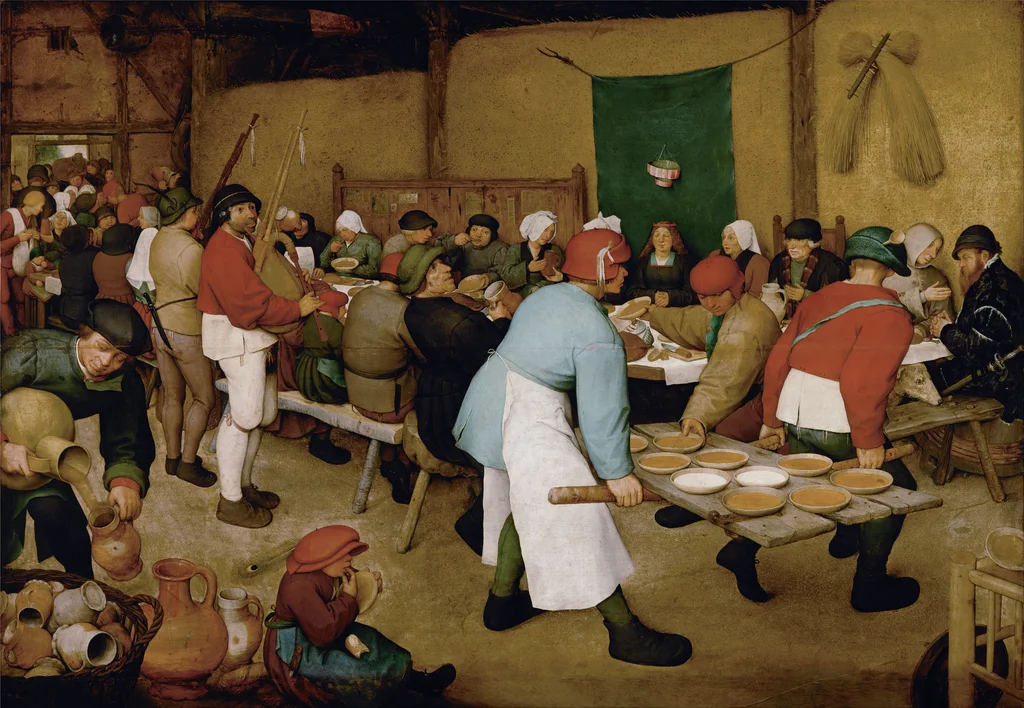
Pieter Brueghel the Elder, The Peasant Wedding, 1567. Wikimedia Commons. · PD
O Casamento Camponês
Ficha técnica
A história
Em 1567, enquanto Bruegel terminava esta cena de festa numa granja de Flandres, o Duque de Alba entrava em Bruxelas à frente das tropas espanholas de Filipe II, e começava a dura repressão que empurraria os Países Baixos para uma guerra de oitenta anos. Nada disso aparece aqui. O que se vê é um casamento camponês num celeiro, com as espigas ainda encostadas ao fundo. A noiva está sentada sob a coroa de papel pendurada no pano verde, de mãos cruzadas, sem fazer nada, como mandava o costume no seu dia. O noivo é mais difícil de apontar, e há séculos os estudiosos discutem qual das figuras seria ele. O tocador de gaita de foles espia a comida com fome. E repare no detalhe que Bruegel guardou em primeiro plano: os dois pratos de mingau são trazidos sobre uma porta tirada das dobradiças, usada como bandeja.