Carlo Crivelli
Republic of Venice · Gothic art
The story
Carlo Crivelli signed his paintings as a Venetian long after he had left Venice for good. Early on he was jailed there for an affair with a married woman, and afterward he built his whole career in the Marche, the provincial hill country on Italy's Adriatic side, painting altarpieces for towns like Ascoli Piceno.
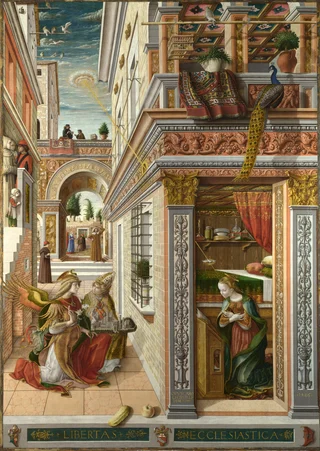
While Florence chased soft modeling and deep space, Crivelli held onto gleaming gold backgrounds and hard, jewel-sharp line, then loaded his pictures with startlingly real fruit. Apples, gourds and cucumbers hang across the front of his scenes, symbols of sin and redemption that also let him show off. His 'Annunciation with Saint Emidius' of 1486, now in London, stages the holy moment in a crowded, sun-struck street with a cucumber lying at the very bottom edge.
Late in life he was knighted by a prince of Naples and began adding the title to his signature. He died in the mid-1490s, still working in the Marche, and stayed largely forgotten until collectors rediscovered him in the 1800s.
More articles
Works
29 works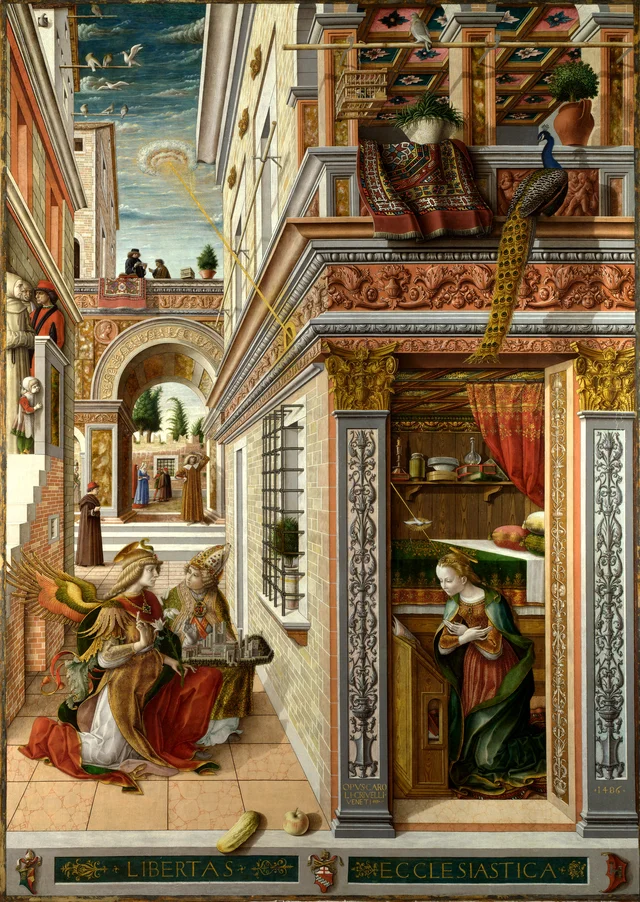 The Annunciation, with Saint EmidiusCarlo Crivelli, 1486
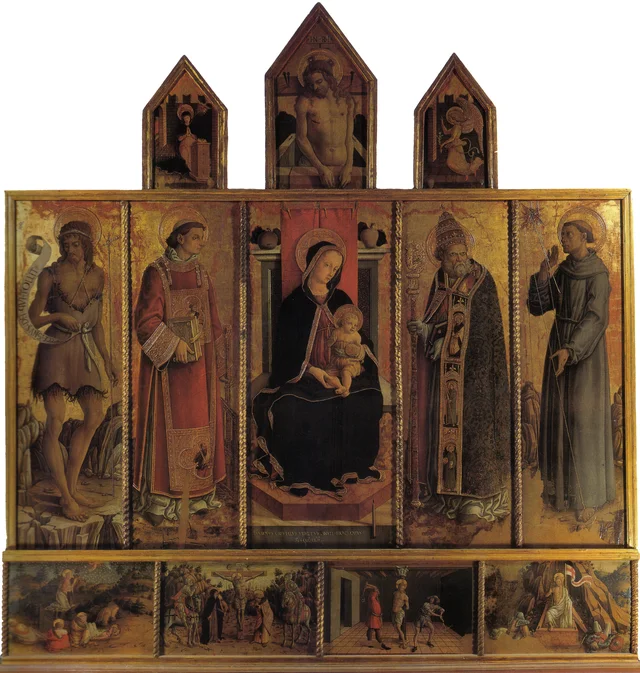 Polyptych of Madonna and child with saintsCarlo Crivelli, 1468
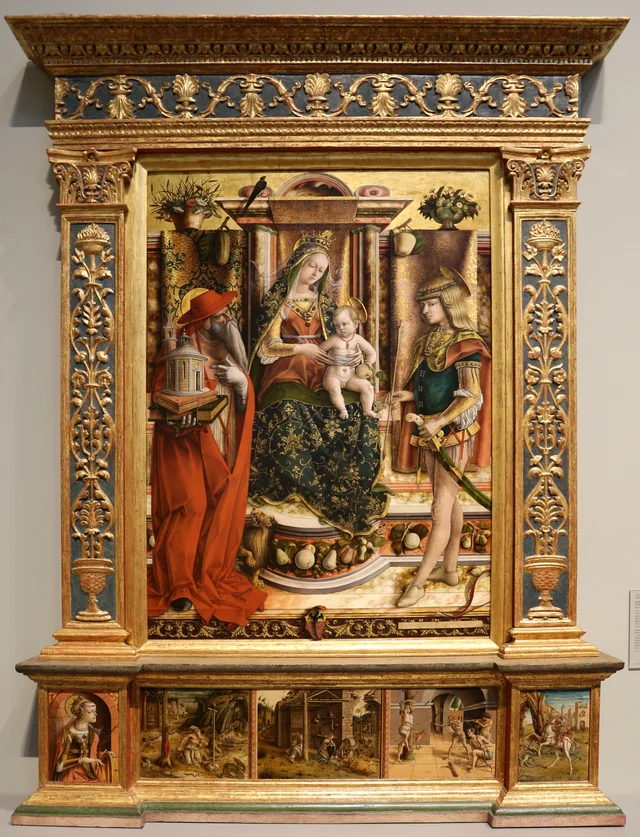 Altarpiece from S. Francesco dei Zoccolanti, MatelicaCarlo Crivelli, 1490
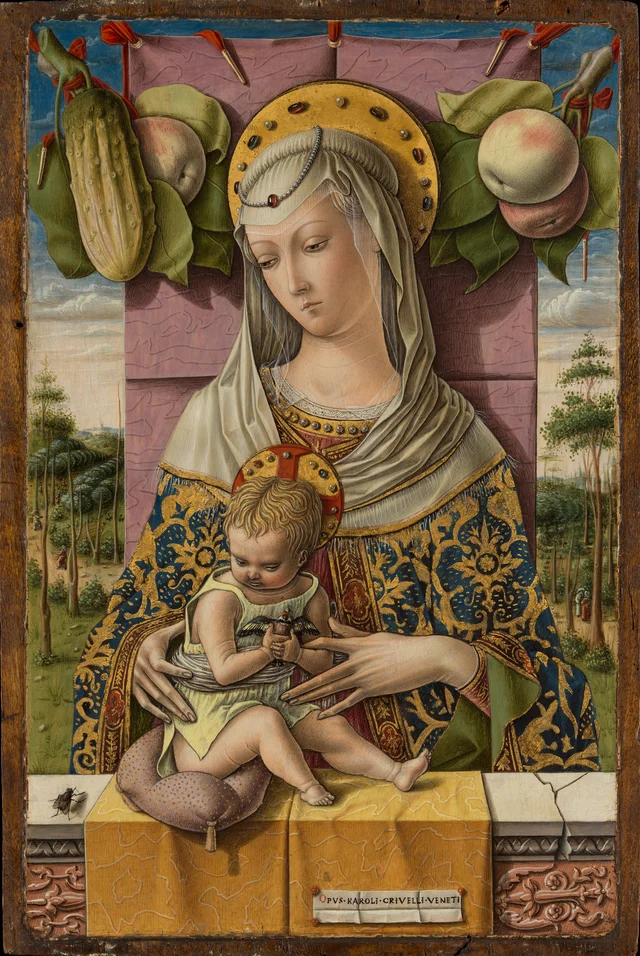 Virgin and ChildCarlo Crivelli, 1472
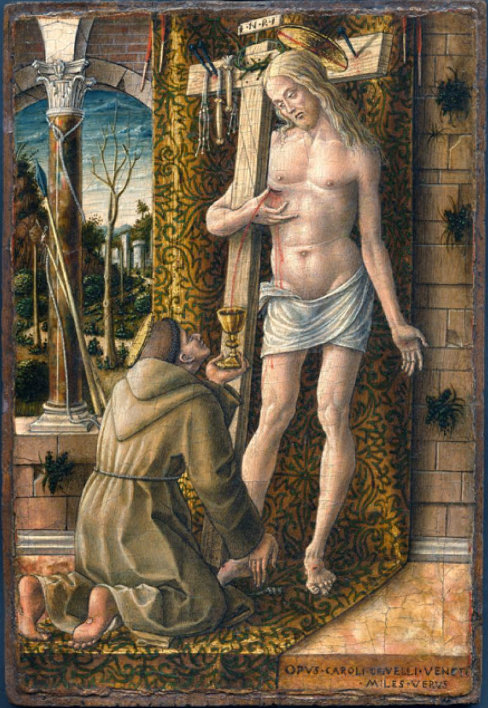 Blood of ChristCarlo Crivelli, 1490
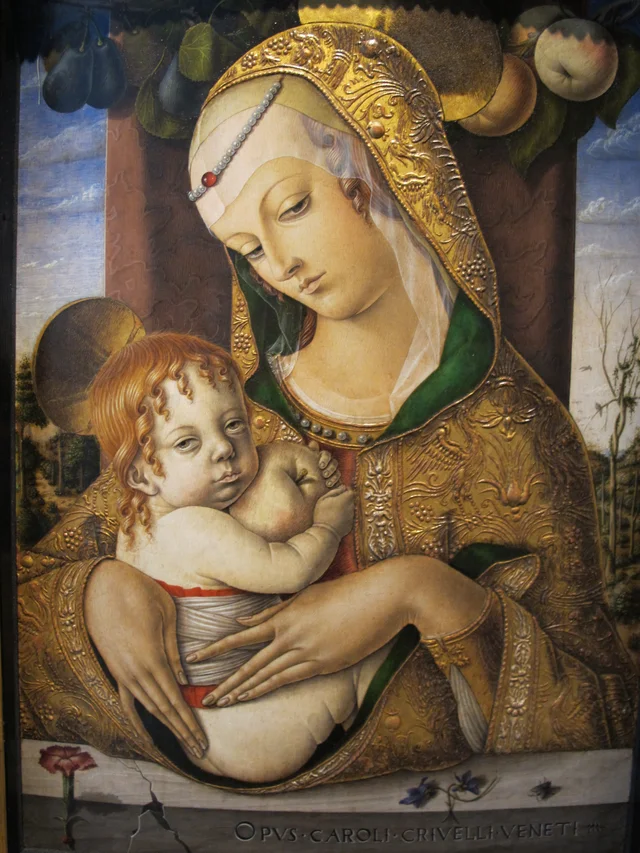 Madonna and ChildCarlo Crivelli, 1480
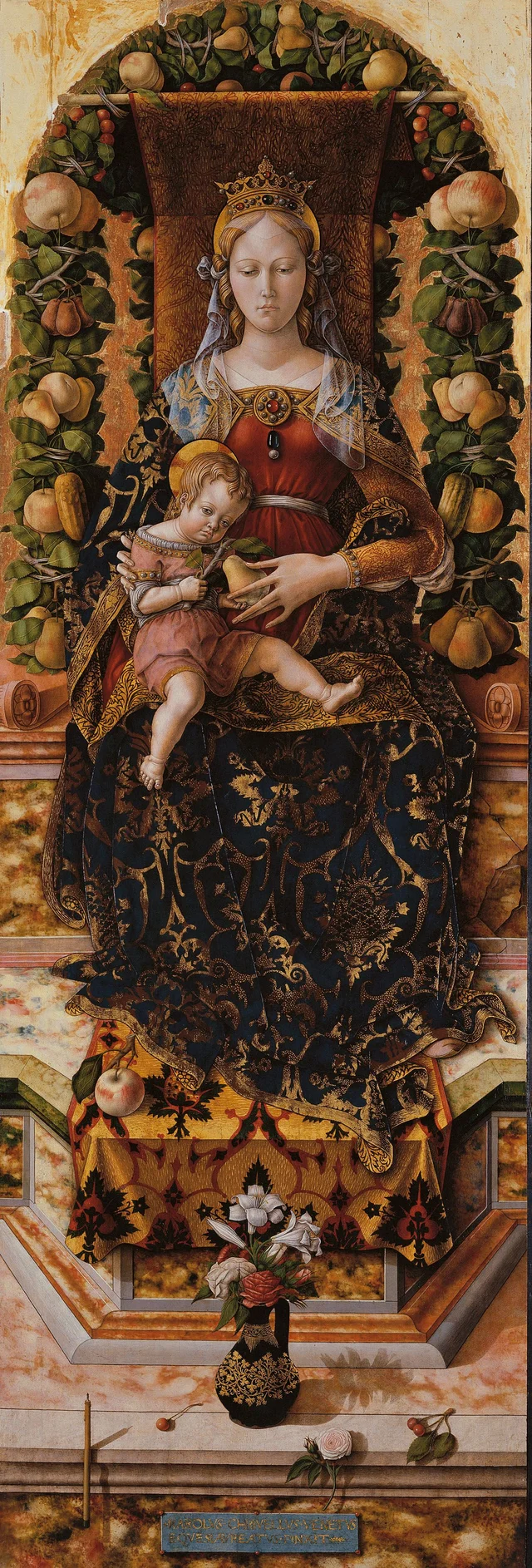 Madonna della CandelettaCarlo Crivelli, 1490
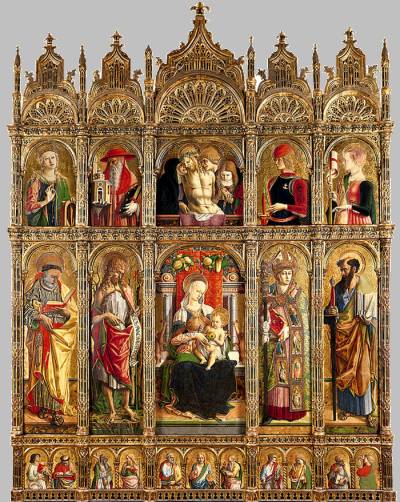 Polyptych of SaintsCarlo Crivelli, 1473
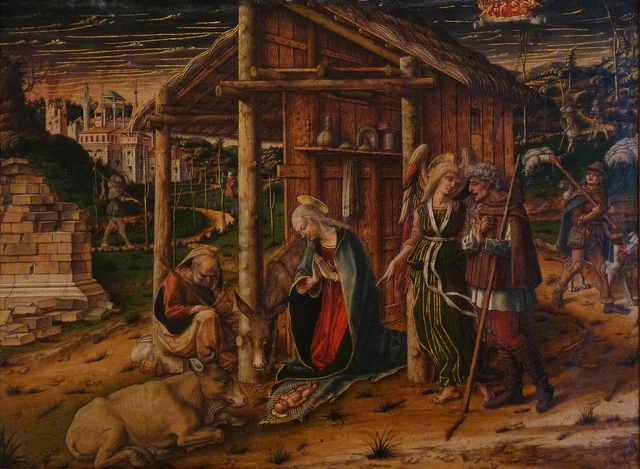 Adoration of the ShepherdsCarlo Crivelli, 1480
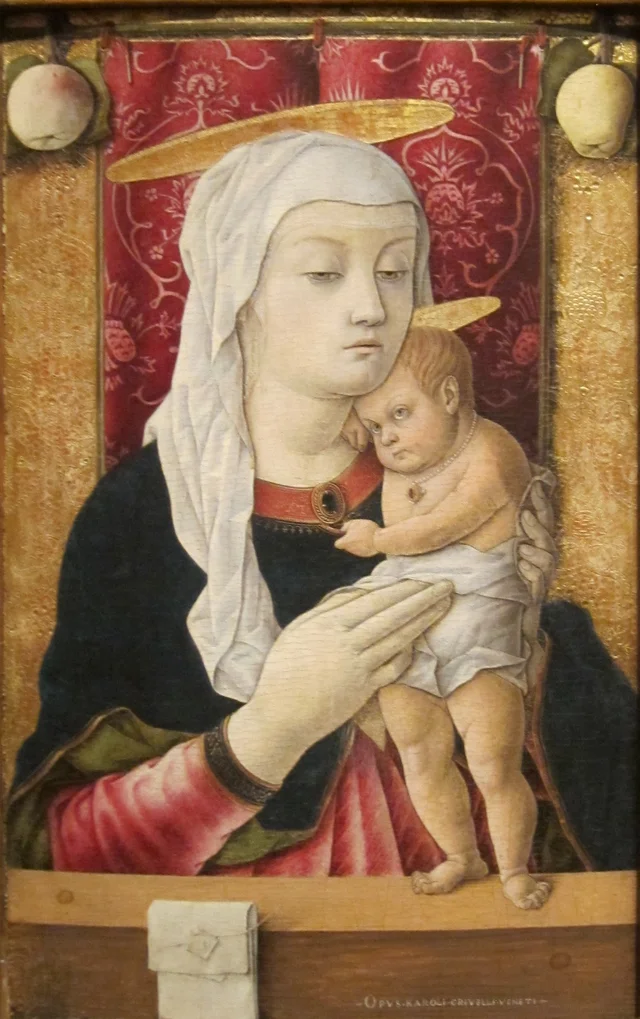 Huldschinsky MadonnaCarlo Crivelli, 1460
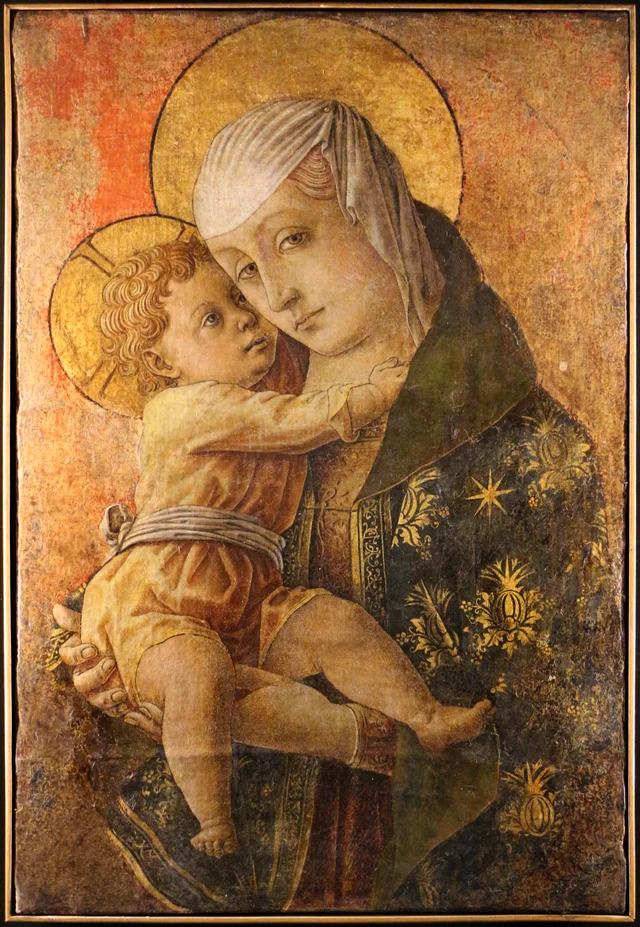 Madonna with ChildCarlo Crivelli, 1470
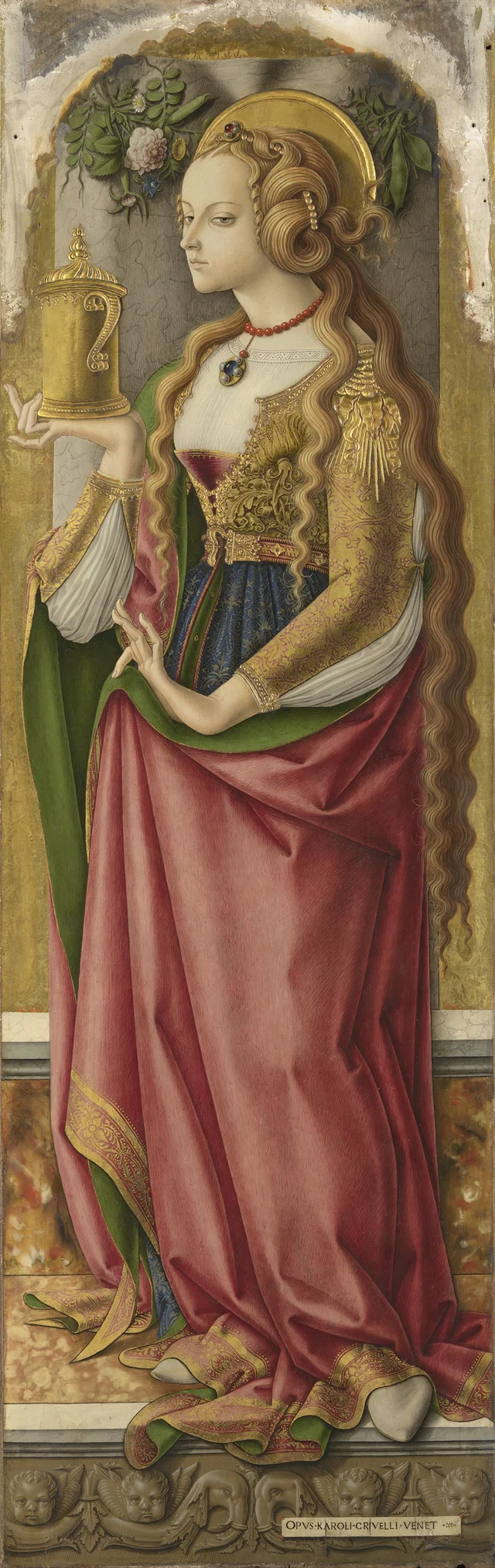 Mary MagdalenCarlo Crivelli, 1476
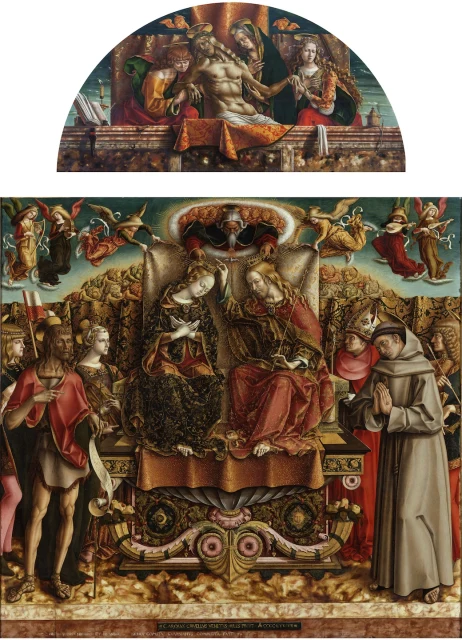 Coronation of the Virgin with the Holy Trinity and SaintsCarlo Crivelli, 1493
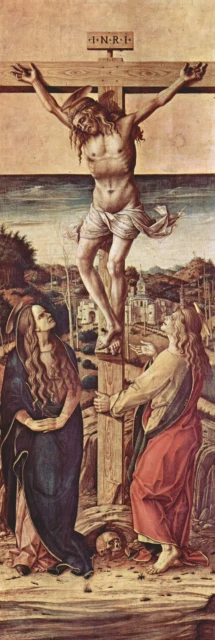 Crucifixion with the Virgin Mary and St. John the EvangelistCarlo Crivelli, 1489
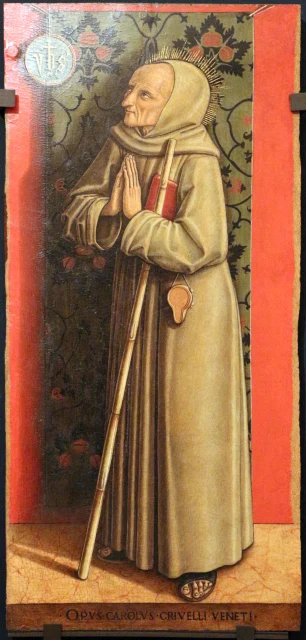 Four Saints and Blesseds: James of the MarchesCarlo Crivelli, 1485
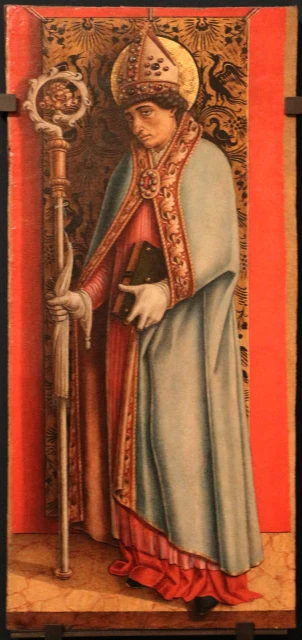 Four Saints and Blesseds: Saint EmygdiusCarlo Crivelli, 1485
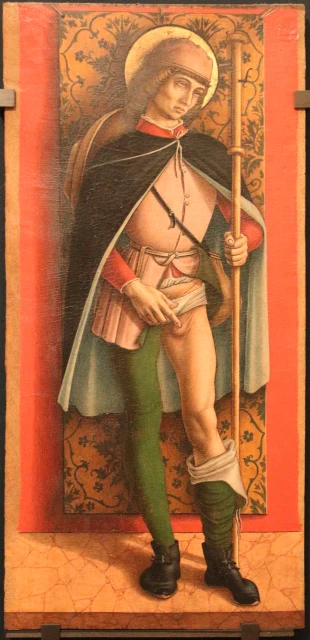 Four Saints and Blesseds: Saint RochCarlo Crivelli, 1485
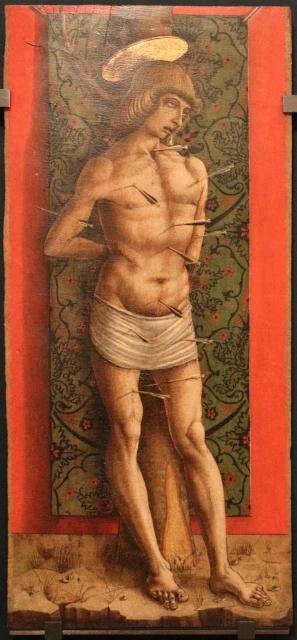 Four Saints and Blesseds: Saint SebastianCarlo Crivelli, 1485
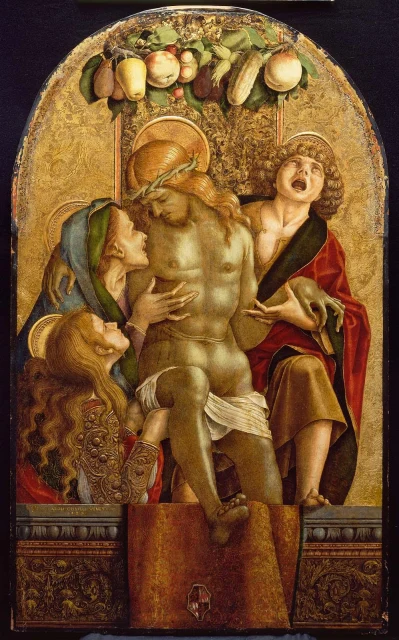 Lamentation over the Dead ChristCarlo Crivelli, 1485
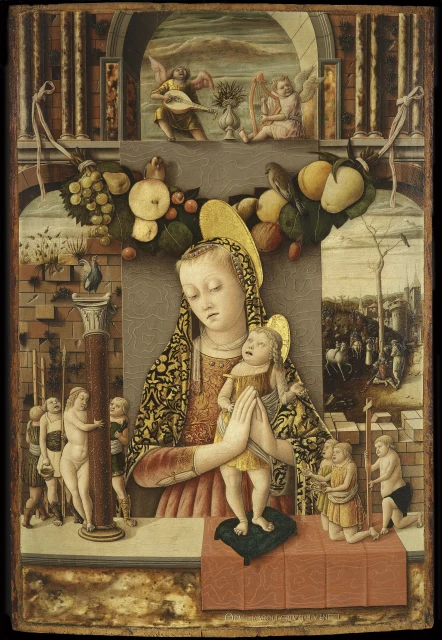 Madonna of the PassionCarlo Crivelli, 1460
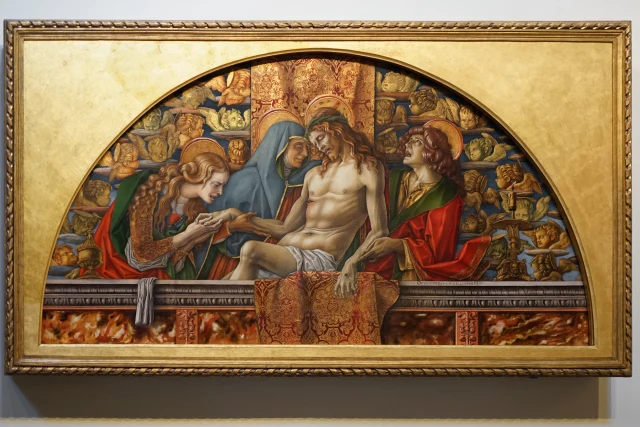 PietàCarlo Crivelli, 1488
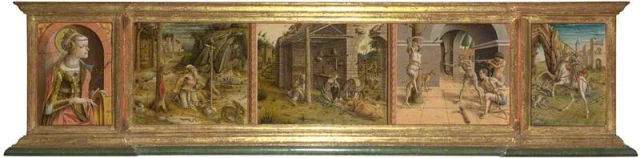 Predella of La Madonna della Rondine (The Madonna of the Swallow)Carlo Crivelli, 1490
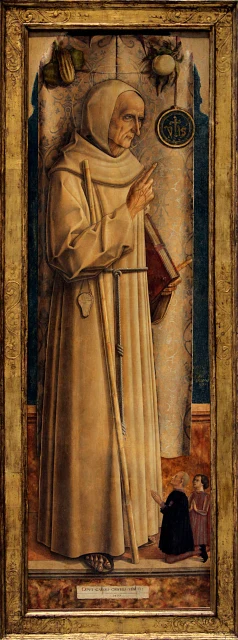 Saint James of the MarchesCarlo Crivelli, 1477
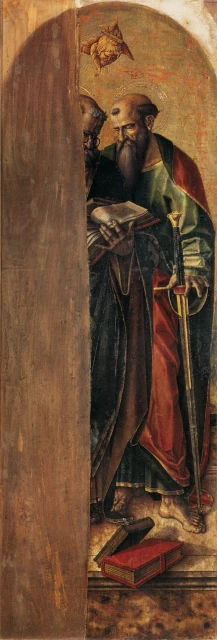 Saints Peter and PaulCarlo Crivelli, 1490
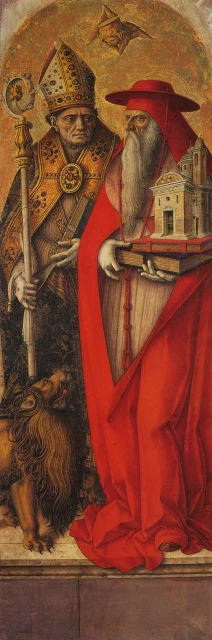 St Jerome and St AugustineCarlo Crivelli, 1490