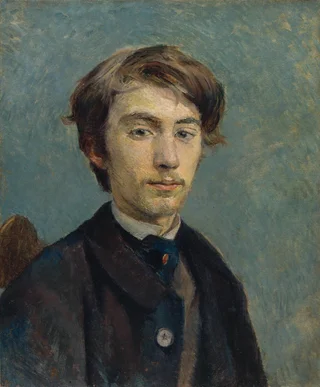
Émile Bernard
1868–1941 · France · Pont-Aven School
The story
Émile Bernard was barely 20 when he helped change the direction of French painting, and then spent much of his long life arguing about the credit. In 1886, in the Breton village of Pont-Aven, he worked out a way of painting he and a friend called cloisonnism, flat areas of strong colour walled off by dark outlines, like the lead strips in stained glass or in cloisonné enamel.
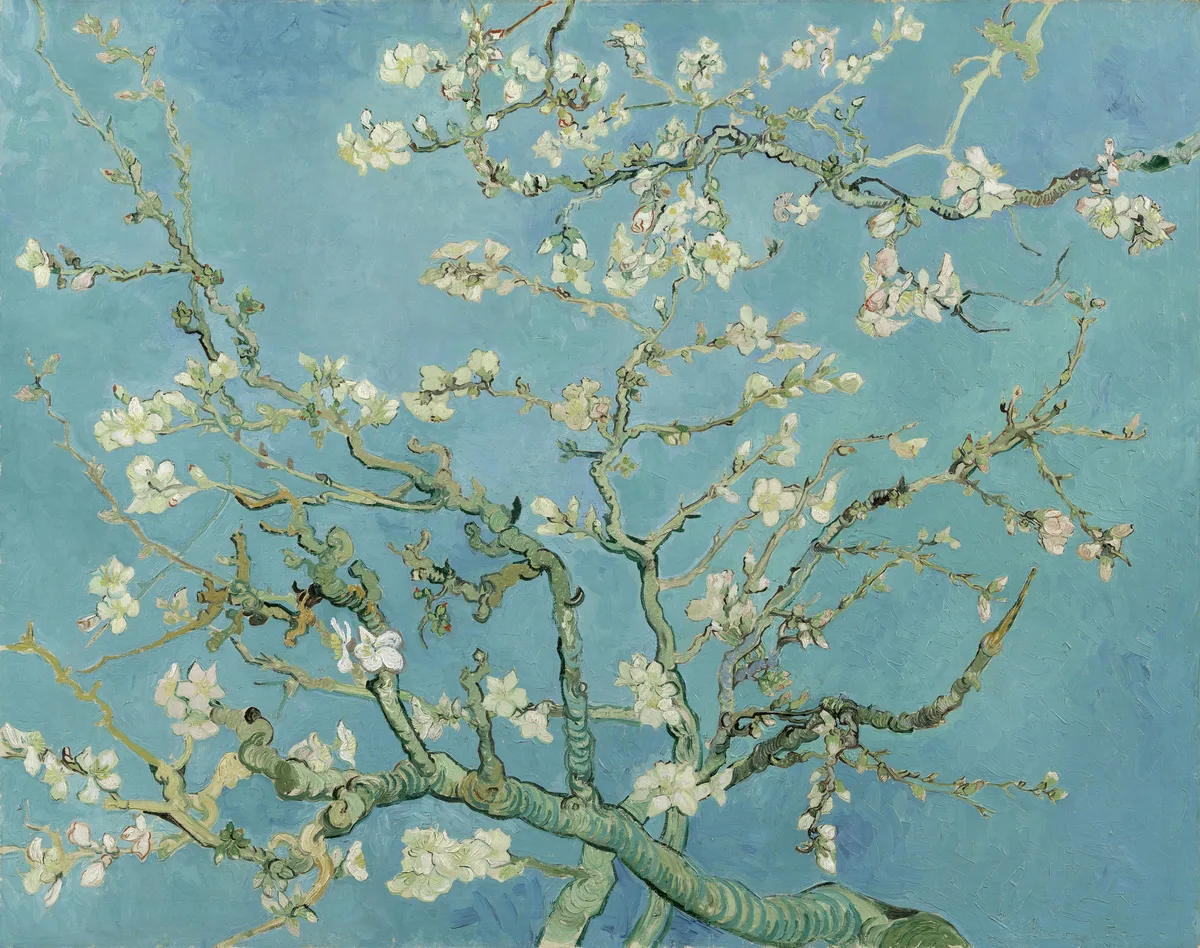
Paul Gauguin, older and forceful, picked up the idea when the two painted together in Brittany, and it fed straight into the bold, simplified style now hung under Gauguin's name. When critics began calling Gauguin the founder of the whole Synthetist movement, Bernard was furious, and the friendship broke. He was close to Van Gogh too, exchanging long letters, until Van Gogh's blunt criticism of his religious pictures cooled that friendship as well.
Bernard kept painting for another fifty years, turning steadily back toward the old masters he loved and away from the avant-garde he had helped start. Today he is remembered above all for that early spark and for his writings — his correspondence with Van Gogh and his later interviews with Cézanne are still primary sources historians lean on. He died in Paris in 1941.
More articles
Works
44 works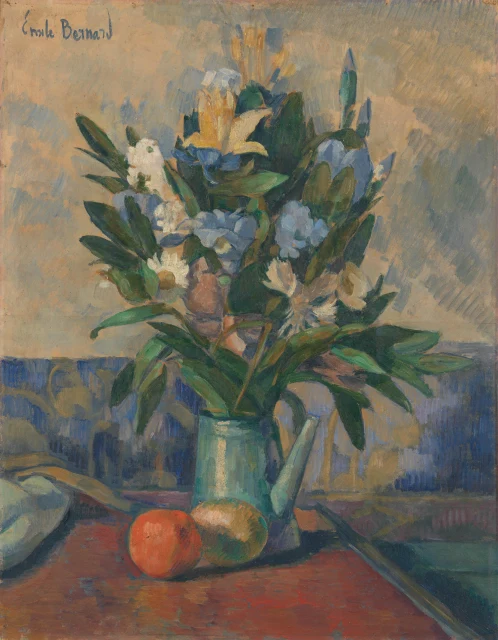 Still Life with Flowers in a JugÉmile Bernard, 1904
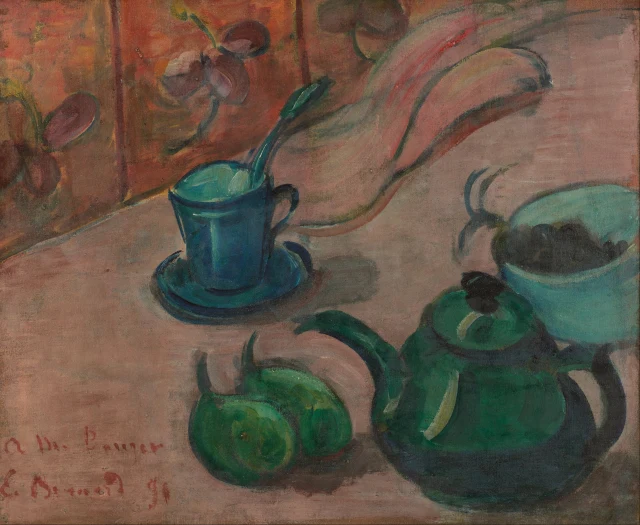 Still Life with Teapot, Cup and FruitÉmile Bernard, 1890
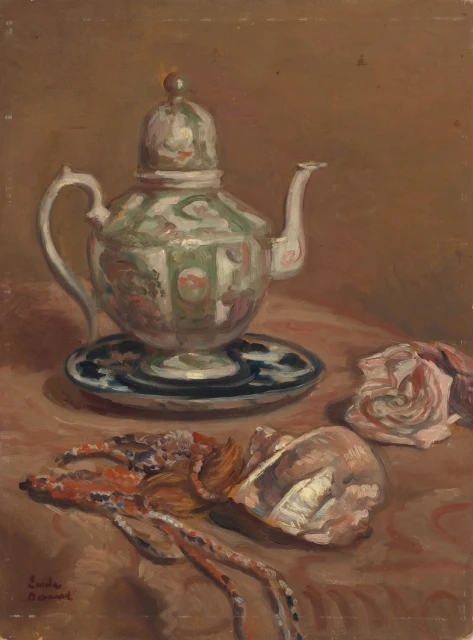 Tea Pot and ShellÉmile Bernard, 1910
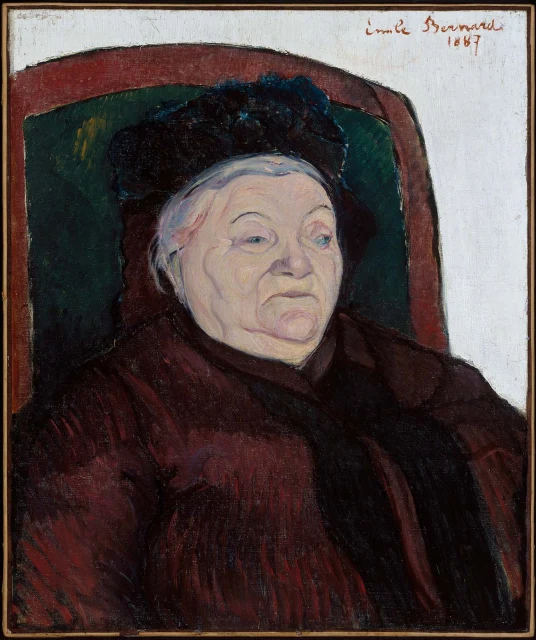 The Artist's GrandmotherÉmile Bernard, 1887
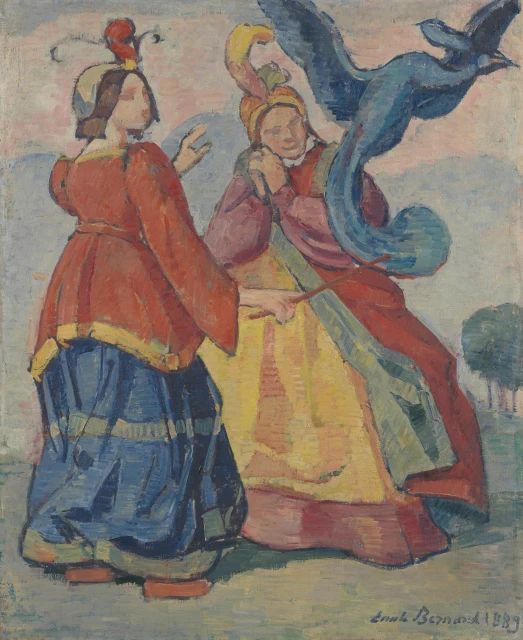 The Blue BirdÉmile Bernard, 1889
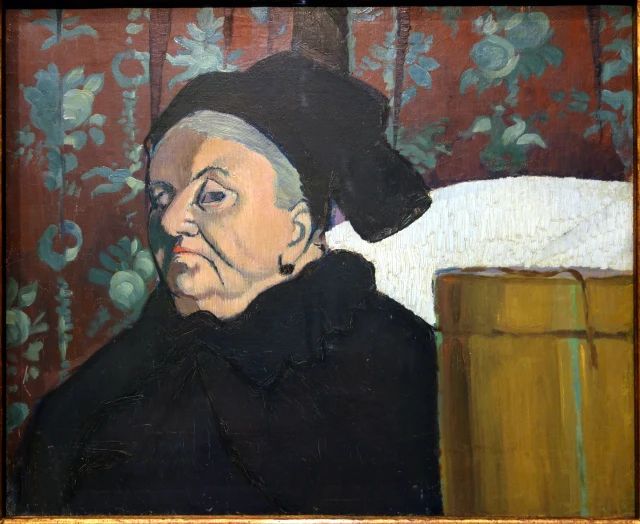 The GrandmotherÉmile Bernard, 1887
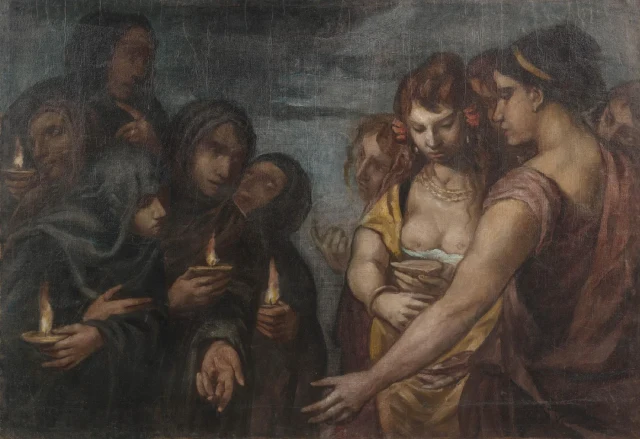 The Wise and Foolish VirginsÉmile Bernard, 1927
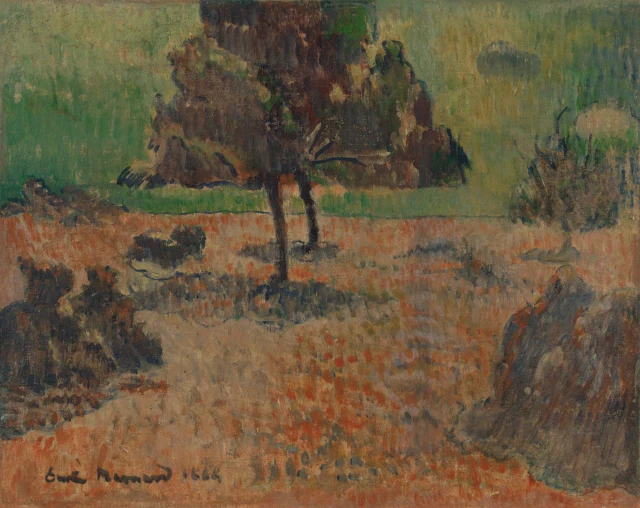 TreesÉmile Bernard, 1888
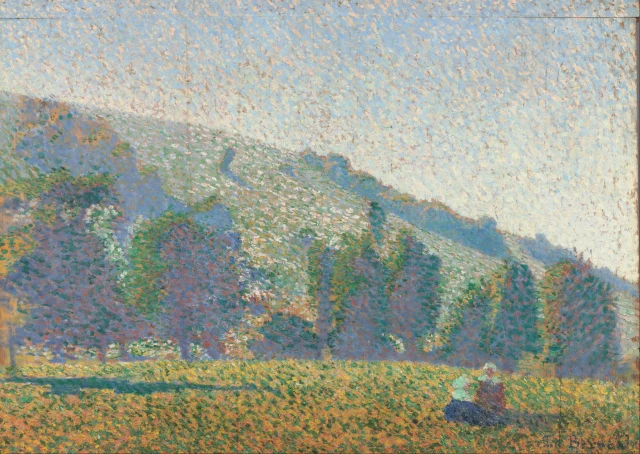 Two Breton Women in a MeadowÉmile Bernard, 1886
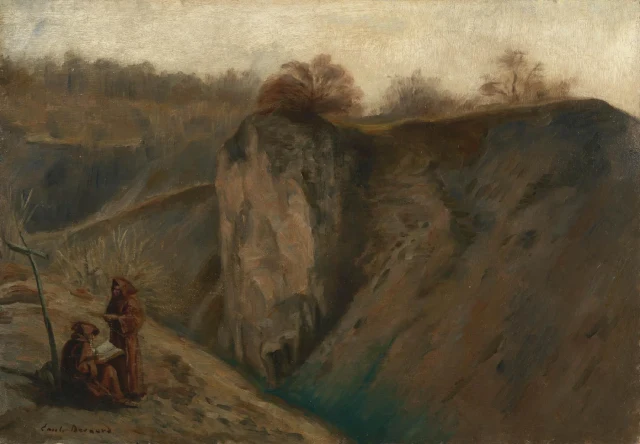 Two Monks in a RavineÉmile Bernard, 1904
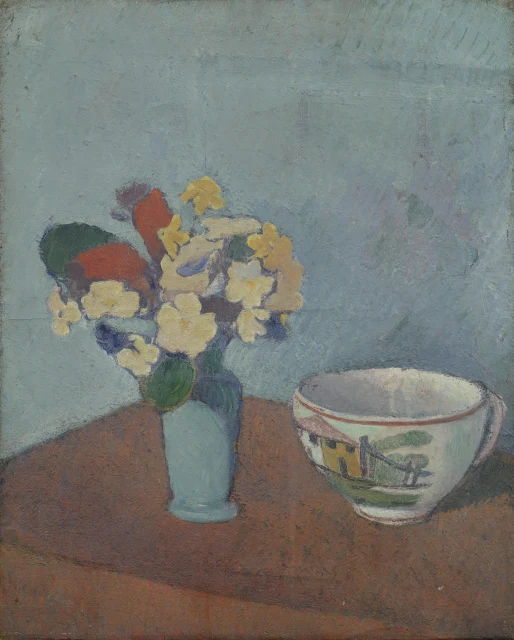 Vase of Flowers and CupÉmile Bernard, 1887
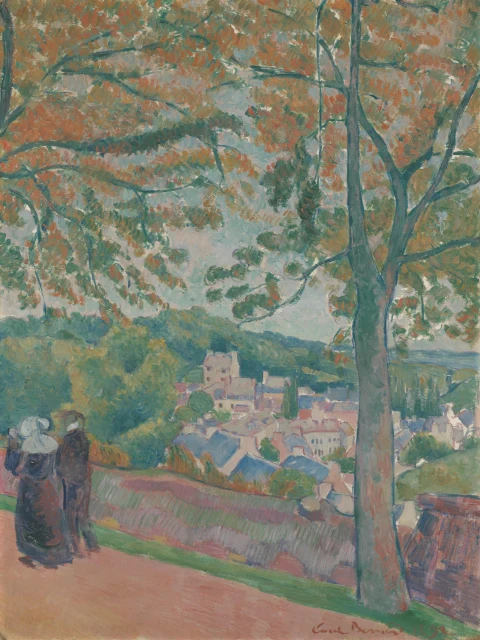 View of Pont-AvenÉmile Bernard, 1892
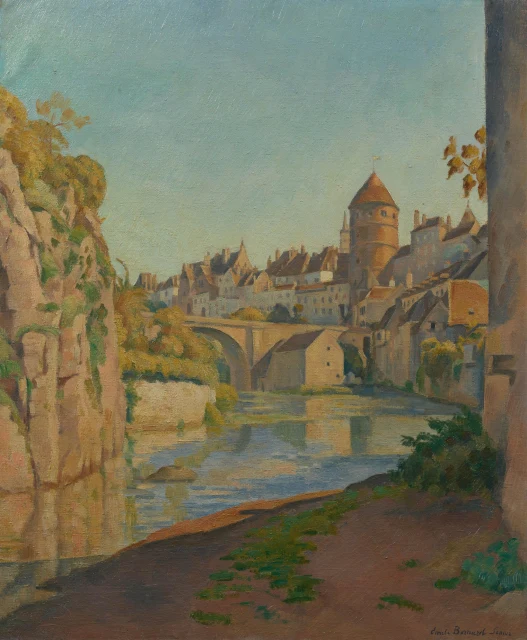 View of SemurÉmile Bernard, 1930
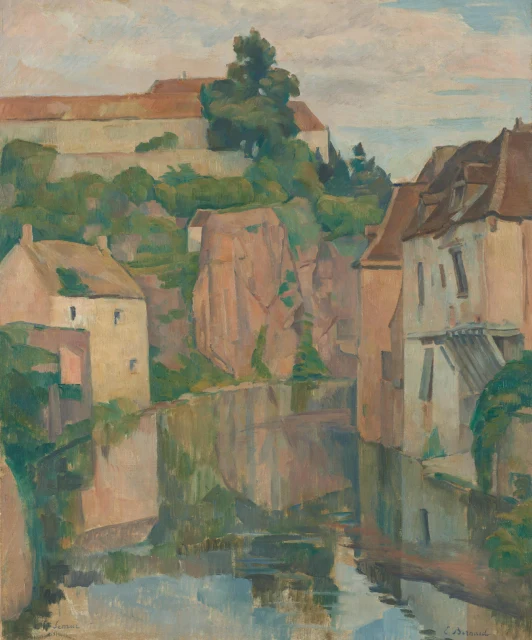 View of SemurÉmile Bernard, 1907
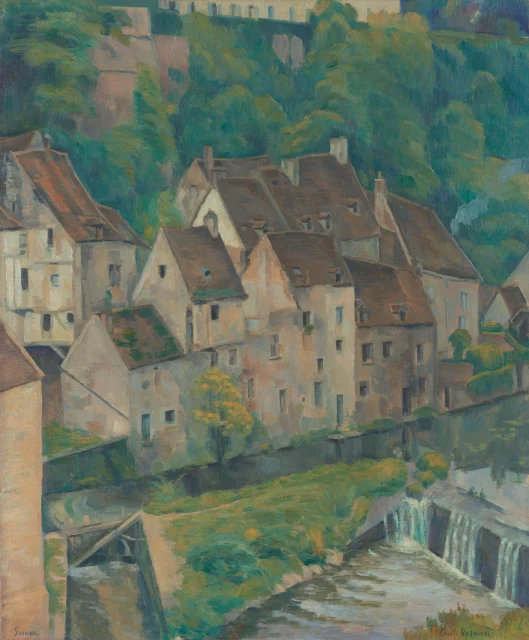 View of Semur, HousesÉmile Bernard, 1907
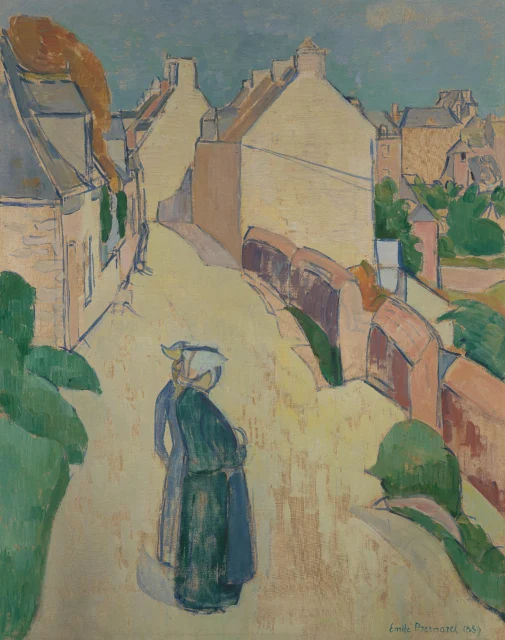 Village Street: Saint-BriacÉmile Bernard, 1889
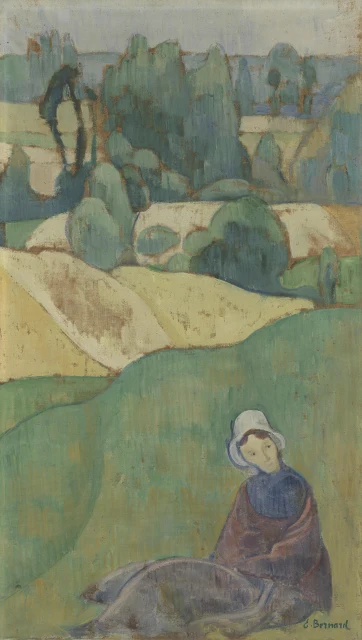 Woman Sitting in a Field: BrittanyÉmile Bernard, 1890
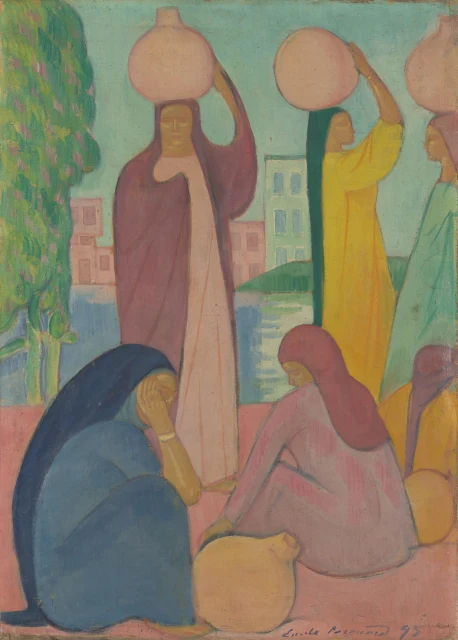 Women by the Waterside, with PitchersÉmile Bernard, 1895