Gentile Bellini
1507 · Republic of Venice · Renaissance, Venetian Renaissance
The story
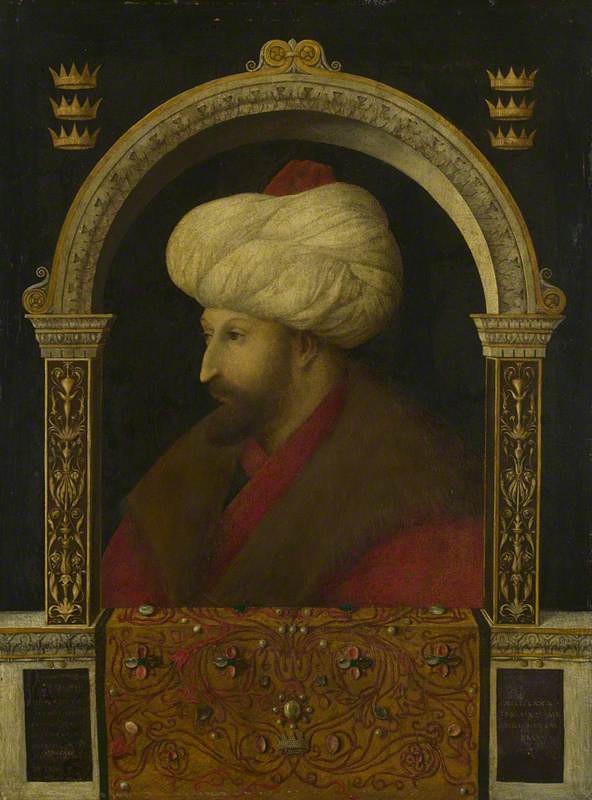
When the Ottoman sultan Mehmed II made peace with Venice in 1479, he asked for an unusual gift: a good painter. The Republic sent Gentile Bellini, its most honoured artist, who sailed to Constantinople and spent about a year and a half at the sultan's court.
There he painted the portrait that keeps his name alive, a small, grave likeness of Mehmed II set within a stone arch, now in the National Gallery in London. It was a diplomatic errand as much as an artistic one, with trade and peace resting on goodwill between a Christian republic and the ruler who had taken Constantinople from the Byzantines a generation earlier.
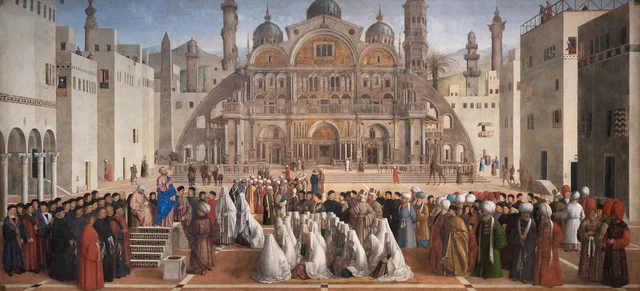
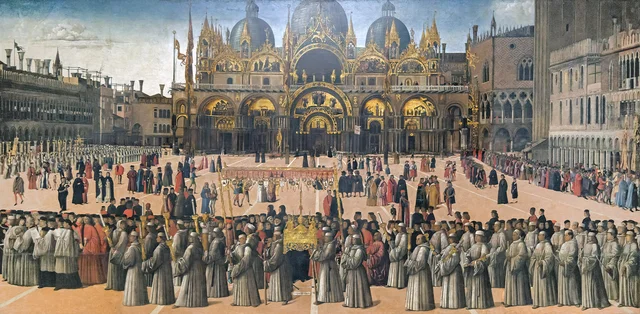
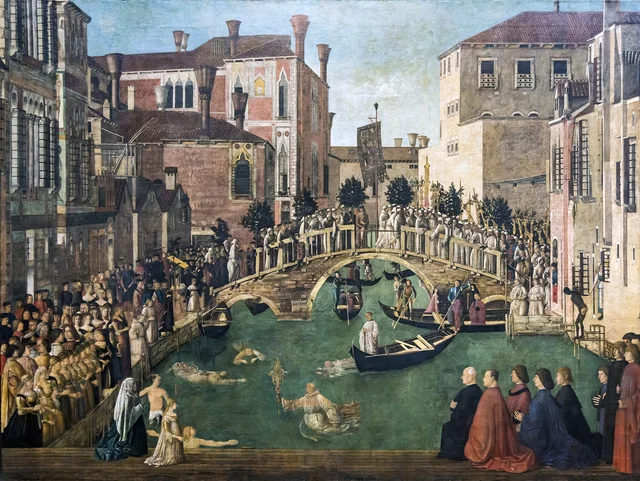
At home Gentile was the official painter of Venice, charged with the great history canvases in the Doge's Palace and with processional scenes for the city's confraternities, like his Procession in Piazza San Marco, crowded with recognisable Venetians in front of the basilica. He came from a painting dynasty, the son of Jacopo Bellini and elder brother of Giovanni, whose softer, more luminous manner would in time overshadow his own precise, documentary style. Much of his grandest work, the history paintings in the Doge's Palace, burned with the building in 1577 and survives only in written descriptions.