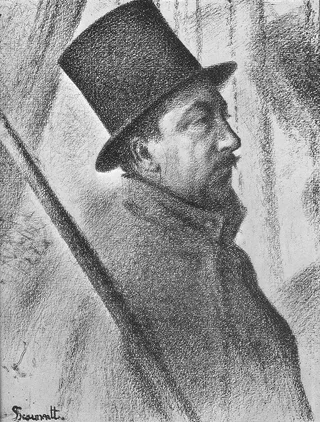
Paul Signac
1863–1935 · France · Pointillism
The story
Signac met Georges Seurat in 1884 and the two of them worked out, over the next few years, a method of painting in small dots of pure, unmixed color, placed so that the eye rather than the brush would do the blending. They called it divisionism; critics called it pointillism. When Seurat died suddenly in 1891 at only 31, Signac was the one who kept the technique going, writing a book on its theory and mentoring the next generation, including a young Henri Matisse.
Sailing shaped what he painted as much as any theory did. Signac kept a boat and worked his way along the Mediterranean coast, docking for weeks at a time in a fishing village called Saint-Tropez that was barely known before he started painting its harbor in dots of color, drawing other artists there after him.
He was also an anarchist, part of a circle that included the critic Félix Fénéon and fellow painter Camille Pissarro, though his politics stayed mostly on the page rather than in the street. He served as president of the Salon des Indépendants, the exhibition society with no jury and no prizes, for nearly three decades, from 1908 until his death in 1935.
More articles
Works
111 works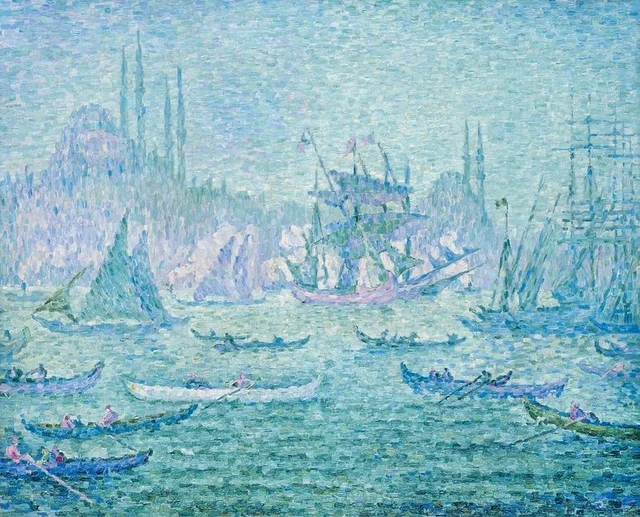 View of the Golden Horn in ConstantinoplePaul Signac, 1907
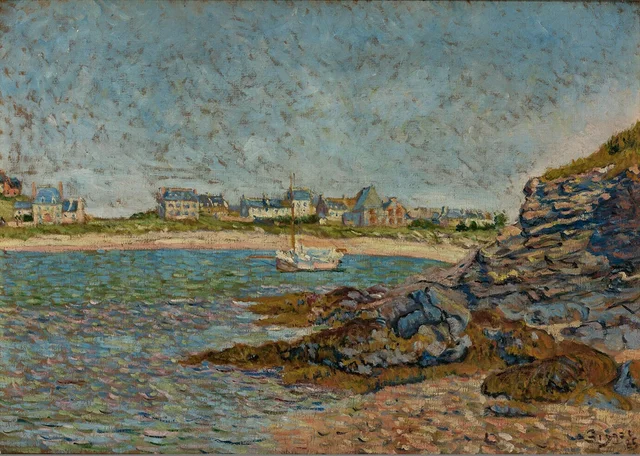 View of the Port, Saint-BriacPaul Signac, 1885
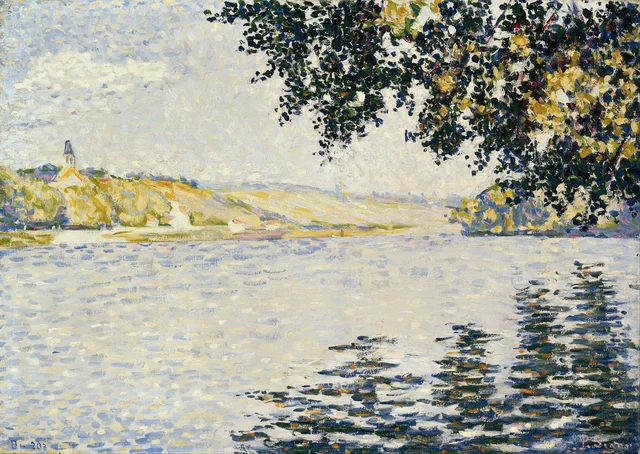 View of the Seine at HerblayPaul Signac, 1889
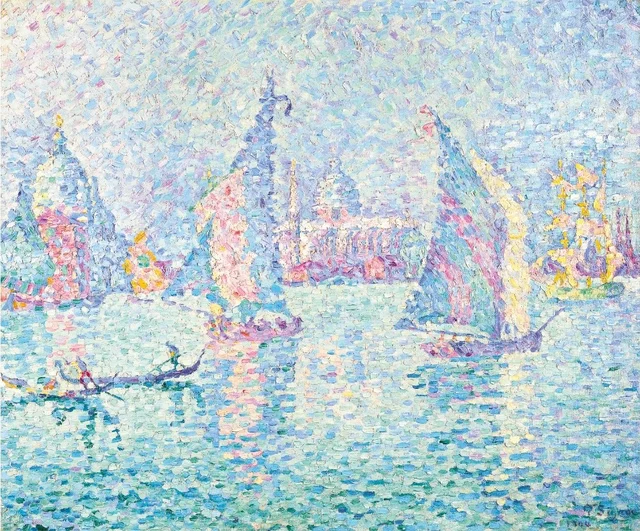 Voiles Dans la Brume. Canal de la GiudeccaPaul Signac, 1904
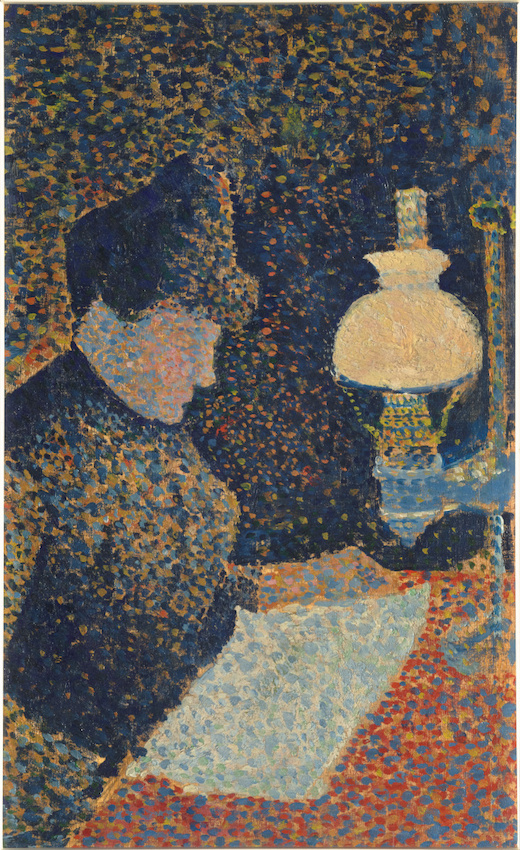 Woman by the LampPaul Signac, 1890
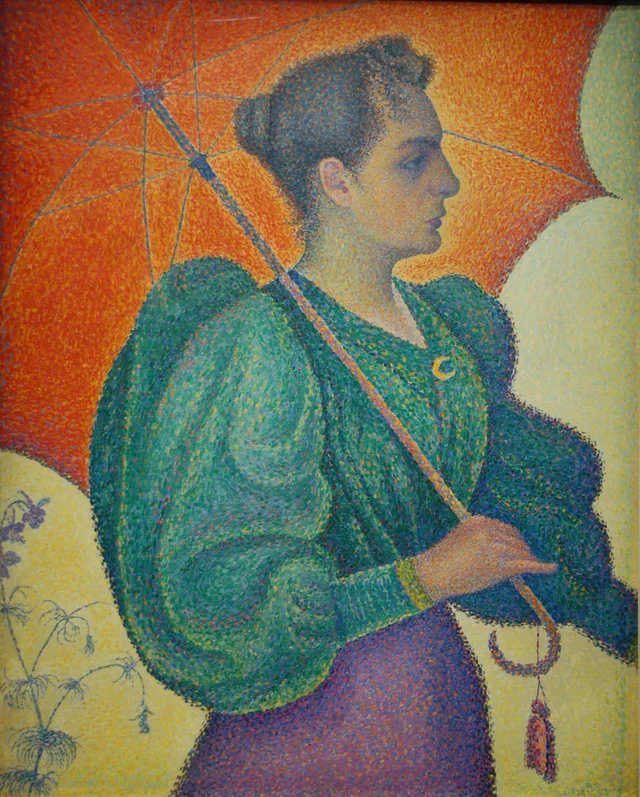 Woman with a ParasolPaul Signac, 1893
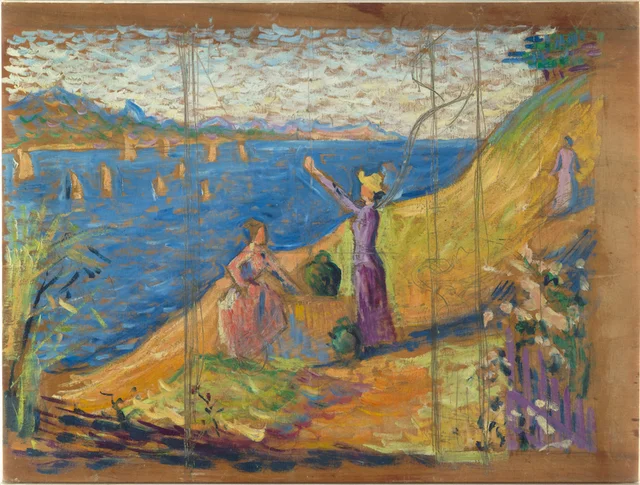 Women by the Well IPaul Signac, 1892
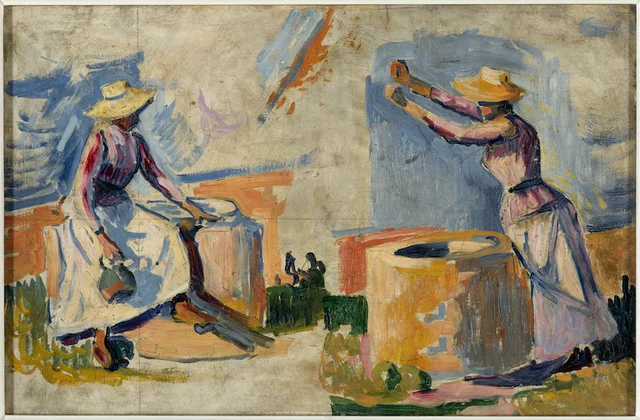 Women by the Well IIPaul Signac, 1892
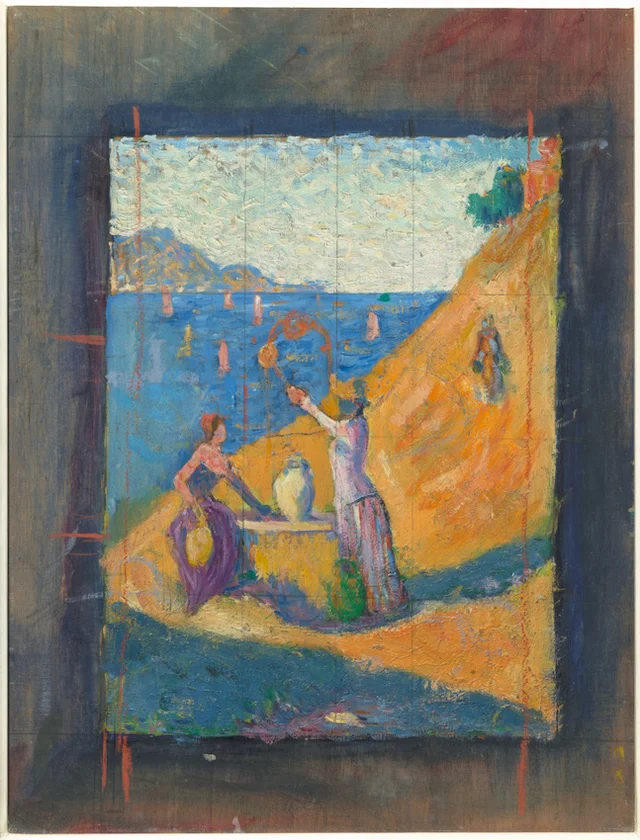 Women by the Well IIIPaul Signac, 1892
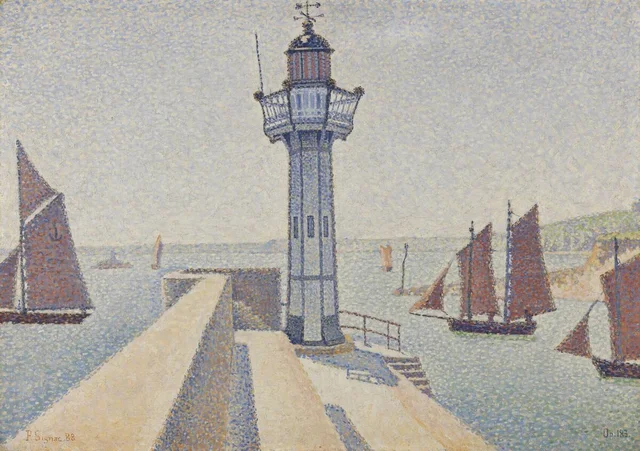 Portrieux, the lighthousePaul Signac, 1888
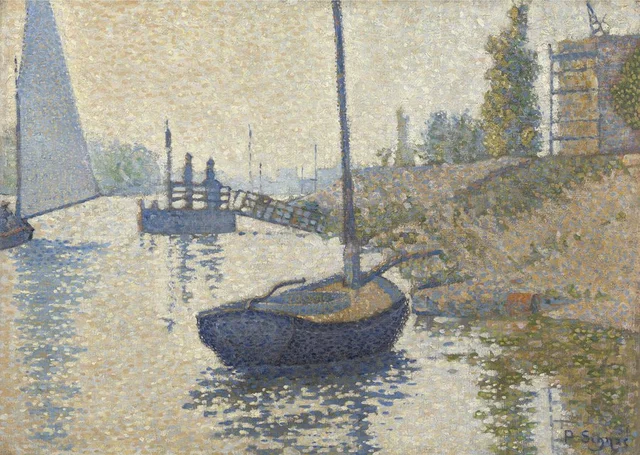 The Ponton de la Félicité at AsnièresPaul Signac, 1886