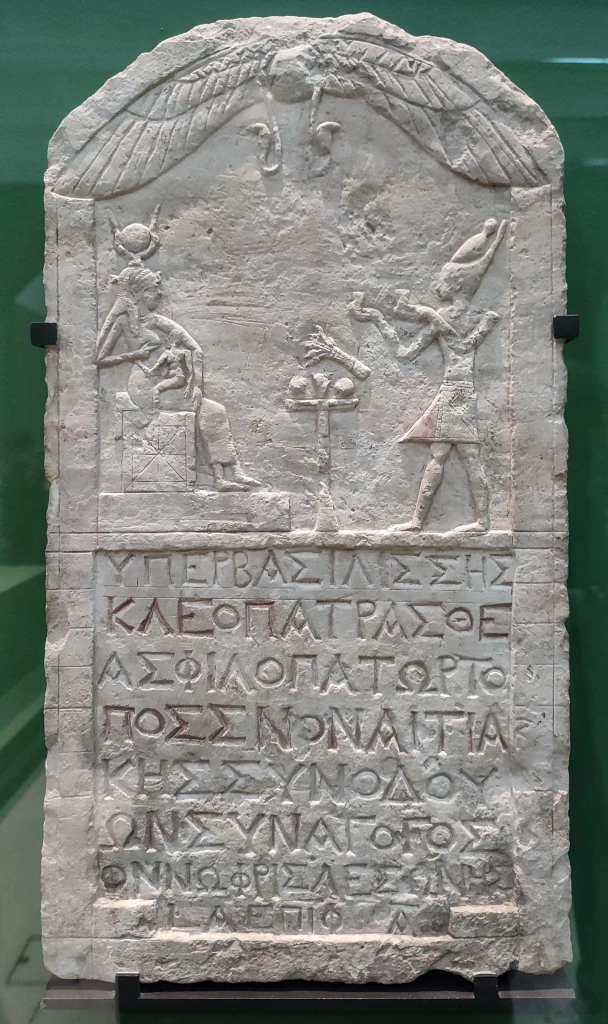
Arched Stela of Cleopatra VII Offering to Isis Nursing Harpocrates
Details
The story
The Greek letters, some still picked out in red, say who this stone was for. It was set up on behalf of Queen Cleopatra, the Father-loving Goddess, by a man called Onnophris, head of a religious association, probably in the Fayum, the farming region west of the Nile. The inscription dates it to the first year of her reign, the reign that ran from 51 to 30 BC and ended with her death.
The scene above the text is entirely Egyptian. Under a winged sun disc, a ruler in the double crown of Upper and Lower Egypt and a pharaoh's short kilt holds out two vessels to Isis, who sits on a throne nursing her infant son Harpocrates, with an offering table between them. The figure is dressed as a king, yet the Louvre reads it as Cleopatra herself. Scholars are not agreed. Some think the queen was deliberately shown in the age-old form of a male pharaoh. Others think the stela was carved earlier for a king, perhaps her father, and only inscribed for her later. The Louvre bought it in 1972.
More works by Unknown Egyptian artist (Late Period or Ptolemaic)
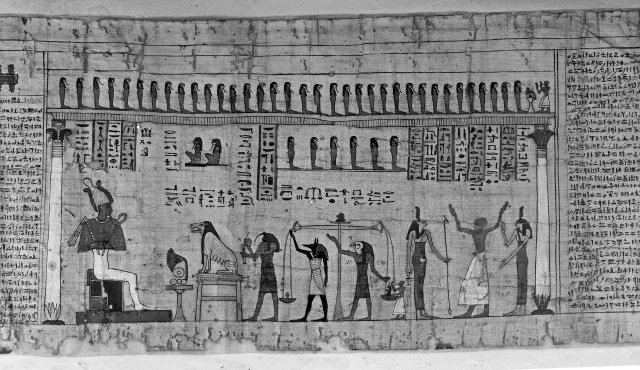 Book of the Dead of PetamunnebnesetawyUnknown Egyptian artist (Late Period or Ptolemaic)
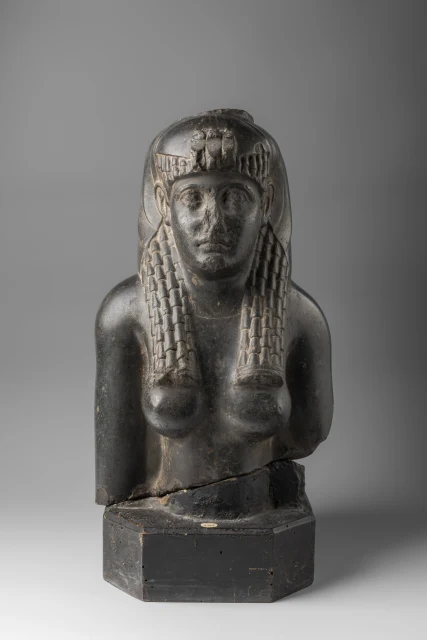 Bust of a Ptolemaic QueenUnknown Egyptian artist (Late Period or Ptolemaic), -125
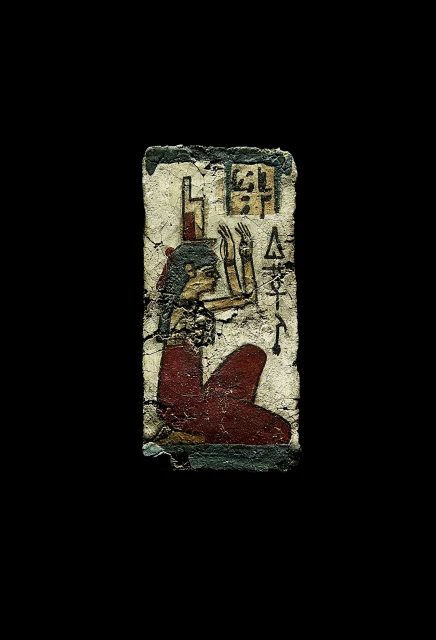 Cartonnage Plaque with Isis MourningUnknown Egyptian artist (Late Period or Ptolemaic)
 Cat CoffinUnknown Egyptian artist (Late Period or Ptolemaic), -498
 Head Attributed to Ptolemy IIUnknown Egyptian artist (Late Period or Ptolemaic), -265