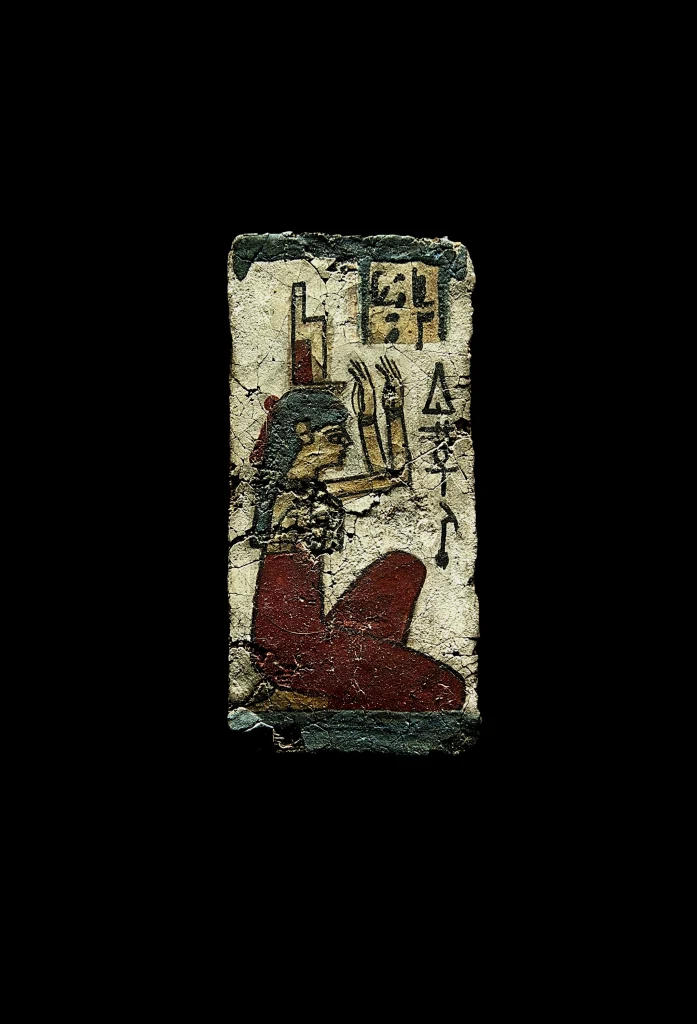
Cartonnage Plaque with Isis Mourning
Details
The story
This scrap of painted linen is less than 9 centimetres tall. It was once part of a cartonnage, the shell of glued and plastered linen that covered an Egyptian mummy, and the Louvre can only place it in the Late Period or the Ptolemaic, somewhere between the 7th and the 1st century BC, with a question mark on both.
Isis kneels in a red dress with both arms raised, the gesture of mourning. On her head sits the hieroglyph of a throne, which is how her name was written, and the column of signs beside her names her again. Above her runs a band for the sky. In the myth Isis wept for her murdered husband Osiris, and since every dead person hoped to become an Osiris, she and her sister Nephthys were painted kneeling at the head and foot of the body to mourn for them too.
The piece was already in the Louvre in 1827, when Champollion, the scholar who deciphered hieroglyphs and the museum's first keeper of Egyptian antiquities, listed it in his catalogue.
More works by Unknown Egyptian artist (Late Period or Ptolemaic)
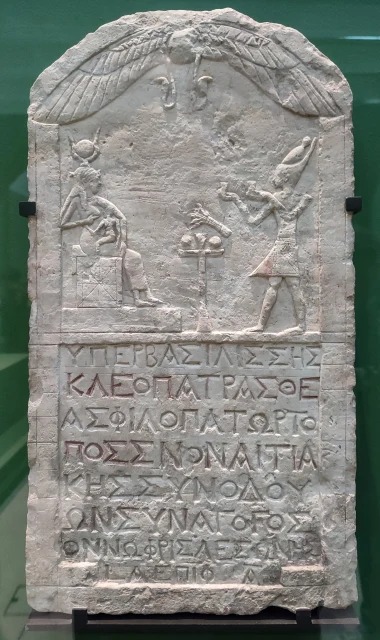 Arched Stela of Cleopatra VII Offering to Isis Nursing HarpocratesUnknown Egyptian artist (Late Period or Ptolemaic), -51
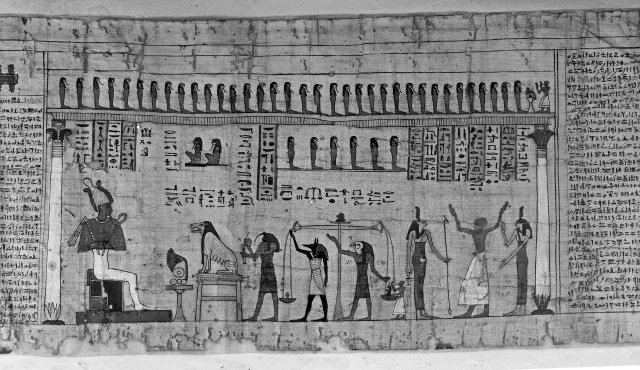 Book of the Dead of PetamunnebnesetawyUnknown Egyptian artist (Late Period or Ptolemaic)
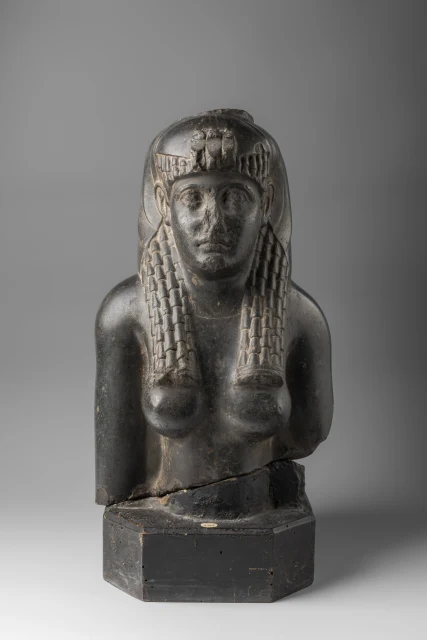 Bust of a Ptolemaic QueenUnknown Egyptian artist (Late Period or Ptolemaic), -125
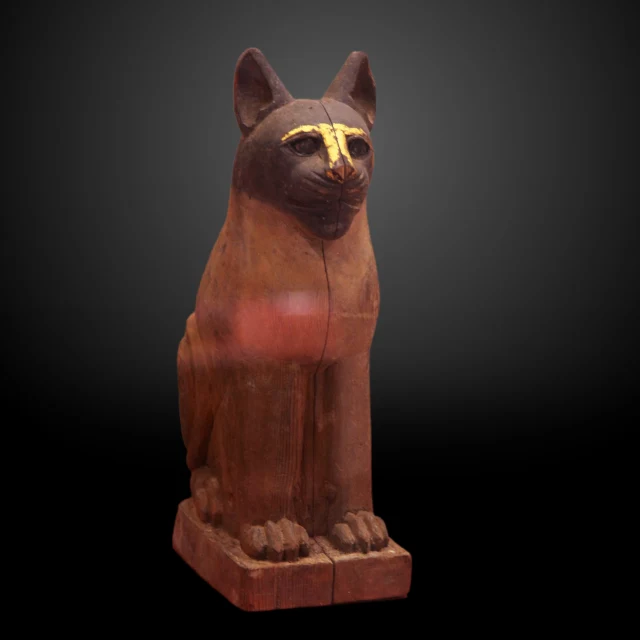 Cat CoffinUnknown Egyptian artist (Late Period or Ptolemaic), -498
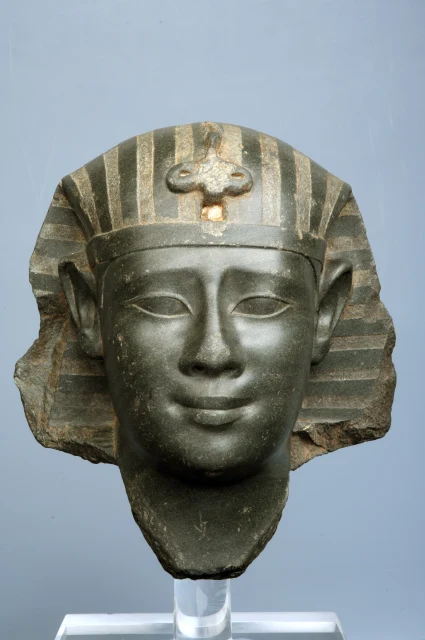 Head Attributed to Ptolemy IIUnknown Egyptian artist (Late Period or Ptolemaic), -265