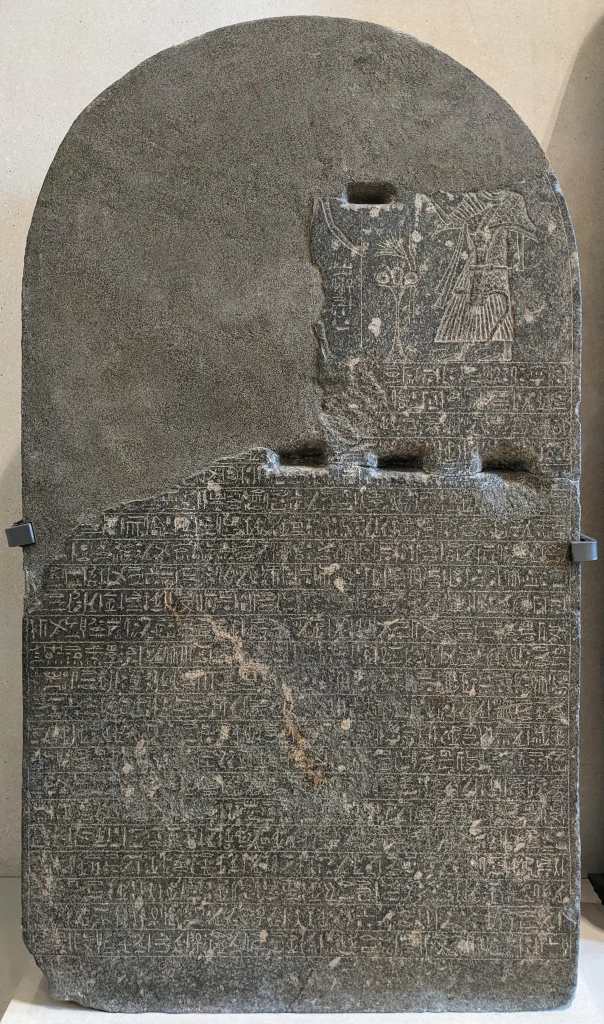
Banishment Stela
Details
The story
When this stone was carved, Egypt in effect had two masters. Kings ruled the north from Tanis in the Nile Delta, while the south was governed from Thebes by the high priests of Amun, who took their decisions through the god's oracle. Menkheperre, the man in the leopard skin standing before the god at the top, was one of them, high priest and commander of the army, a son of the high priest Pinedjem.
The text tells of trouble in Thebes. There had been unrest, and men had been banished to the oases of the Western Desert. Menkheperre came south, restored order, and then, at a festival, put to Amun the question of whether the exiles might come home. The god's statue gave its assent, and Menkheperre had the god also forbid such banishments in future. The stela carries a regnal date, but which king it belongs to is still argued over, and the Louvre lists three candidates.
It was found at Karnak in the 19th century by Victor Gustave Maunier, a Frenchman living at Luxor, kept for years at the French consulate there, and finally sent to the Louvre by the Egyptologist Gaston Maspero.
More works by Unknown Egyptian artist (Third Intermediate Period)
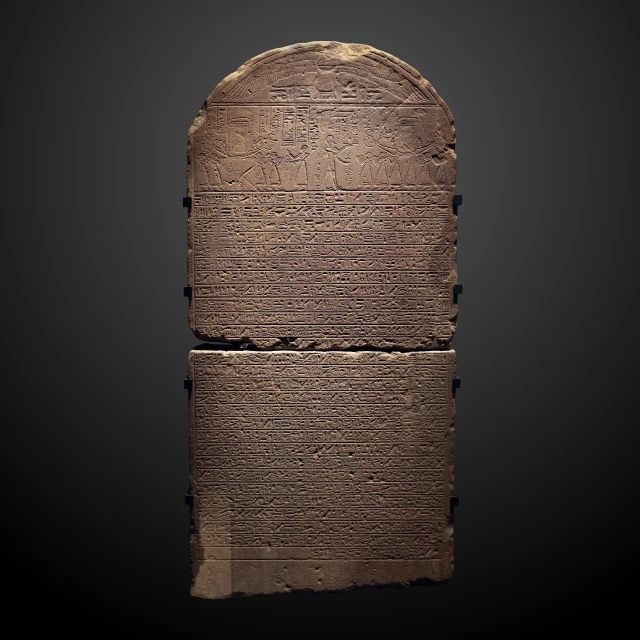 Bentresh StelaUnknown Egyptian artist (Third Intermediate Period), -1006
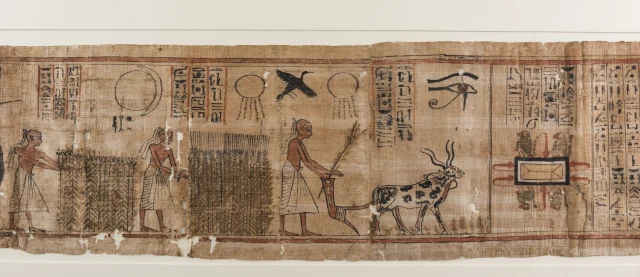 Book of the Dead of NebhepetUnknown Egyptian artist (Third Intermediate Period)
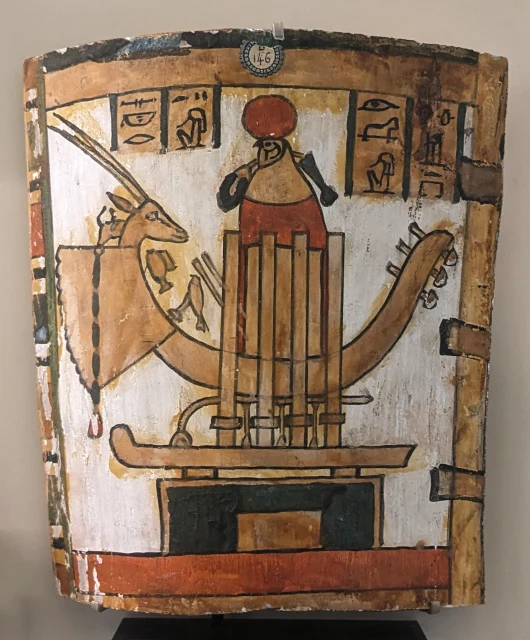 Cartonnage Fragment with the Barque of SokarUnknown Egyptian artist (Third Intermediate Period), -867
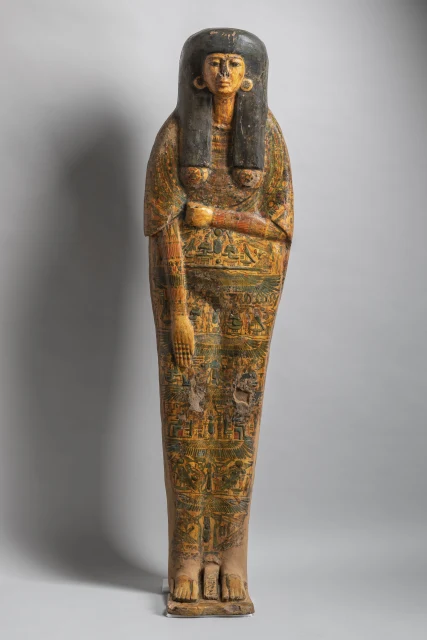 Coffin of TamutmutefUnknown Egyptian artist (Third Intermediate Period), -934
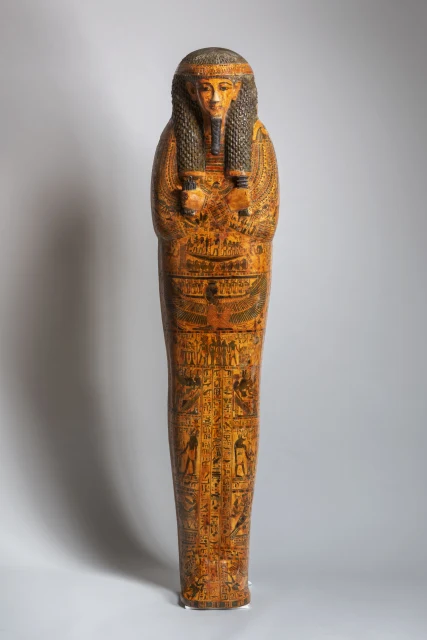 Inner Coffin of ButehamunUnknown Egyptian artist (Third Intermediate Period), -1010