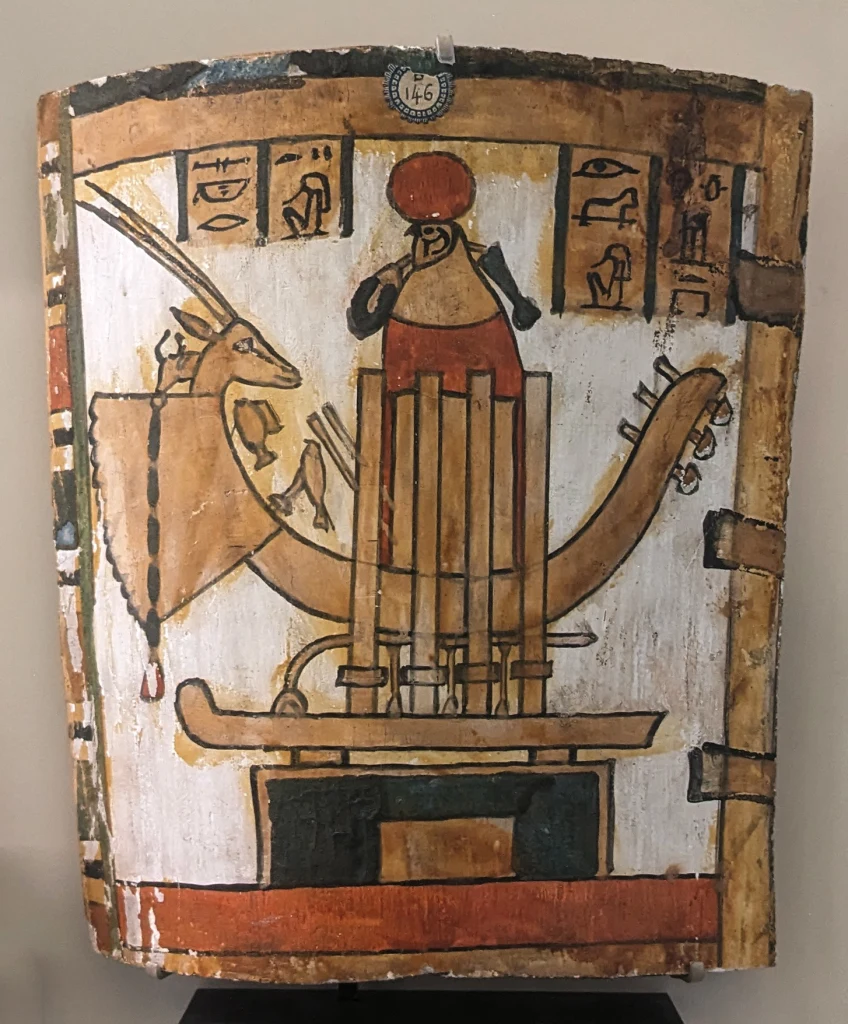
Cartonnage Fragment with the Barque of Sokar
Details
The story
Near the top edge of this fragment a small old label carries the number B 146. That is the number Jean-François Champollion, the man who deciphered hieroglyphs, gave it when he catalogued the Louvre's new Egyptian museum, the Musée Charles X, which opened in 1827, the year this piece arrived. The fragment comes from a cartonnage, a mummy case built up from layers of linen glued together and coated with plaster, then painted and varnished, a technique widely used for the dead in the Third Intermediate Period. Its scene is the barque of Sokar, an ancient god of the dead from the region of Memphis, with a falcon's head. His boat, called the Henu, has a prow shaped like the head of an oryx, an antelope with long straight horns, and it stands on a sledge, because at the god's festival it was dragged in procession over land. The falcon god sits on top, and columns of hieroglyphs on either side give names. Champollion's catalogue first appeared in 1827, and when the Louvre republished it in 2013 this fragment was among the illustrations.
More works by Unknown Egyptian artist (Third Intermediate Period)
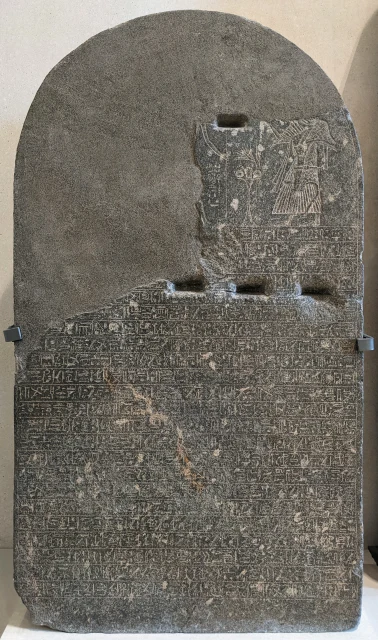 Banishment StelaUnknown Egyptian artist (Third Intermediate Period), -1022
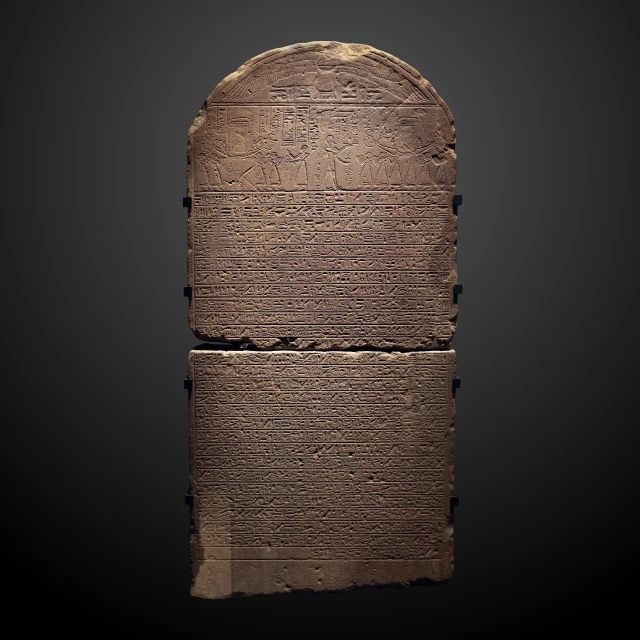 Bentresh StelaUnknown Egyptian artist (Third Intermediate Period), -1006
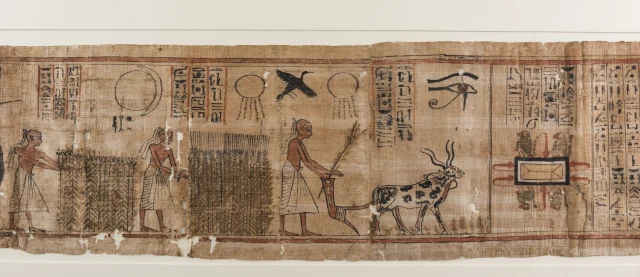 Book of the Dead of NebhepetUnknown Egyptian artist (Third Intermediate Period)
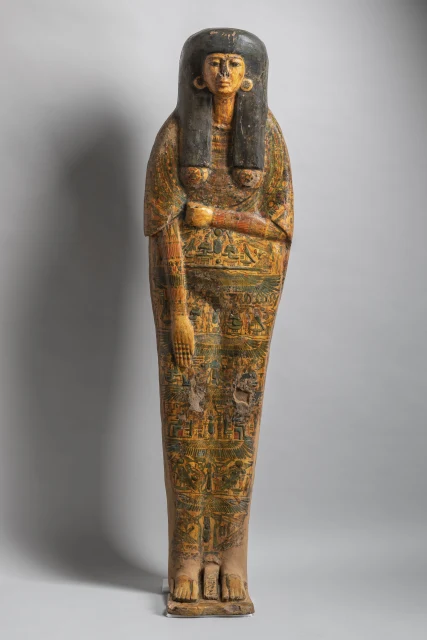 Coffin of TamutmutefUnknown Egyptian artist (Third Intermediate Period), -934
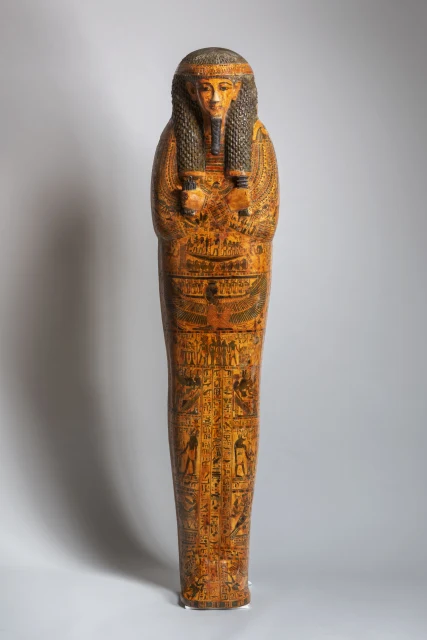 Inner Coffin of ButehamunUnknown Egyptian artist (Third Intermediate Period), -1010