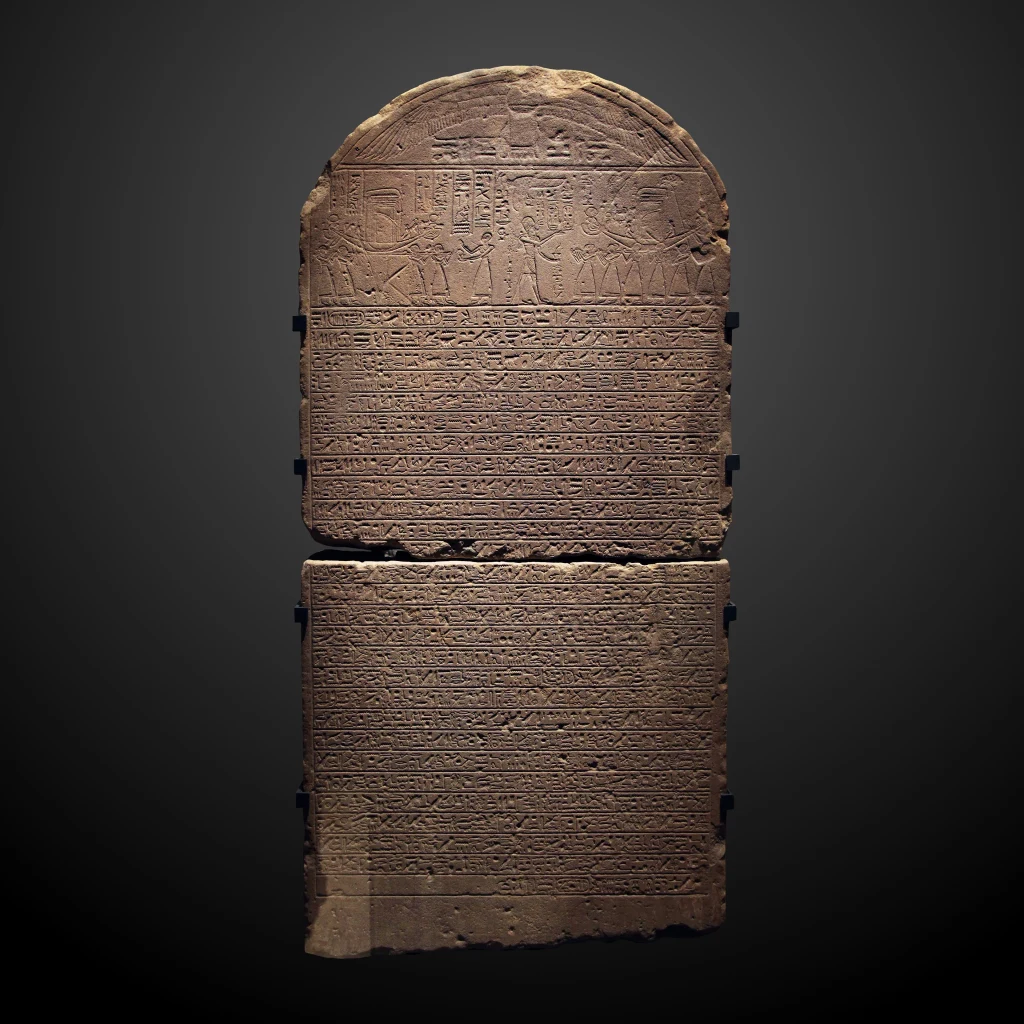
Bentresh Stela
Details
The story
The story carved on this stone is set in the reign of Ramesses II, and it borrows from something that really happened. In the 1240s BC Ramesses married a Hittite princess to seal peace with Egypt's old enemy in the north. Here she becomes the elder daughter of the prince of a distant land called Bakhtan, renamed Neferure by the king. Years later word arrives that her younger sister, Bentresh, is ill, held by a spirit. An Egyptian scribe is sent and fails. So Ramesses sends a statue of the moon god Khonsu from Thebes, the god drives the spirit out, and the prince of Bakhtan, unwilling to give up such a god, keeps the statue for more than three years, until he dreams of a golden falcon flying back toward Egypt and sends it home with gifts.
It was probably not written under Ramesses at all. The Louvre dates the stela by its style to the 21st Dynasty, and many Egyptologists place the text later still, in the Persian or Ptolemaic period, when Egypt was ruled by foreigners. One reading is that priests at Karnak composed it to glorify one form of their god Khonsu over another.
At the top, two processions carry the god's sacred boat, its prow a falcon's head. The stela stood in the small temple of Khonsu at Karnak until the French artist and traveller Émile Prisse d'Avennes removed it in 1843.
More works by Unknown Egyptian artist (Third Intermediate Period)
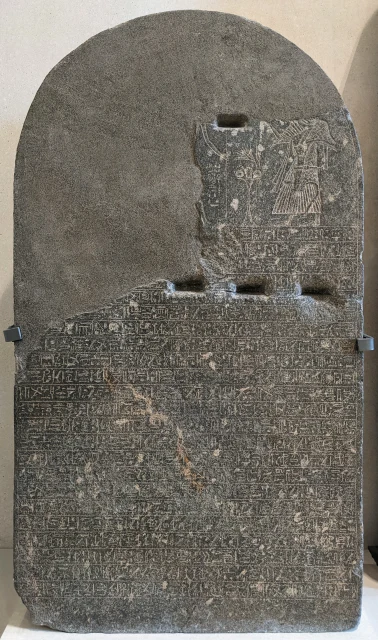 Banishment StelaUnknown Egyptian artist (Third Intermediate Period), -1022
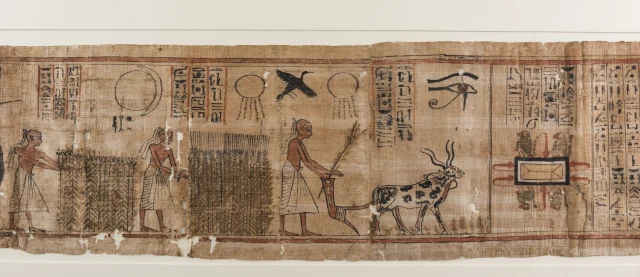 Book of the Dead of NebhepetUnknown Egyptian artist (Third Intermediate Period)
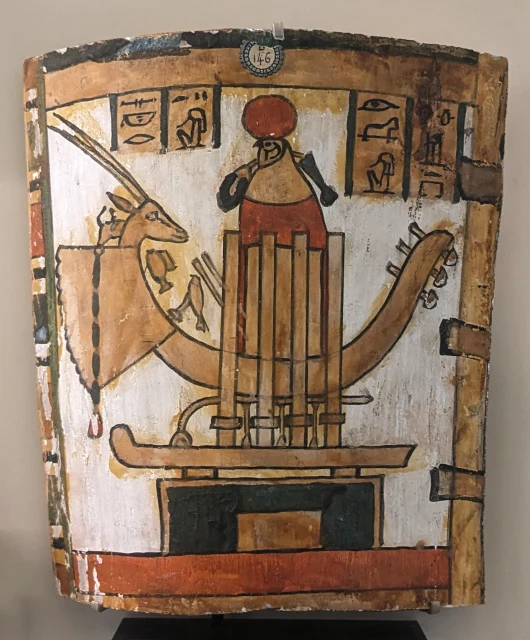 Cartonnage Fragment with the Barque of SokarUnknown Egyptian artist (Third Intermediate Period), -867
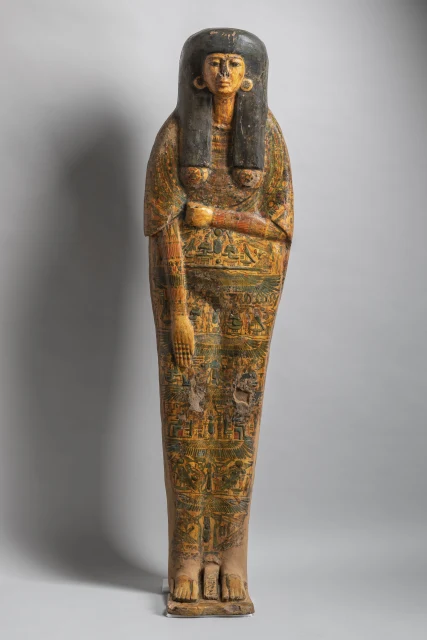 Coffin of TamutmutefUnknown Egyptian artist (Third Intermediate Period), -934
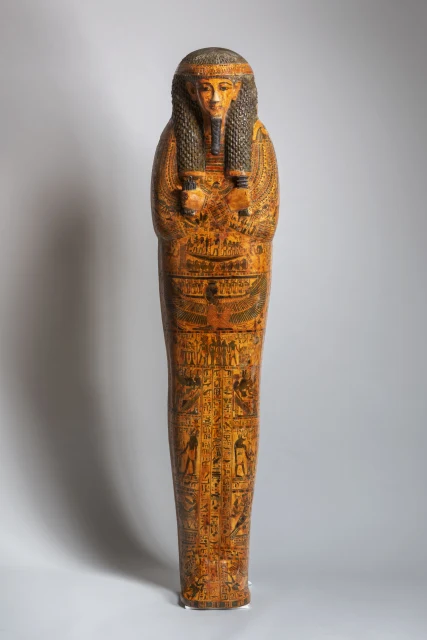 Inner Coffin of ButehamunUnknown Egyptian artist (Third Intermediate Period), -1010