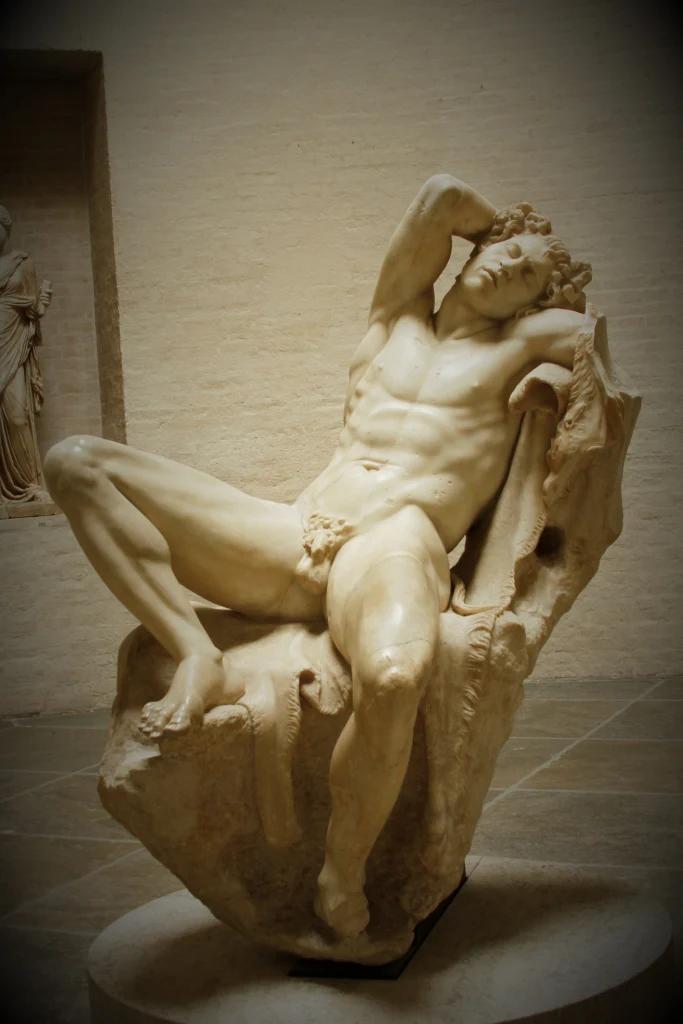
Barberini Faun
Details
The story
In 537 AD the Goths laid siege to Rome. The historian Procopius, who was inside the city, wrote that the defenders of Hadrian's tomb broke up its statues and threw the pieces down on the attackers. Nearly 1,100 years later, between 1624 and 1628, this satyr was dug up at the foot of the same tomb, by then the papal fortress of Castel Sant'Angelo, badly damaged. A link to Procopius's story has been suggested ever since, though it cannot be proved.
The pope at the time was Urban VIII, of the Barberini family, and he declared the statue a possession his family could never sell. From 1810 it took years of negotiation to buy it for Crown Prince Ludwig of Bavaria, and it reached Munich on 6 January 1820.
A young satyr, one of the followers of Dionysus, the god of wine, lies sprawled on a rock covered with a panther skin, his right arm thrown over his head in sleep. The ivy wreath marks a reveller, and the museum points to the strain in his face, the restless half-sleep of someone worn out by wine and dancing. What makes him a satyr only shows from behind. Walk round him and you find a small horse's tail. The museum dates him to around 220 BC. His right leg and parts of the hands were supplied by later restorers.
More works by Unknown Greek sculptor (Hellenistic)
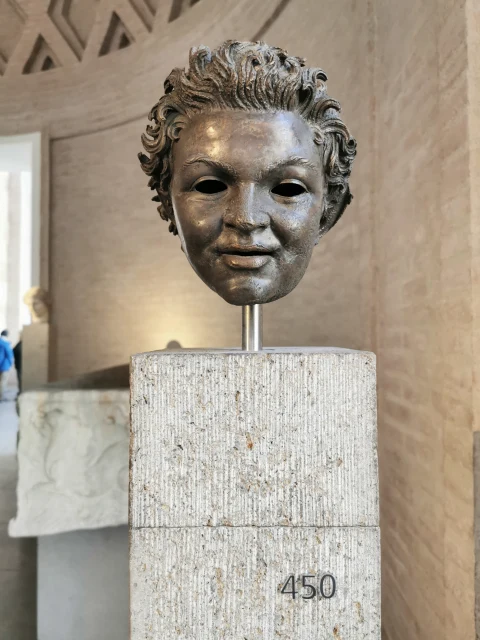 Bronze Head of a Young SatyrUnknown Greek sculptor (Hellenistic), -100
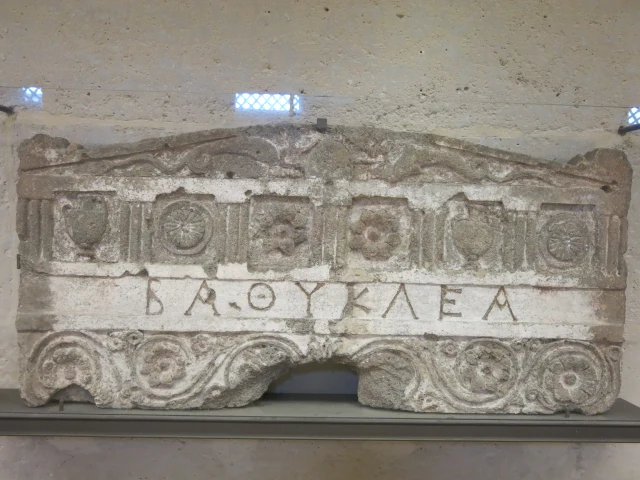 Funerary Stele of BathycleaUnknown Greek sculptor (Hellenistic), -188
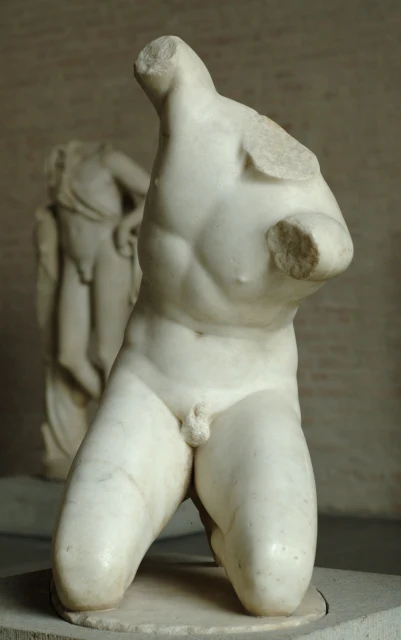 Ilioneus (Kneeling Son of Niobe)Unknown Greek sculptor (Hellenistic)
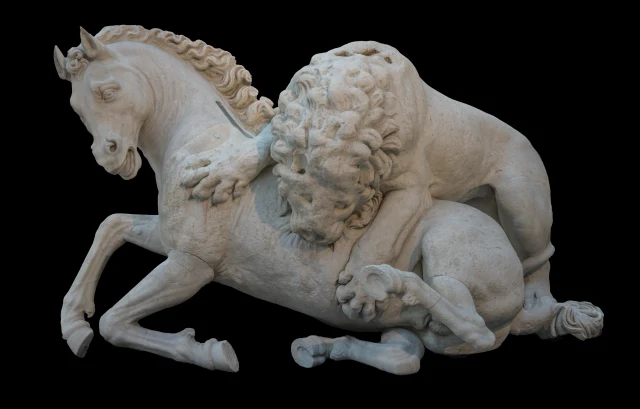 Lion Attacking a HorseUnknown Greek sculptor (Hellenistic), -312
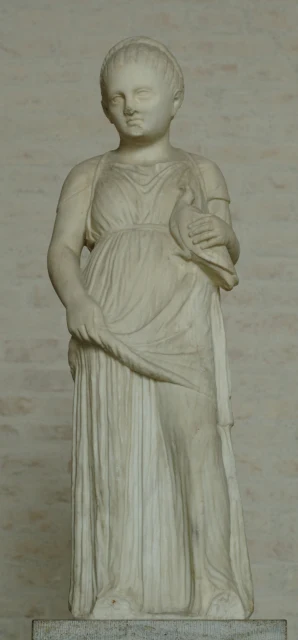 Votive Statue of a Girl with a DoveUnknown Greek sculptor (Hellenistic), -310