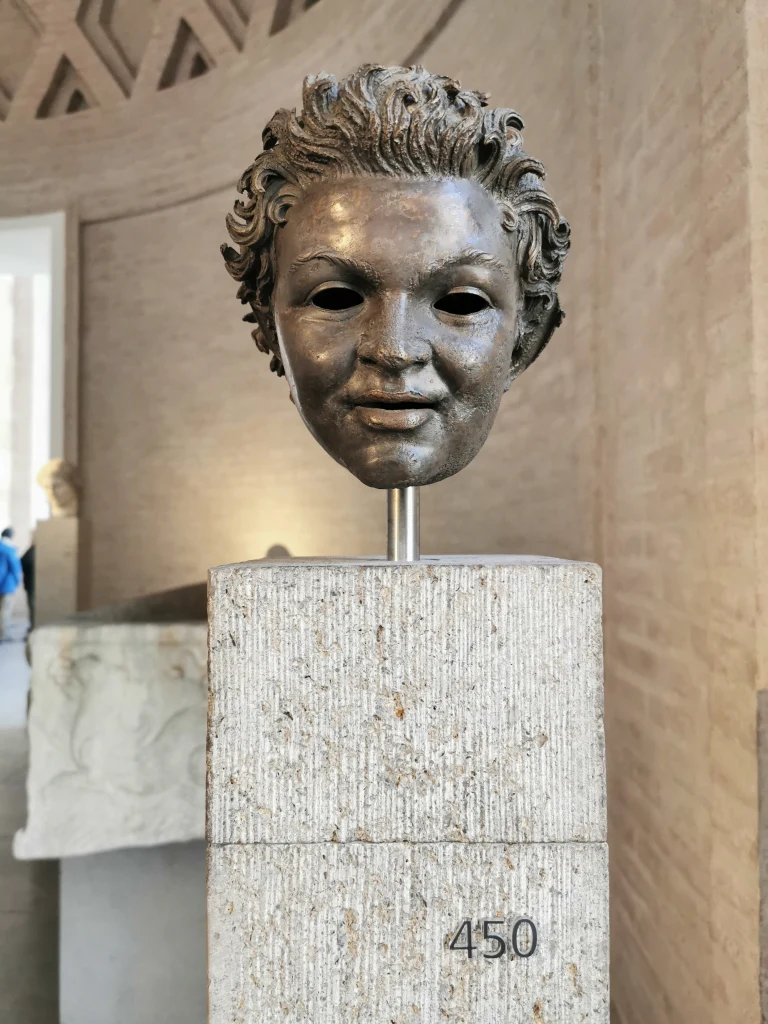
Bronze Head of a Young Satyr
Details
The story
Around 100 BC, when this head was cast, mainland Greece had been under Roman rule for about half a century, and Greek statues were being shipped to Italy for the houses and gardens of wealthy Romans. Most of the bronzes of that age were later melted down for their metal. Greek sculpture survives mainly in marble, very often in Roman copies, so a Greek bronze original like this one is rare.
The museum's label calls him a young satyr. The head belonged to a full statue showing one of the companions of Dionysus, the god of wine, the half-wild revellers of his train. The rest of the figure is lost.
The eyes are empty now. Greek bronze-casters made eyes separately, from stone, glass or other materials, and set them into the sockets, and here the inlays have gone. The head is only 21 centimetres high.
More works by Unknown Greek sculptor (Hellenistic)
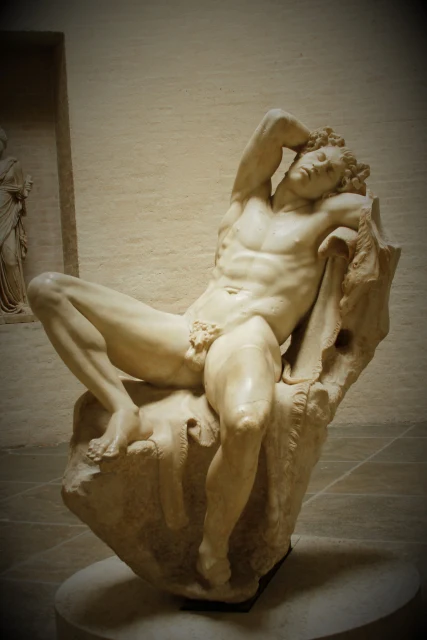 Barberini FaunUnknown Greek sculptor (Hellenistic), -220
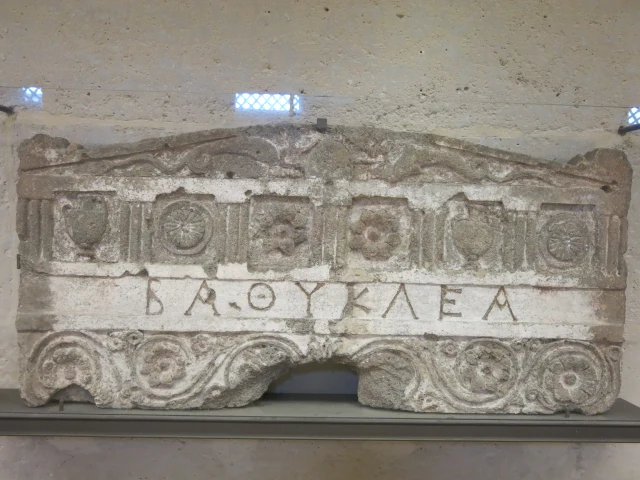 Funerary Stele of BathycleaUnknown Greek sculptor (Hellenistic), -188
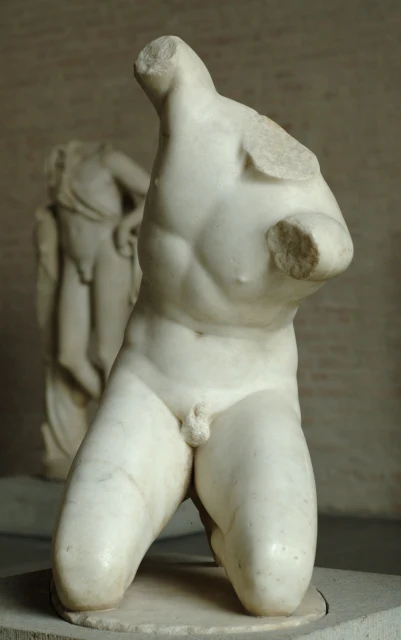 Ilioneus (Kneeling Son of Niobe)Unknown Greek sculptor (Hellenistic)
 Lion Attacking a HorseUnknown Greek sculptor (Hellenistic), -312
 Votive Statue of a Girl with a DoveUnknown Greek sculptor (Hellenistic), -310