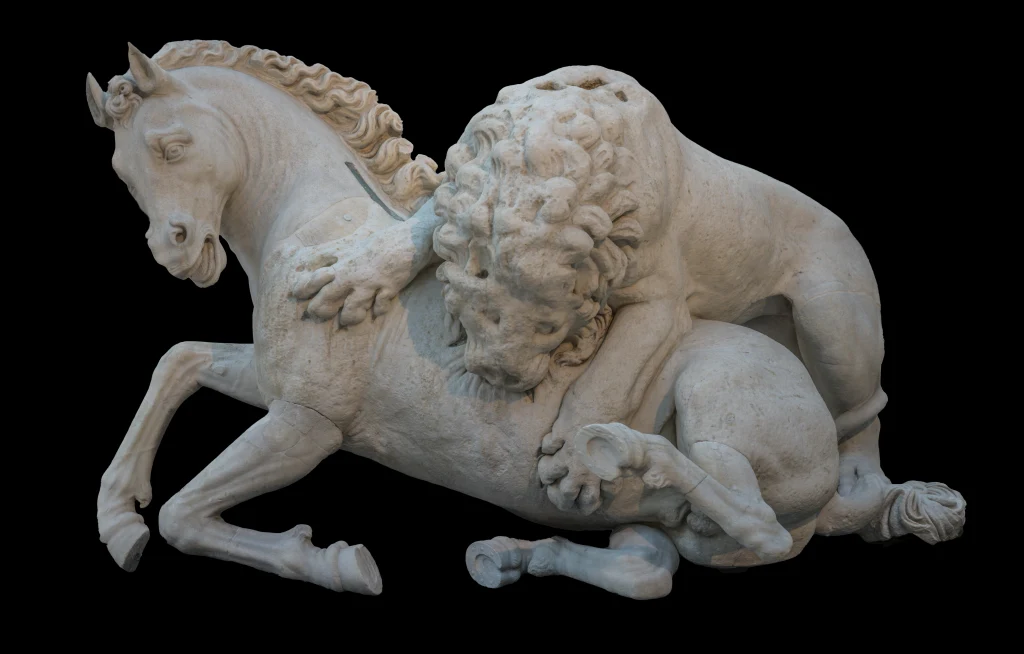
Lion Attacking a Horse
Details
The story
Most ancient marbles on this hill are Roman. This one is probably Greek, carved in the last quarter of the 4th century BC, the generation after Alexander the Great, when sculptors began to show strain and pain in bodies. How it reached Rome is not recorded. It was probably brought as war booty, and since it was reportedly found in a streambed below the Palatine, it may have stood in the Circus Maximus, where Romans watched chariot races and staged animal hunts.
By 1347 it stood on the staircase of the Palazzo Senatorio, the seat of the city's government here on the Capitol. Justice was dispensed there, sentences were read and executions carried out, and the lion bringing down its prey stood for the authority of Rome's citizen government. Michelangelo called it most marvellous. The horse had long since lost its head and legs, and in 1594 his pupil Ruggero Bascapè carved new ones, with a tail and the lion's hind legs. In 2012, after a new restoration, the group travelled to the Getty Villa in Malibu before coming back to stand near Marcus Aurelius.
More works by Unknown Greek sculptor (Hellenistic)
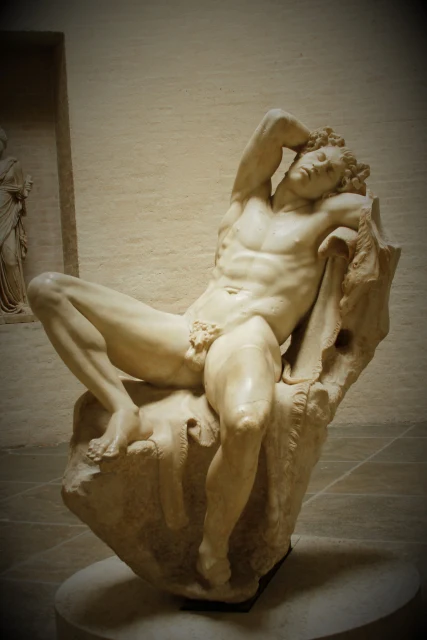 Barberini FaunUnknown Greek sculptor (Hellenistic), -220
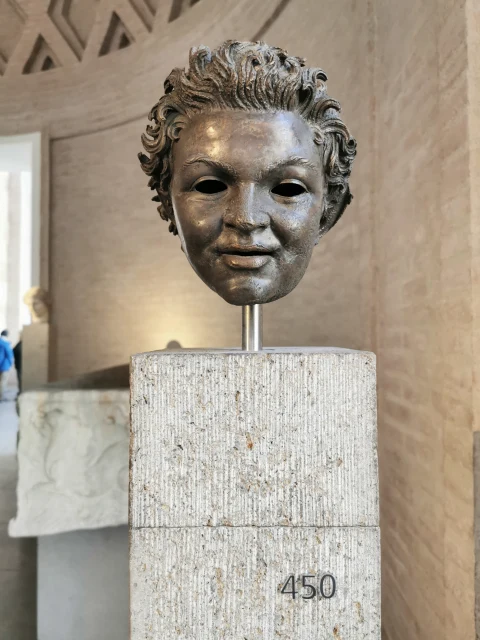 Bronze Head of a Young SatyrUnknown Greek sculptor (Hellenistic), -100
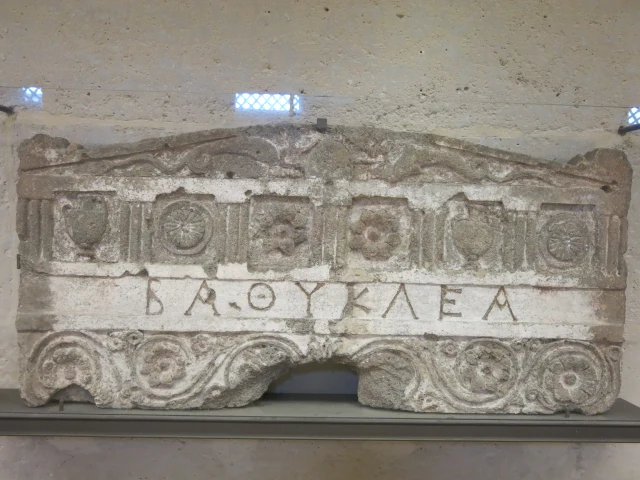 Funerary Stele of BathycleaUnknown Greek sculptor (Hellenistic), -188
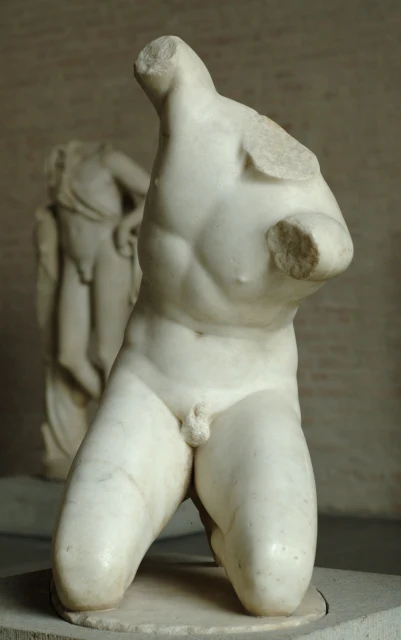 Ilioneus (Kneeling Son of Niobe)Unknown Greek sculptor (Hellenistic)
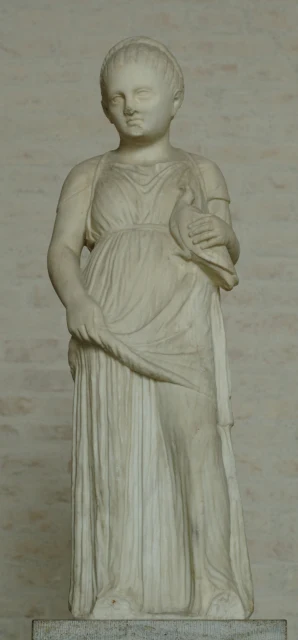 Votive Statue of a Girl with a DoveUnknown Greek sculptor (Hellenistic), -310