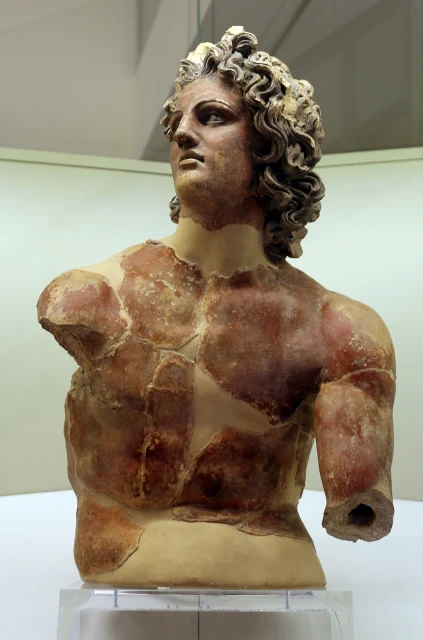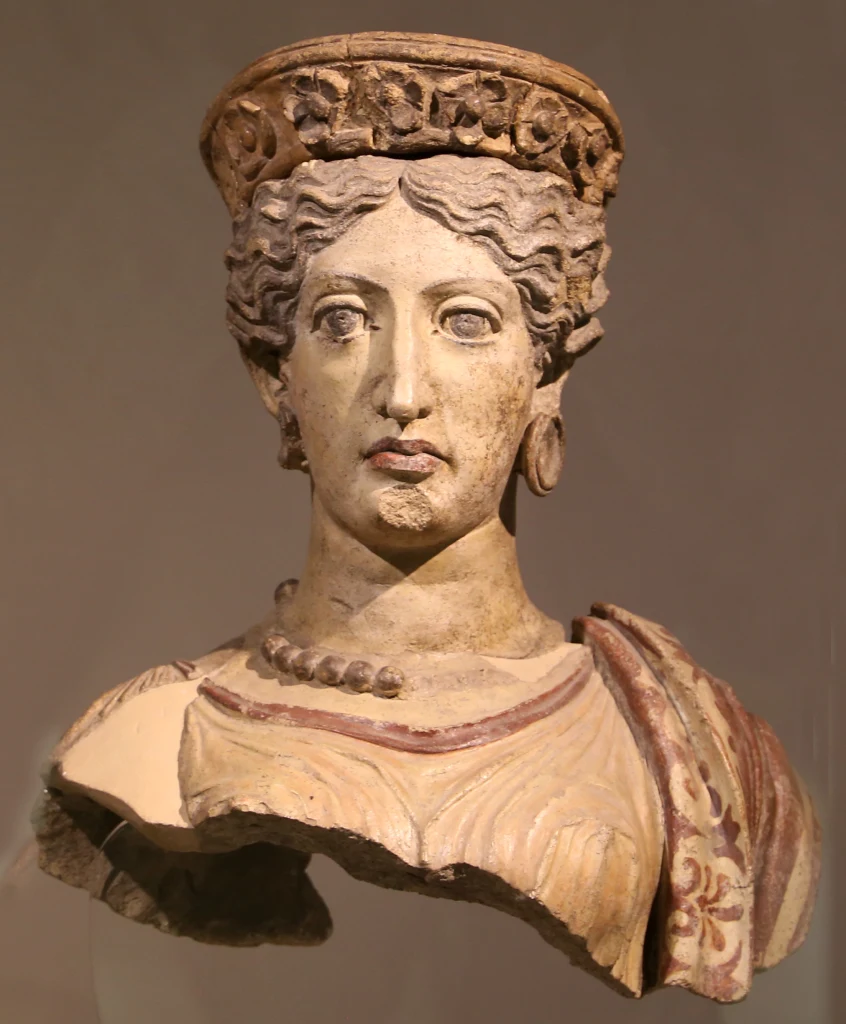
Bust of Juno from Celle
Details
The story
In 394 BC the Roman general Camillus besieged Falerii, the chief town of the Faliscans. Roman tradition, as told by the historian Livy, says the town gave in after a schoolmaster tried to hand his pupils over to the enemy and Camillus sent him back, whipped by the boys themselves. However much of that is legend, Falerii made peace with Rome and kept its own gods.
About 15 years later, around 380 BC, this bust of a goddess was made for the temple at Celle, outside the town, which the museum identifies as the temple of Juno Curitis, the great goddess of Falerii.
Her festival was still drawing crowds nearly four centuries on. The Roman poet Ovid, whose wife came from Falerii, went to see it and wrote a poem about the day. He describes a steep path up to an ancient grove, a procession through decorated streets, girls with gold and jewels in their hair, and white heifers raised on Faliscan meadows led to the altar. The one animal the goddess refused, he says, was the she-goat, because a goat had once given away her hiding place in the forest.