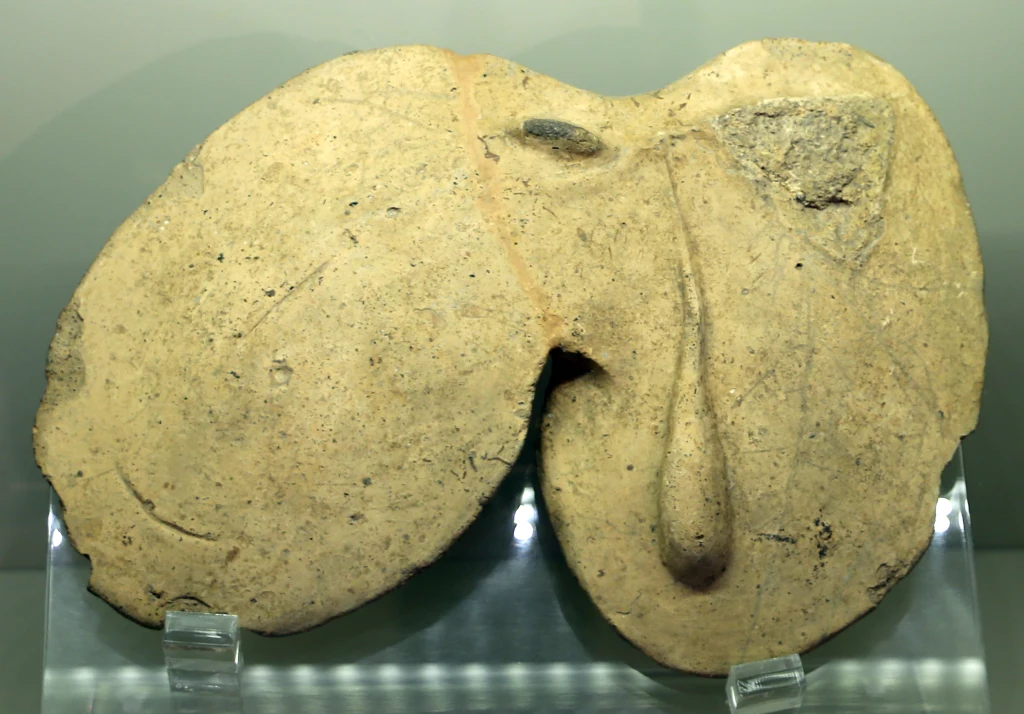
Terracotta Model of a Liver from Falerii
Details
The story
Etruscan priests called haruspices claimed to read the will of the gods in the liver of a sacrificed animal, and Rome went on calling them in to interpret omens for centuries. The best-known guide to their art is a bronze liver found near Piacenza in 1877, its surface divided into small fields, each carrying the name of a god.
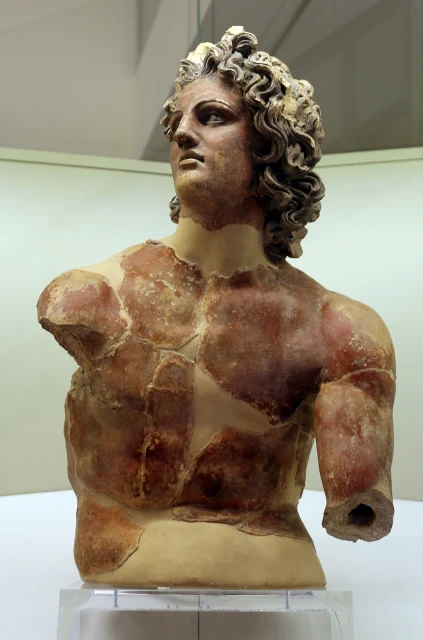
This clay liver was found in the same temple at Lo Scasato, at Falerii, as the museum's Apollo, and dates from around the end of the 4th century BC. It carries no inscription, and that leaves its purpose open. It may have been a model of the kind used to teach or practise divination, or a thank-offering, like the many clay hands, feet and internal organs that worshippers left in the sanctuaries of central Italy. The museum does not say which.