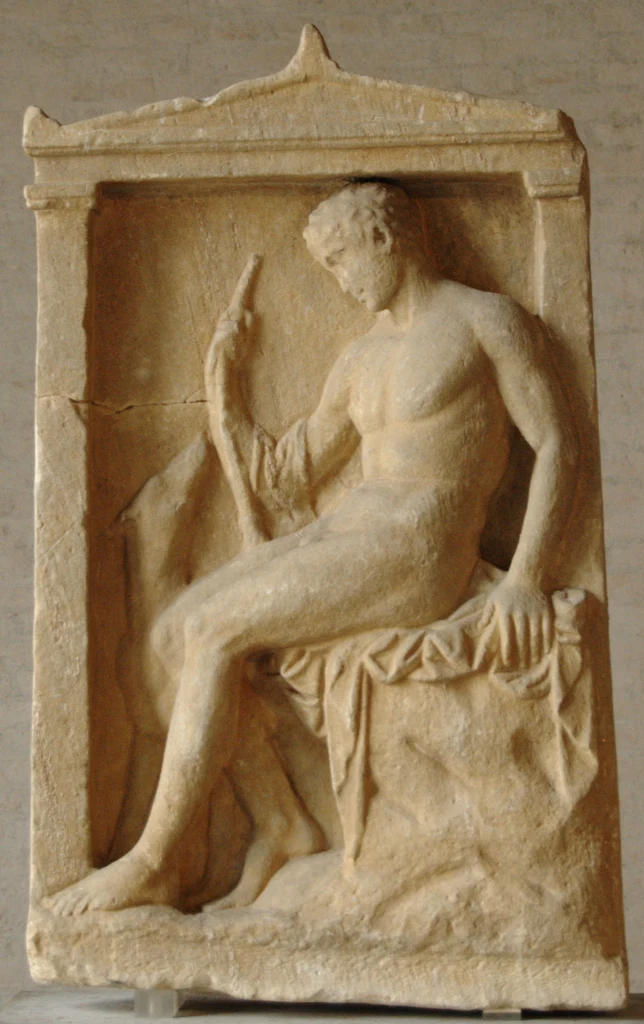
Grave Relief of a Young Man as a Hunter
Details
The story
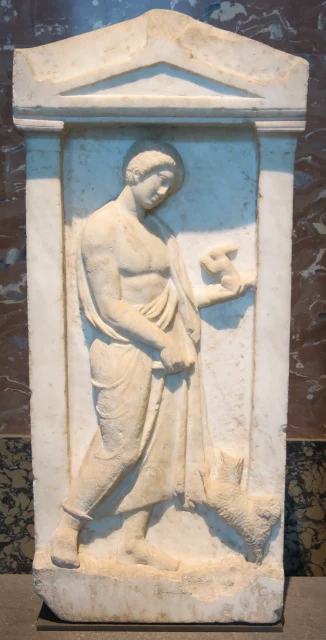
Around 360 BC the roads leading out of Athens ran past family burial plots marked with carved marble monuments, and the families chose how their dead would be remembered. This family showed their son as a hunter. The museum's label points to what he holds in his right hand, a throwing stick of the kind used to bring down hares, and his hunting dog is with him.
The label gives the place of origin as Attica, the countryside of Athens, with a question mark, and some scholars have seen features of the Ionian workshops of the eastern Greek world in it. Where the relief was found is not recorded. The Glyptothek acquired it in 1906.
Monuments like this were close to their end. Between 317 and 307 BC Athens was governed by Demetrios of Phaleron, who restricted the cost of funerals. According to Cicero, his law allowed nothing over a grave but a small column, a stone table or a basin, and carved figures vanished from Attic tombs. This relief, 120 centimetres high, survives complete, and the room it stands in is named after it.