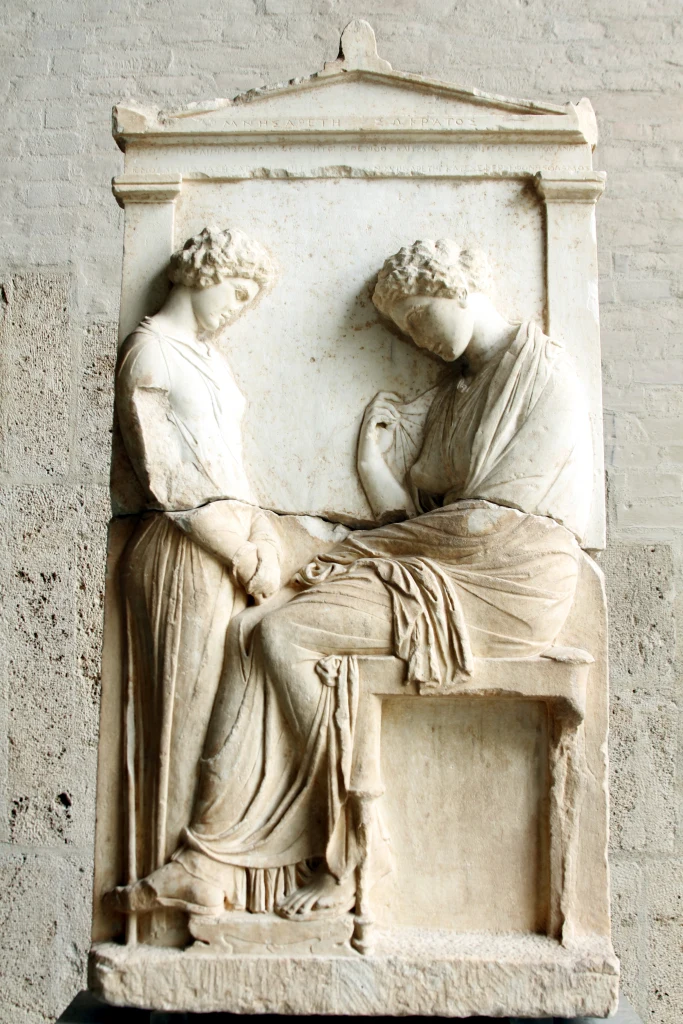
Grave Stele of Mnesarete
Details
The story
Around 380 BC, in Attica, the countryside of Athens, a family set this tall marble stone over the grave of a young woman. The inscription on the beam at the top names her as Mnesarete, daughter of Sokrates. The philosopher Sokrates had been put to death in Athens some 20 years before. This was a different man of that common name, of whom nothing else is known, and the philosopher's own children were all sons.
The verse below lists what she left behind. Her husband, her brothers and sisters, grief for her mother, her child, and the lasting fame of great virtue. Now, it says, the chamber of Persephone, queen of the dead, holds Mnesarete, who reached the peak of all virtue.
She sits on a stool with finely turned legs, her feet on a footstool, and with her right hand she lifts her mantle a little, as if to draw it over her head. Her eyes are lowered. A servant girl stands in front of her, hands clasped, her head bowed as well. The frame of the relief seems to place the two women in one room, and the museum points out that they belong to different worlds, the girl to the living and Mnesarete to the dead.
More works by Unknown Greek sculptor (Classical)
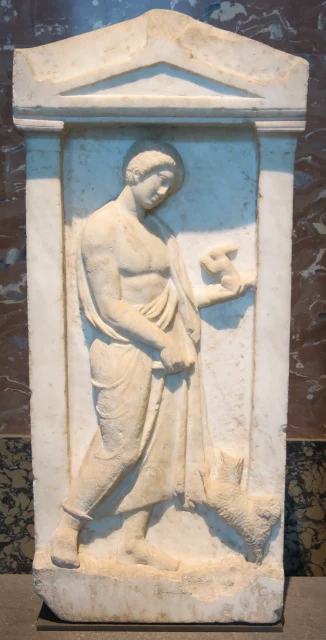 Funerary Stele of a Boy with a DogUnknown Greek sculptor (Classical), -360
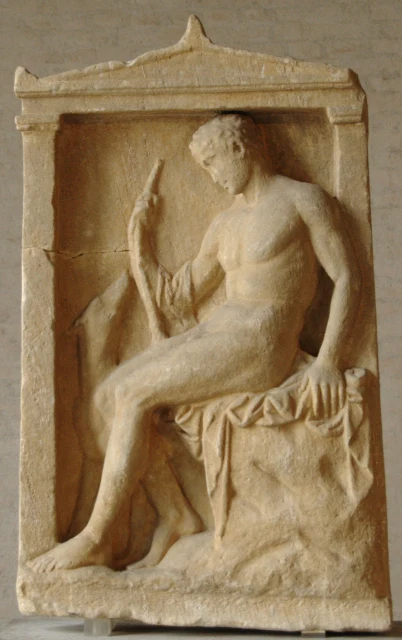 Grave Relief of a Young Man as a HunterUnknown Greek sculptor (Classical), -360
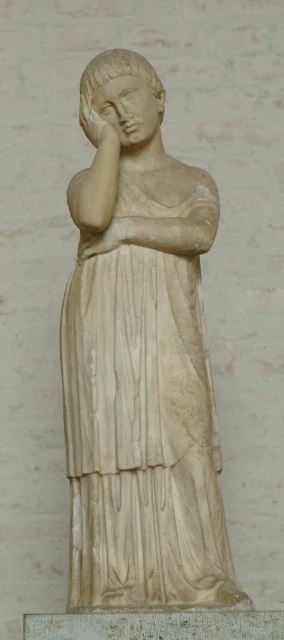 Grave Statue of a Girl ("Dreaming Girl")Unknown Greek sculptor (Classical), -360
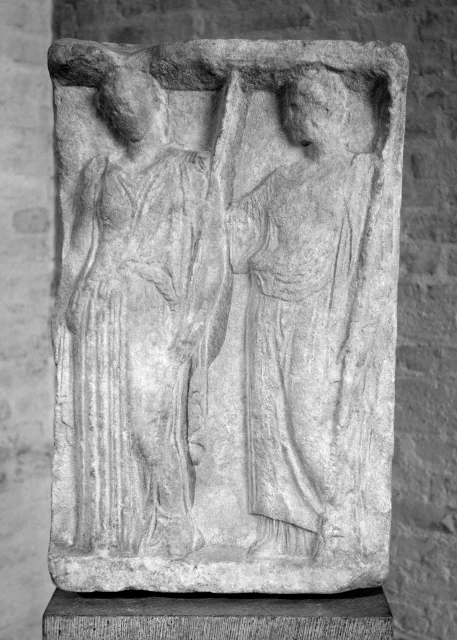 Votive Relief of Demeter and KoreUnknown Greek sculptor (Classical)