Rembrandt and workshop · PD
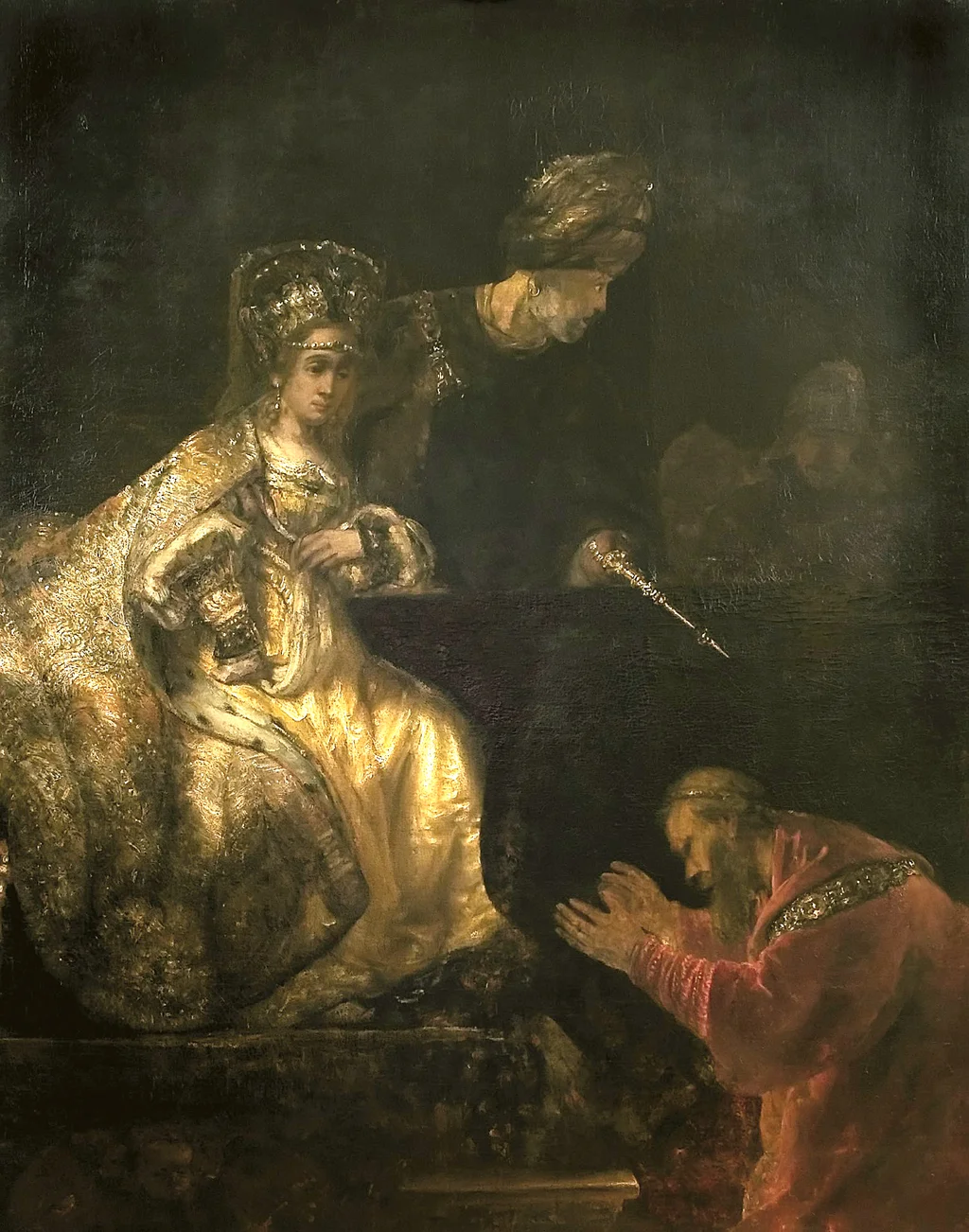
Haman begs Esther for his life
Details
The story
By the mid-1630s Rembrandt was the most sought-after painter in Amsterdam, and he laid in most of this canvas then, around 1635. Then he put it aside. It sat unfinished for nearly two decades, and the final passages were only carried to completion in the 1660s, most likely by someone trained in his workshop. That long gap is why the handling shifts, from the crisp detail of the early years to the loose, glowing manner of his late work. The scene comes from the Book of Esther. Haman, the minister who had plotted to destroy the Jews of Persia, kneels in heavy robes as King Ahasuerus lifts his sceptre and condemns him. Two centuries of argument over who actually painted it were settled only after the picture was studied and cleaned in the Netherlands in 1990 and 1991.