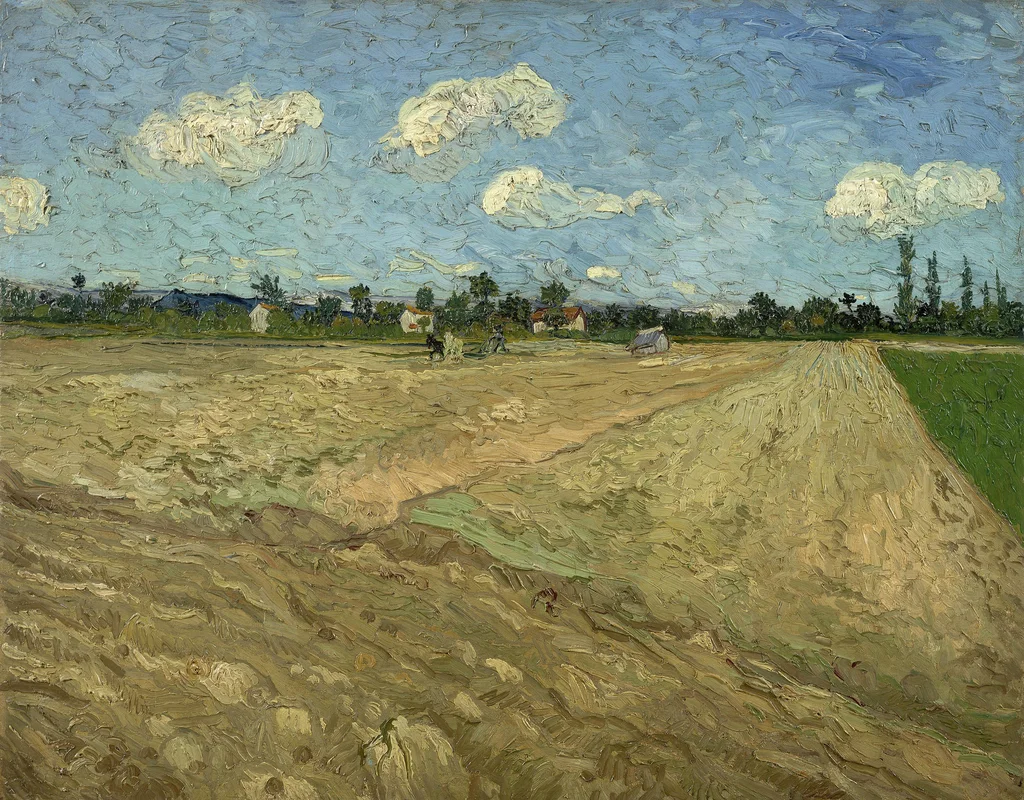
Vincent van Gogh, Ploughed fields, 1888. Wikimedia Commons. · PD
Ploughed fields
Details
The story
On 25 September 1888, in Arles, Van Gogh wrote to Theo and sketched this canvas into the letter. He listed what was in it, plainly. A blue sky with white clouds. An immense field of ashy lilac, furrows, innumerable clods of earth, and on the horizon blue hills, green bushes and small farms with orange roofs.
He had moved into the yellow house on the place Lamartine about a week earlier, his first real home in years, and he was thinking about walls. He ordered a frame for this one in white deal, a pale softwood chosen to sit with the colours, and he told Theo the painting was calmer than some of the others, which he hoped might help it find a buyer. It did not. The canvas was still in the family when he died.
The paint went on thick and in every direction to build the turned clods, and in the same letter he explained why it could not be sent yet. Work loaded like that, he said, has to be handled the way you handle the strongest wine. It has to ferment.