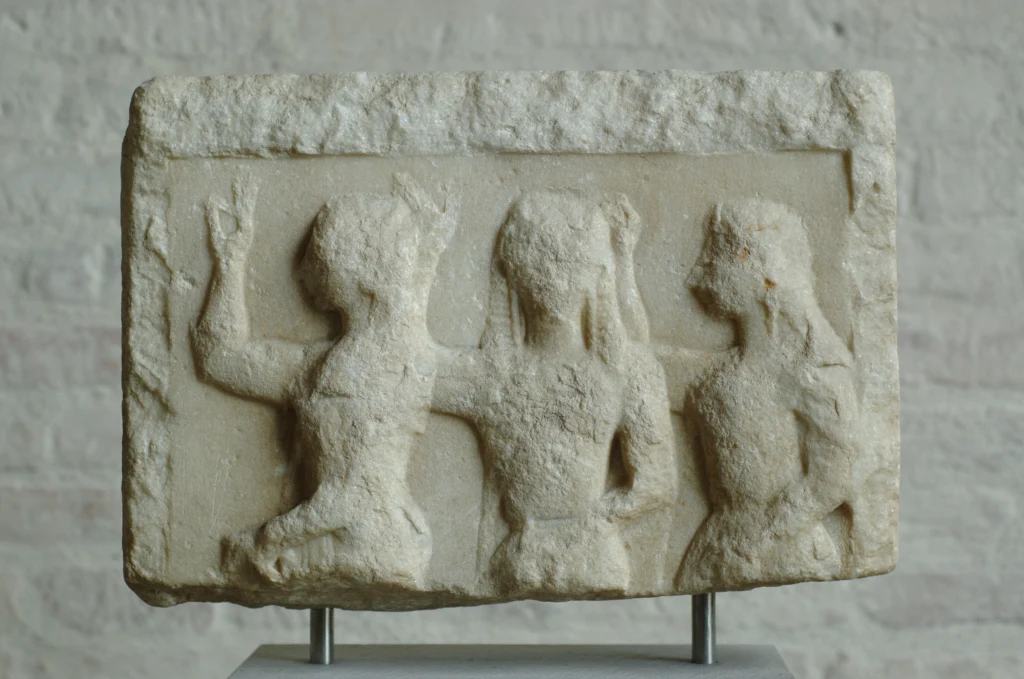
Relief with Dancing Charites
Details
The story
Around 570 to 560 BC, as scholars date it, someone on the island of Paros dedicated this small relief to a trio of goddesses. Paros was then growing rich on its marble, a fine white stone that sculptors all over Greece sent for. Three women are dancing here. Museum guides have long called them the Charites, the Graces, goddesses of charm and festivity, with a cautious perhaps, since no inscription names them.
The Charites had a cult of their own on Paros. A Greek handbook of myths, written centuries later, tells that King Minos of Crete was sacrificing to them on the island when news came that his son had been killed. He threw off his garland and silenced the flute, and still finished the sacrifice. Ever since, the story ends, the people of Paros have sacrificed to the Charites without flutes or garlands.
Only the top of the slab survives, broken off at the dancers' hips, and its surface is badly worn. It came to Munich in 1821 with the collection of Carl Haller von Hallerstein, an architect who had worked in Greece for the Bavarian crown prince and died there in 1817.
More works by Unknown Greek sculptor (Archaic)
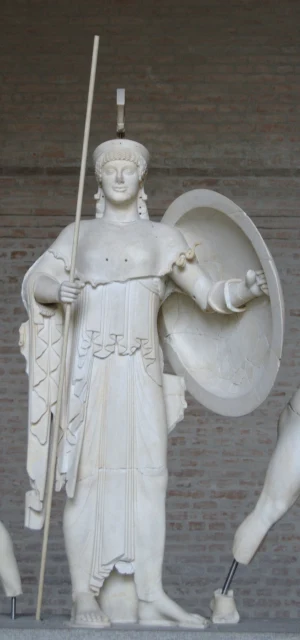 Athena from the West Pediment of the Temple of AphaiaUnknown Greek sculptor (Archaic), -500
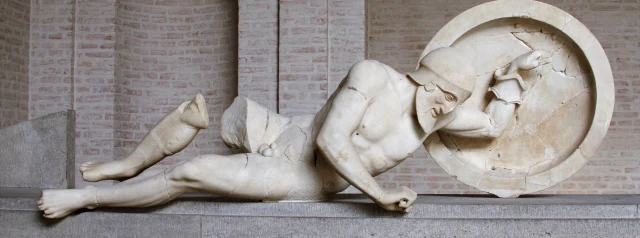 Dying Warrior ("Laomedon") from the East Pediment of the Temple of AphaiaUnknown Greek sculptor (Archaic), -490
 East Pediment of the Temple of Aphaia, AeginaUnknown Greek sculptor (Archaic), -490
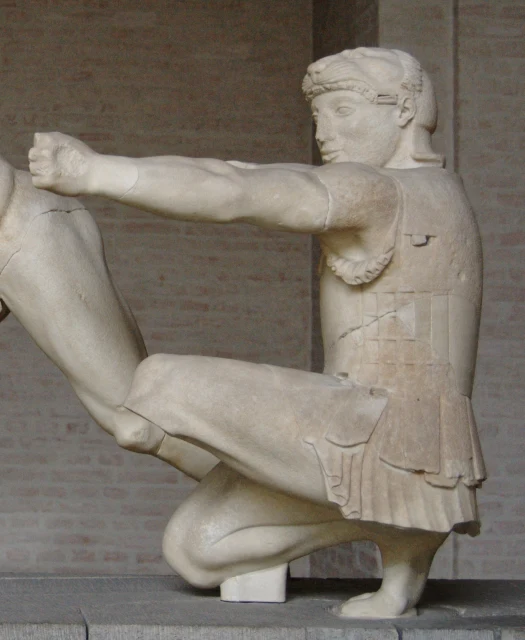 Herakles the Archer from the East Pediment of the Temple of AphaiaUnknown Greek sculptor (Archaic), -490
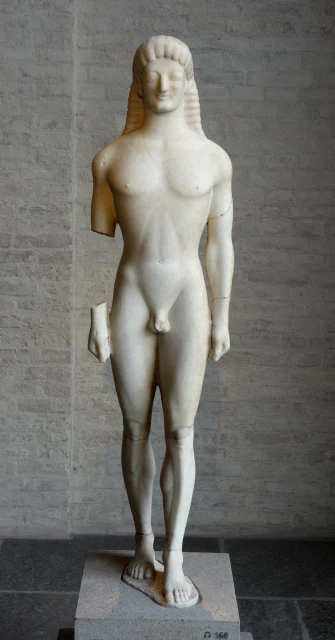 Kouros of TeneaUnknown Greek sculptor (Archaic), -560