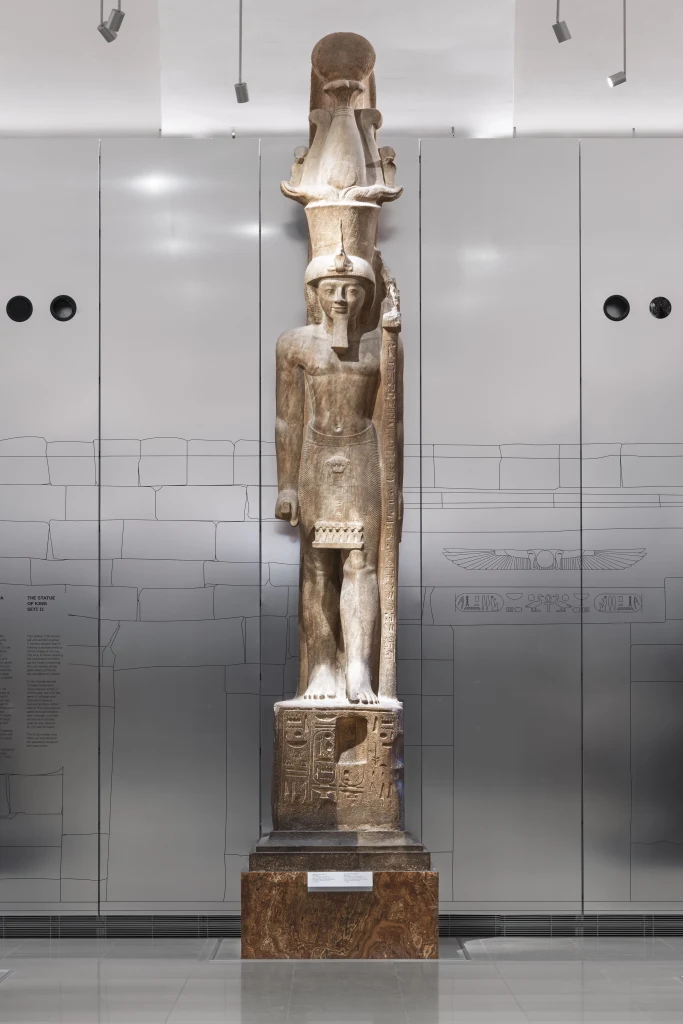
Statue of Seti II
Details
The story
Seti II reigned for only a few years, and the museum dates this colossus to between 1202 and 1198 BC. They were troubled years. Many Egyptologists think that a rival king, Amenmesse, perhaps a half-brother, held Thebes and the south for part of the reign. At Thebes, in the great forecourt of Karnak, the temple of Amun, Seti built a chapel, and this quartzite figure, more than five metres tall, stood at its entrance together with a matching colossus now in the Louvre.
The king steps forward on his left leg, the Egyptian way of showing a figure able to walk and act. He holds a tall standard topped by a figure of Amun, presenting himself as the god's standard-bearer. The museum points to the solid modelling of the muscles and the geometric volumes and outlines, which give the statue its sense of strength and stability. In that same courtyard at Karnak still stands Seti II's way station for the sacred boats of Amun, his wife Mut and their son Khonsu, a building of three chapels.
More works by Unknown Egyptian artist (Ramesside period)
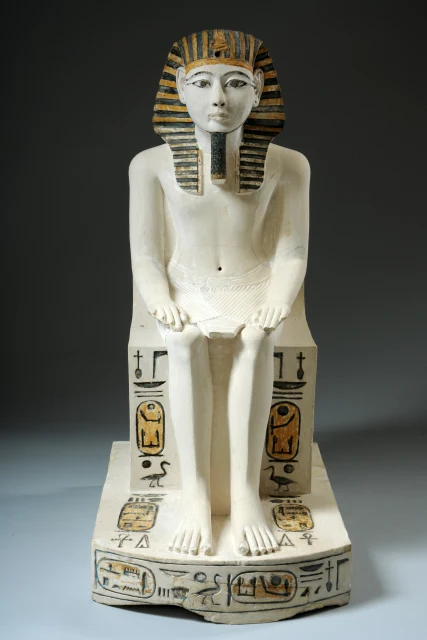 Cult Statue of Amenhotep IUnknown Egyptian artist (Ramesside period), -1242
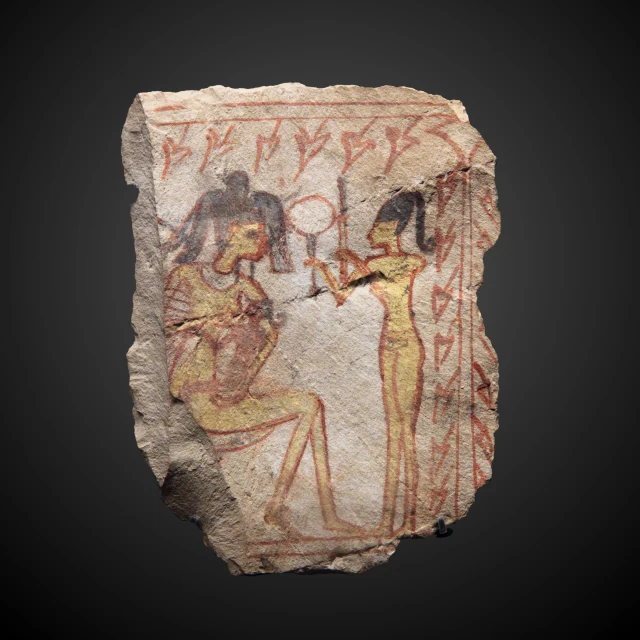 Figured Ostracon: Servant Presenting a Mirror to Her MistressUnknown Egyptian artist (Ramesside period), -1182
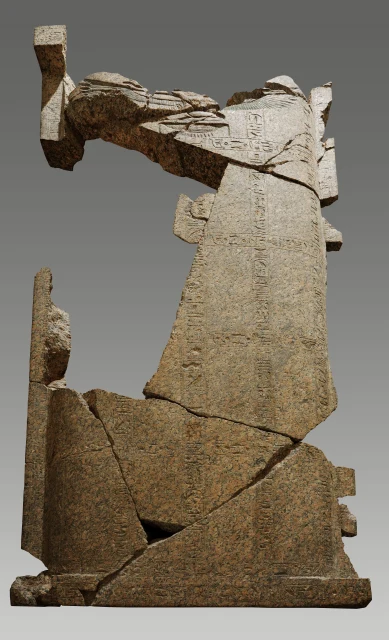 Lid of the Sarcophagus of Queen NefertariUnknown Egyptian artist (Ramesside period), -1246
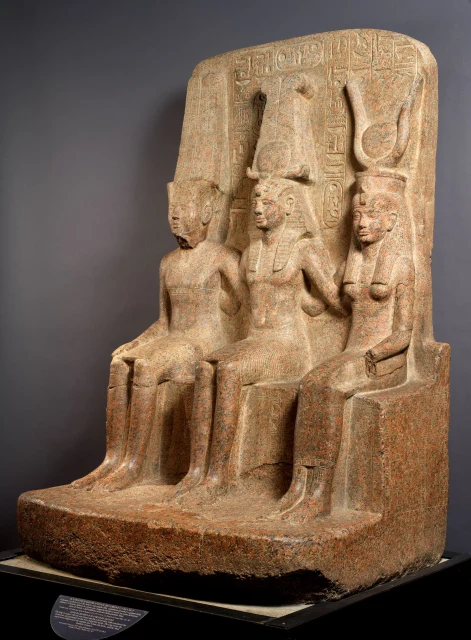 Ramesses II Seated between Amun and MutUnknown Egyptian artist (Ramesside period), -1246
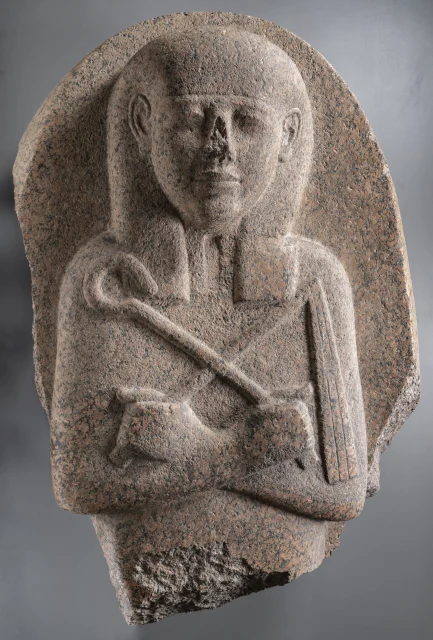 Sarcophagus Lid of Prince KhaemwasetUnknown Egyptian artist (Ramesside period), -1168