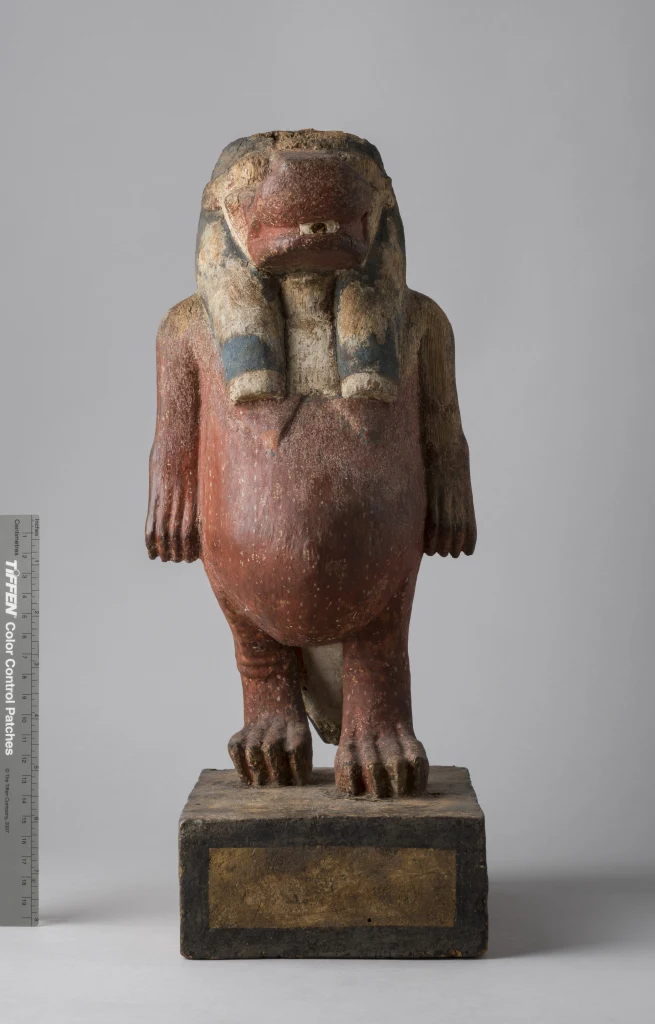
Statuette of Taweret Dedicated by the Draftsman Parahotep
Details
The story
In many houses of Deir el-Medina, the village of the royal tomb builders, the front room held a raised brick platform with low walls and a few steps, sometimes painted with figures of Bes, a protective household god. Archaeologists have argued about it ever since the French excavations of the 1920s and after. It may have been a shrine, a bed for giving birth, a place to sleep, or all of these at different times.
That domestic world belonged to Taweret. Her name means the Great One. She has the head and body of a hippopotamus, the back and tail of a crocodile and the feet of a lion, all animals known for fiercely protecting their young. She had no temples and no colossal statues. She lived in the home, in small figures of clay or wood that guarded newborn children and helped women conceive.
This wooden one was dedicated, the museum records, by the draftsman Parahotep, son of Pay, one of the village men whose work was drawing the scenes on the walls of the royal tombs.
More works by Unknown Egyptian artist (Ramesside period)
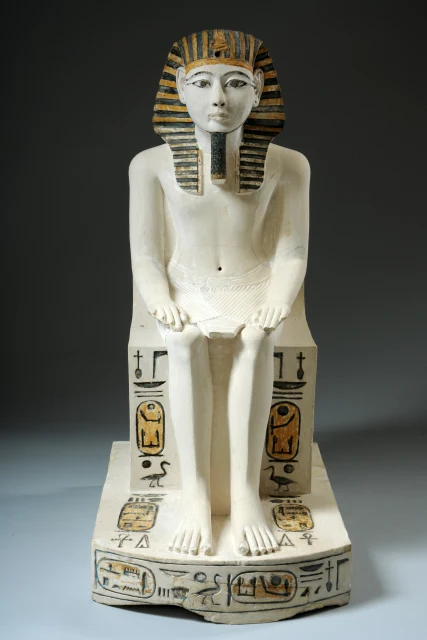 Cult Statue of Amenhotep IUnknown Egyptian artist (Ramesside period), -1242
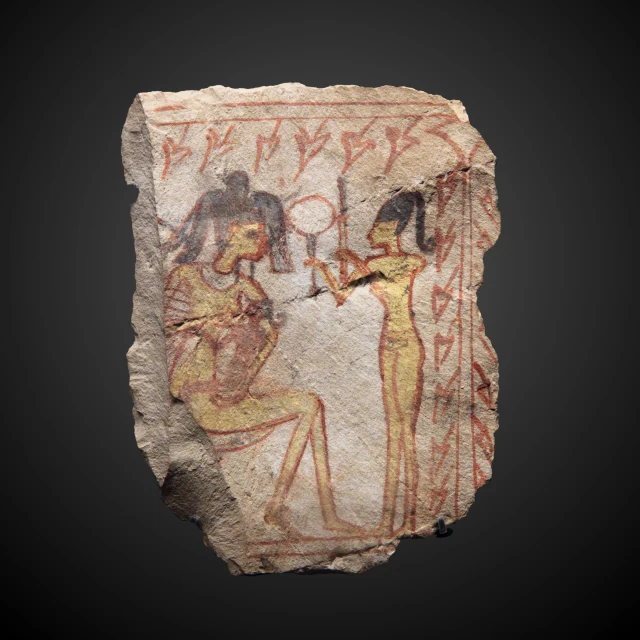 Figured Ostracon: Servant Presenting a Mirror to Her MistressUnknown Egyptian artist (Ramesside period), -1182
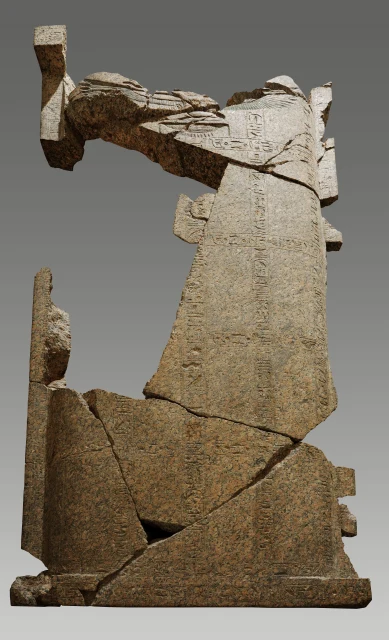 Lid of the Sarcophagus of Queen NefertariUnknown Egyptian artist (Ramesside period), -1246
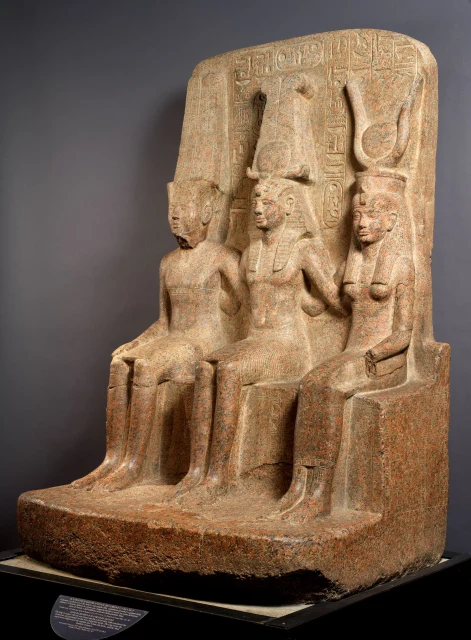 Ramesses II Seated between Amun and MutUnknown Egyptian artist (Ramesside period), -1246
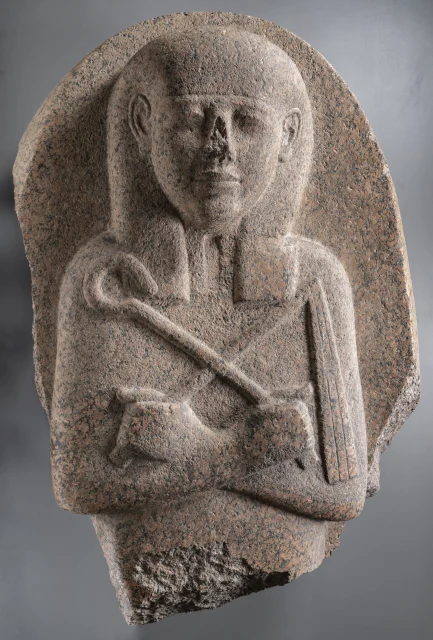 Sarcophagus Lid of Prince KhaemwasetUnknown Egyptian artist (Ramesside period), -1168