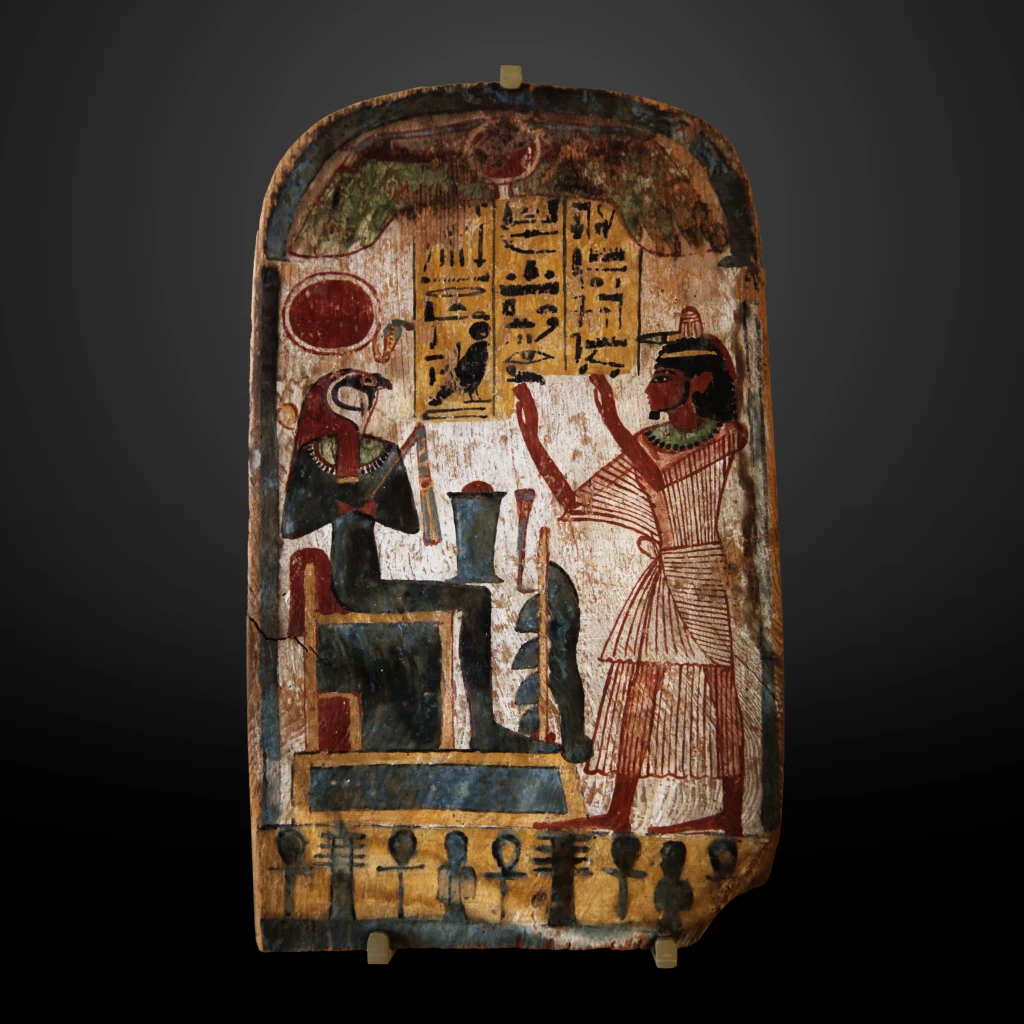
Stela of Renpetmaa Worshipping Ra-Horakhty
Details
The story
The god on the throne is Ra-Horakhty, a name that means Ra who is Horus of the two horizons. The Egyptians joined the sun to Horus, the sky god pictured as a falcon, the bird that flies highest, and so the sun at its rising and setting was given a falcon's head. Here he sits with a sun disc and a cobra on his head, holding the crook and the flail.
Facing him, both hands raised, stands Renpetmaa, a priest in the temple of Amun, in a pleated kilt and a shirt with pleated sleeves, with a heavy wig and a short beard. The Louvre's description also notes the animal skin that went with his office. Along the bottom of the board runs a border of protective signs, among them the ankh, the sign of life, and the djed pillar, the sign of stability, repeated side by side like a fence. Above, a winged sun disc spreads across the rounded top.
The stela is painted on wood and dated by its style, with a question mark, to the 22nd Dynasty. The Louvre bought it in July 1868, and in 2014 and 2015 it travelled to an exhibition on the animal world of ancient Egypt, at Louvre-Lens and then in Madrid and Barcelona.
More works by Unknown Egyptian artist (Third Intermediate Period)
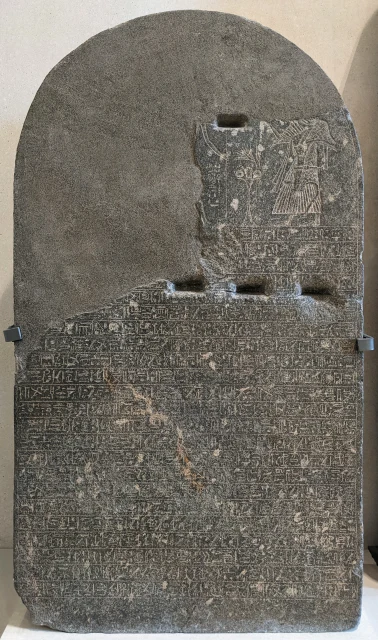 Banishment StelaUnknown Egyptian artist (Third Intermediate Period), -1022
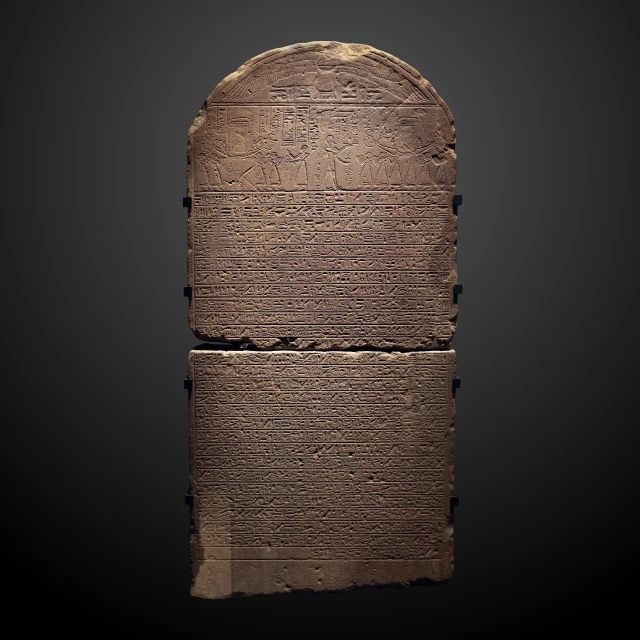 Bentresh StelaUnknown Egyptian artist (Third Intermediate Period), -1006
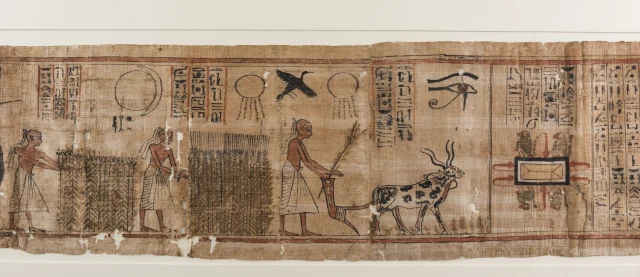 Book of the Dead of NebhepetUnknown Egyptian artist (Third Intermediate Period)
 Cartonnage Fragment with the Barque of SokarUnknown Egyptian artist (Third Intermediate Period), -867
 Coffin of TamutmutefUnknown Egyptian artist (Third Intermediate Period), -934