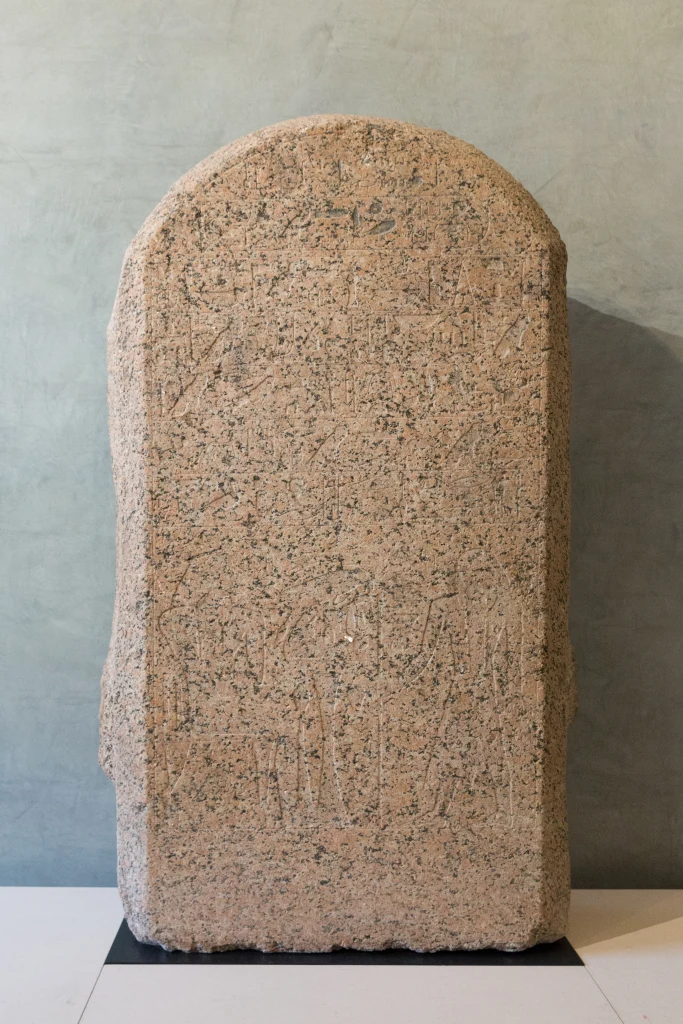
Stele of the Vizier Senusret
Details
The story
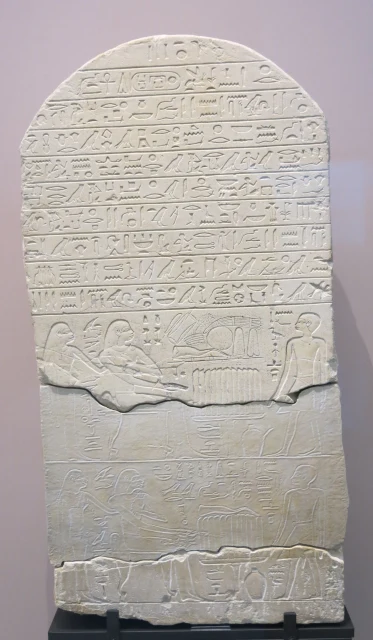
The two long straps hanging from this man's neck are the badge of his office. Senusret was vizier, the highest official in the land after the king, at the end of the reign of Senusret I and in the first years of Amenemhat II, early in the 12th Dynasty. On this stele he appears twice, seated and standing, on either side of a table of offerings, and both times he wears the vizier's straps. Above, seven lines of hieroglyphs give the date, year 8 of Amenemhat II, the king's throne name, an offering formula and the vizier's titles, among them overseer of the city, and they name his mother, Sathathor.
The stone is pink granite, almost two metres tall and weighing about two and a half tonnes. It reached the Louvre in 1849 and was long thought to have come from Abydos, the town of Osiris. The Louvre now suggests it came instead from Lisht, the royal cemetery of that time, where the vizier built a large stone mastaba tomb beside the pyramid of Amenemhat I, the founder of the dynasty. The stele would have stood in its chapel. Excavators from the Metropolitan Museum of Art working inside his tomb enclosure in the early 20th century found the untouched burial of a woman named Senebtisi.
For most of its time in Paris the stele drew little attention. In March 2021 the Louvre moved it to the entrance of its Egyptian galleries.
More works by Unknown Egyptian artist (Middle Kingdom)
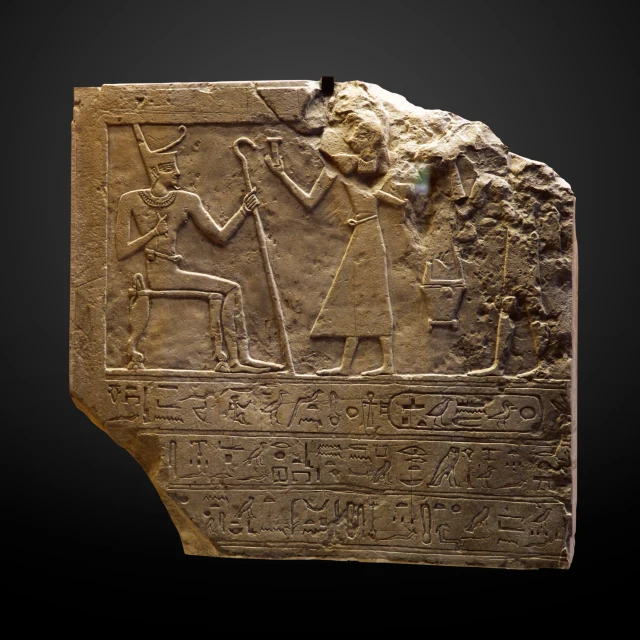 Fragmentary Stela with an Offering Scene before King Mentuhotep IIUnknown Egyptian artist (Middle Kingdom), -2019
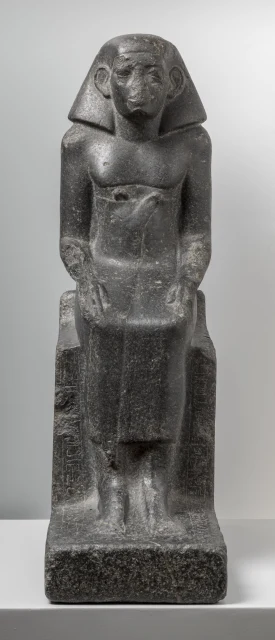 Statue of Kheperka, Overseer of FieldsUnknown Egyptian artist (Middle Kingdom), -1754
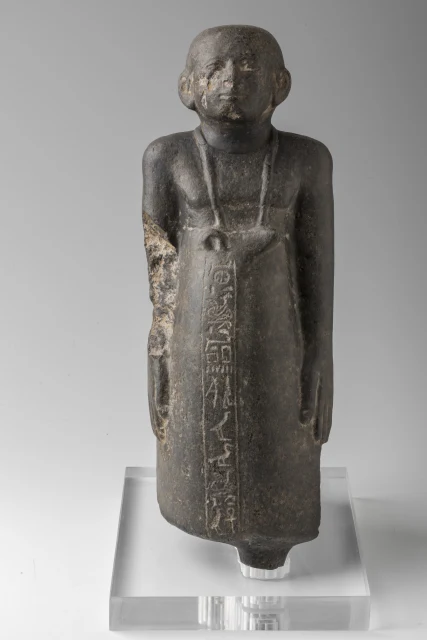 Statue of the Vizier IymeruUnknown Egyptian artist (Middle Kingdom), -1725
 Stela of ImenyUnknown Egyptian artist (Middle Kingdom), -1883
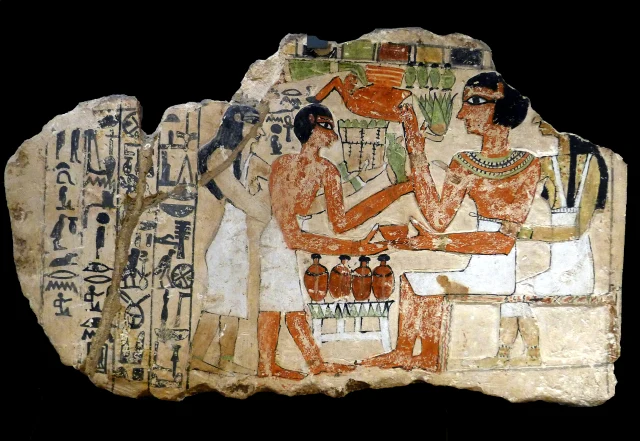 Stela of Iri Receiving an OfferingUnknown Egyptian artist (Middle Kingdom), -1882